 Photo: Calistemon · CC BY-SA 4.0
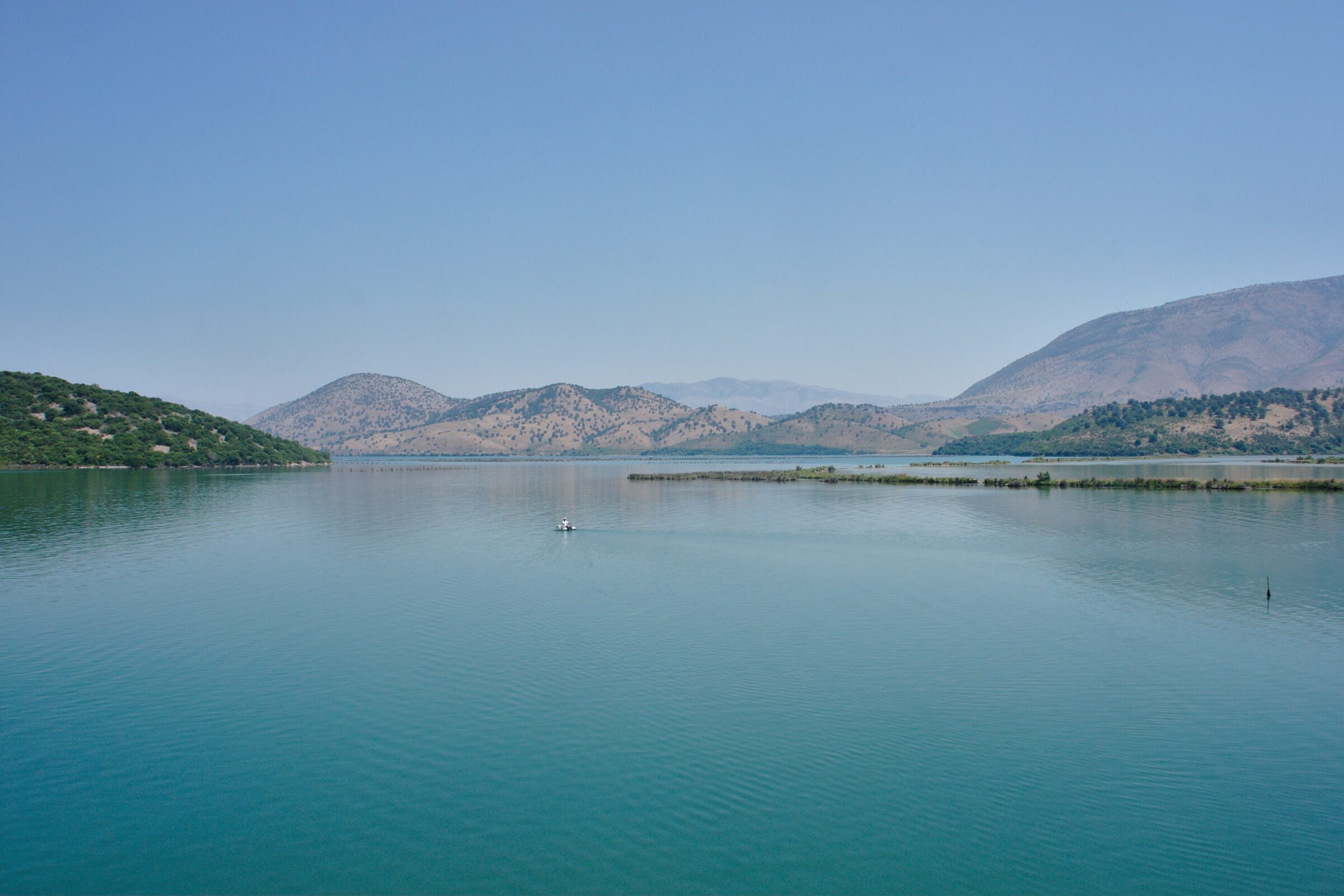
Photo: Inkey · CC BY-SA 3.0
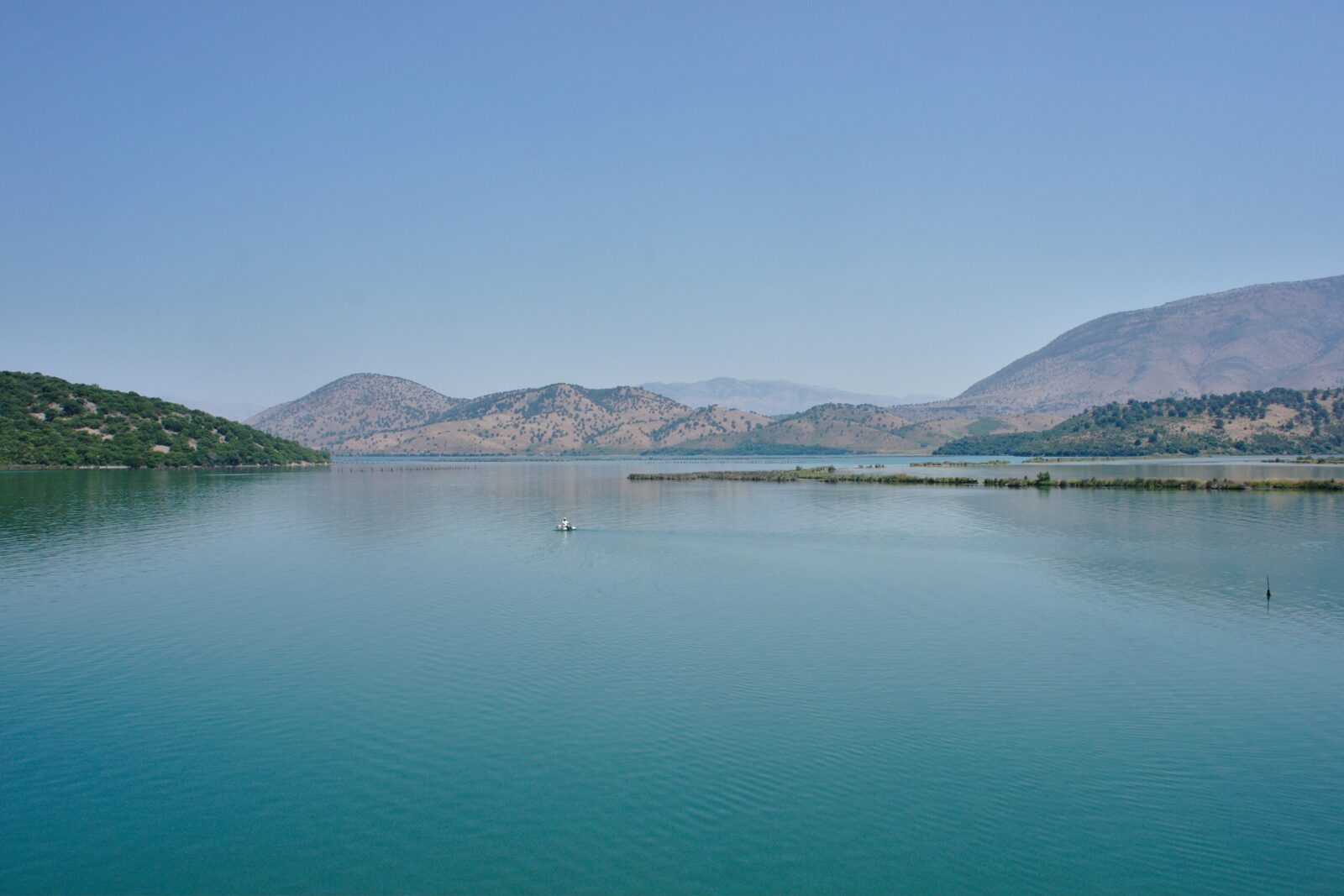
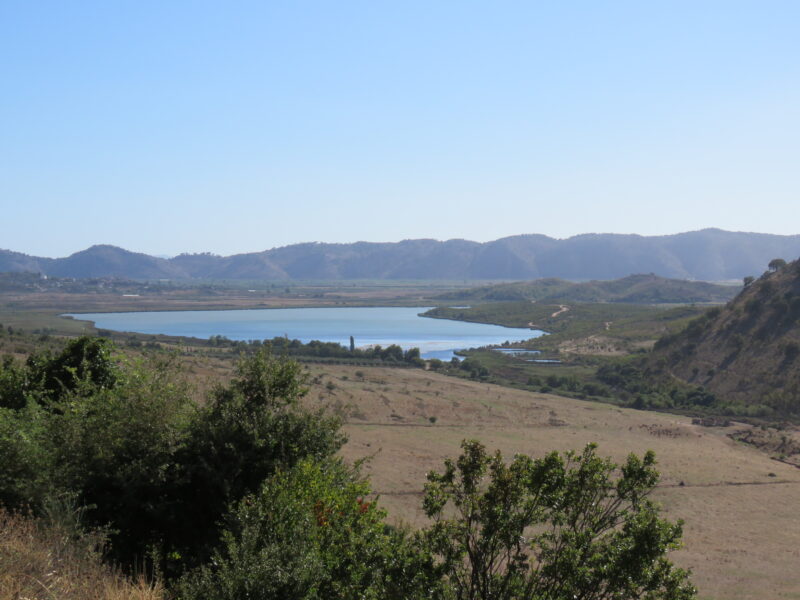
Butrint Lagoon (Liqeni i Butrintit) is a salt lagoon south of Sarandë in southern Albania, close to the Ionian Sea, to which the Vivari Channel joins it. Dense forested hills, a rocky coast and salt and fresh marshes surround it. Its southern part lies inside Butrint National Park, beside the ancient site of Butrint, and has been recognised as a wetland of international importance.
How it formed
The lagoon lies in direct contact with the sea: at its southern end the Vivari Channel connects it to the Ionian Sea. It is shaped like a giant footprint pointing north, and saltwater and freshwater marshes complement the open water.
History
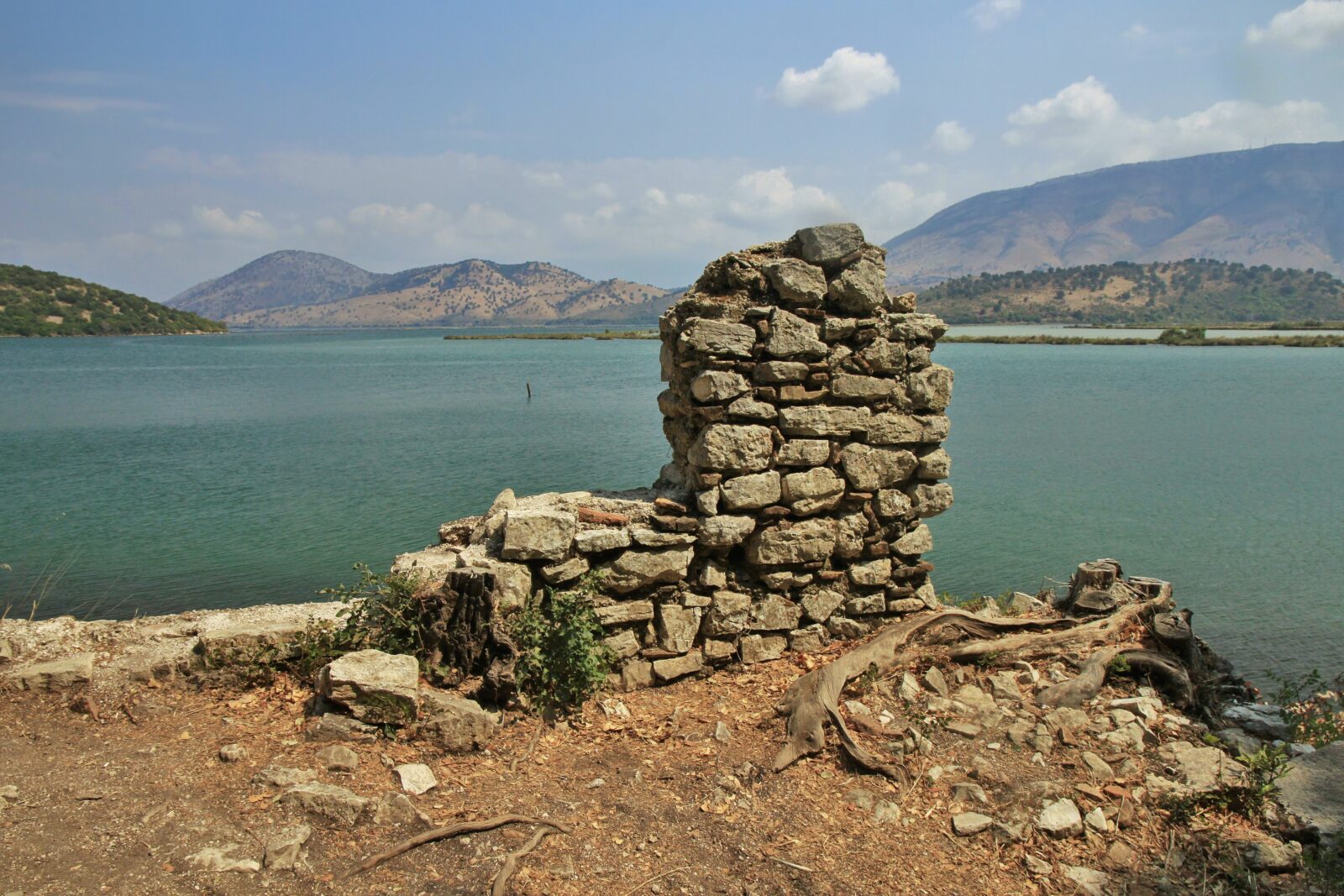
Beside the lagoon lies the ancient city of Butrint. Greeks founded a small colony on the hillside in the 4th century BC, the Romans expanded it into a port, the Byzantines made it a centre of early Christian worship, and the Venetians strengthened the fortifications and built the tower that overlooks the Vivari Channel.
What to look for in the ruins
The Lion Gate is a narrow gate in the walls, named for a carved relief of a lion attacking a bull. The theatre, Hellenistic and later enlarged by the Romans, has well-preserved seating. The late Roman baptistery has a floor mosaic of geometric and animal designs, though it is often covered. The Venetian tower is now a small museum.
Nature
Butrint is particularly known for the diversity of its plants and animals. The southern part of the lagoon lies within Butrint National Park and is a Ramsar wetland of international importance, and the lagoon has also been identified as an important area for birds and for plants, because it supports significant numbers of species of both.
Gallery
Visit
Getting there
Nearest settlement: Ksamil
Swimming
No reliable information
Tips
The lagoon is part of Butrint National Park, and its rules apply. Boat tours and walks go along the Vivari Channel.
Visiting
The circuit through the ruins takes 1.5–2 hours, on a mostly flat but uneven path through shaded woodland, so wear shoes with a good sole. Pay cash at the kiosk inside the entrance. Summer is very hot, so arrive near opening time or late in the afternoon to avoid both the heat and the tour groups from Sarandë and Ksamil. The site floods in winter, and museum hours vary by season. If the car park is full, staff may send you across the Vivari Channel on a small car ferry.
Mussels, birds and walks
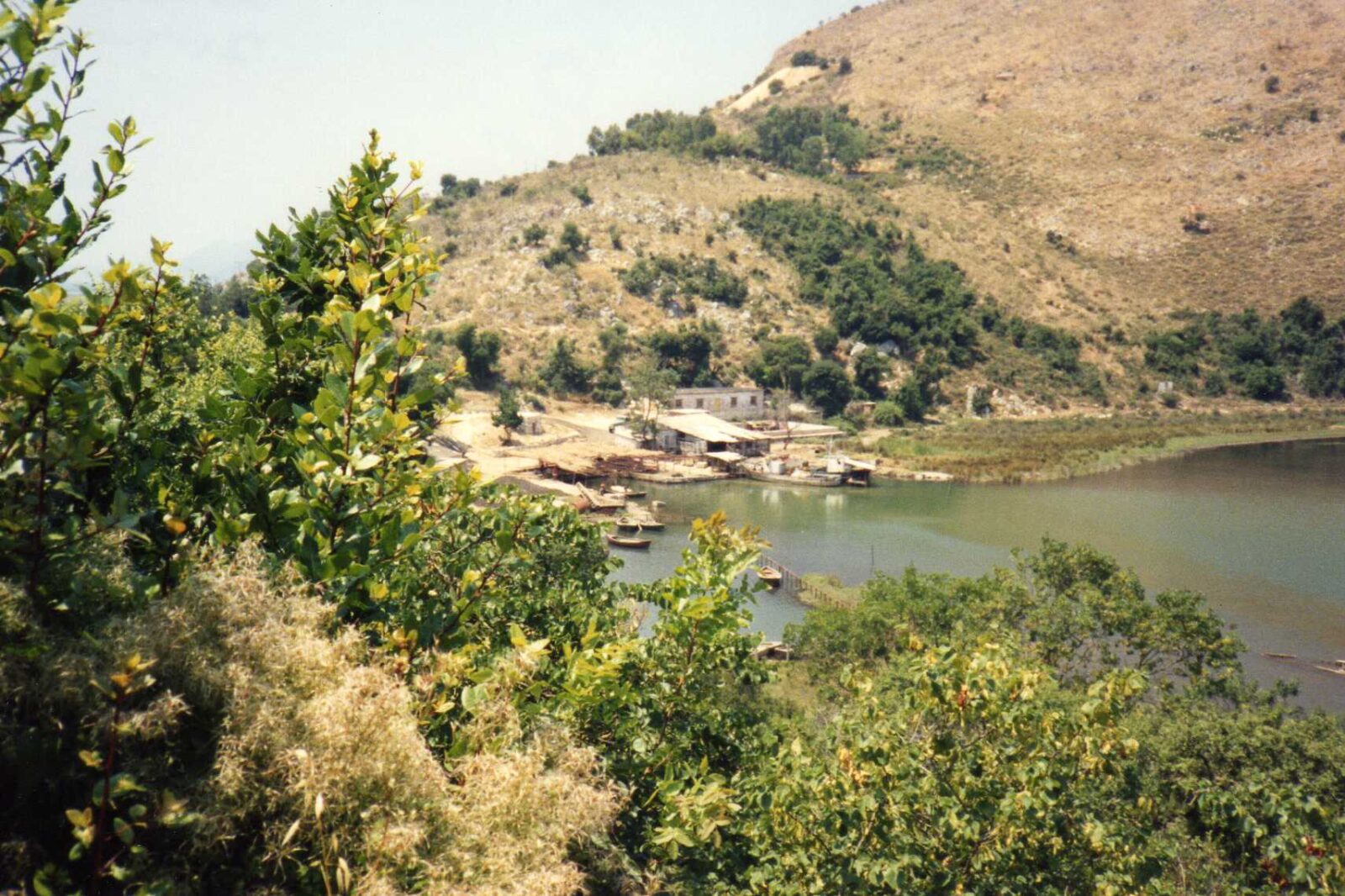
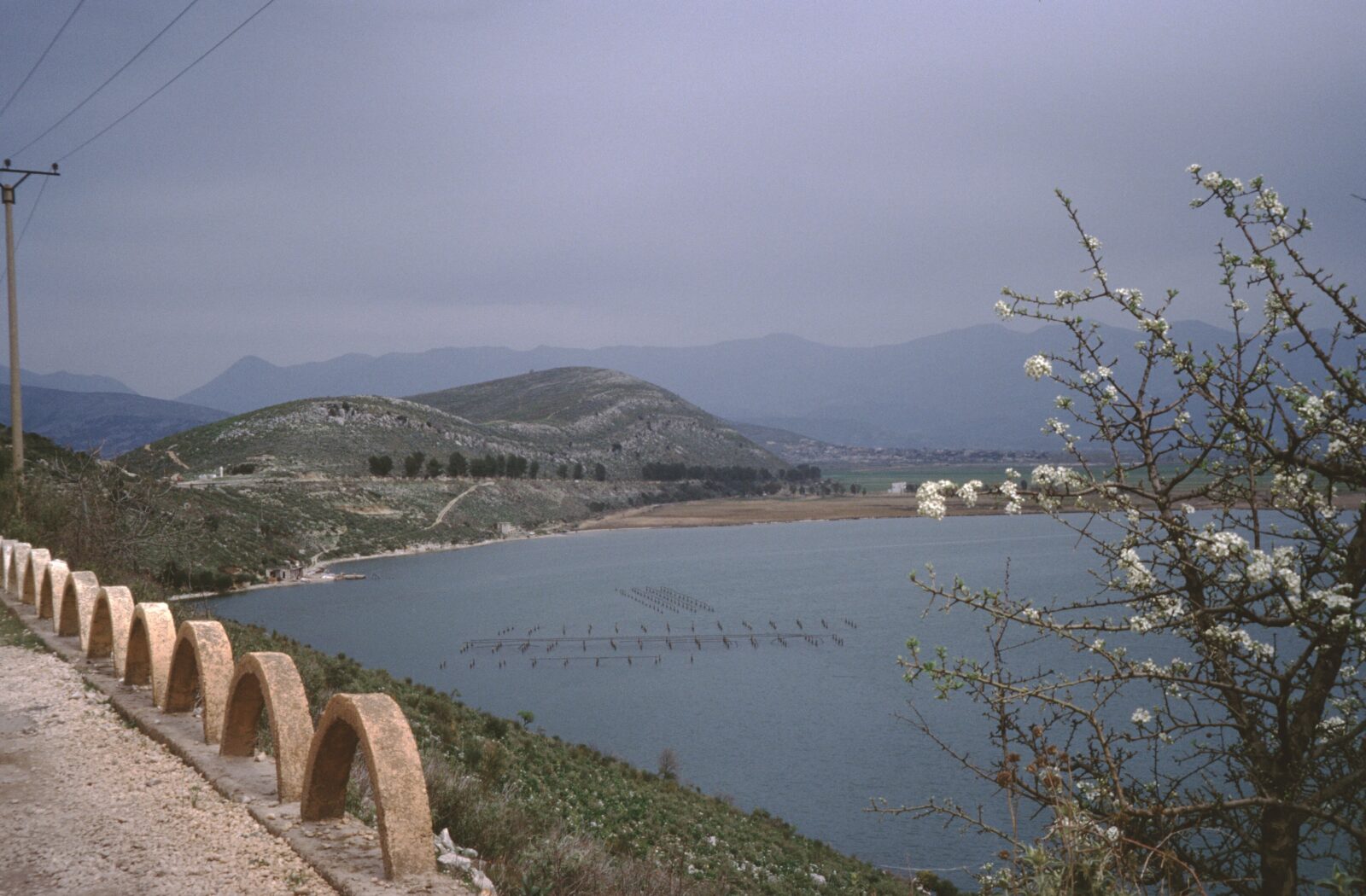
The lagoon is known for mussel farming, and the Vivari Channel is where the fishing boats go. Herons, egrets and flamingos can be seen depending on the season, with winter and early spring and also spring and autumn named as good times, and mosquitoes in the warm months. An easy coastal walk of about 4.8 km links the site with Ksamil, and you can hire a boat from Ksamil or Sarandë. Ksamil is about 5 km away, with minibuses every 30 to 60 minutes. Ali Pasha Castle boat trips mostly run from June to September.
Nearby lakes
Show on map


Know Lake Butrint well?
Suggest a beach, viewpoint, trail or amenity, or tell us if something has changed. We read every message.
Sources & data
- Wikidata: Lake Butrint (Q851050), Wikimedia Foundation
- OpenStreetMap: None (relation 6784668), OpenStreetMap contributors
- English Wikipedia: Butrint Lagoon, Wikimedia Foundation
- A guide to visiting Butrint National Park, Albania, Along Dusty Roads
- About Lake Butrint, Visit Saranda