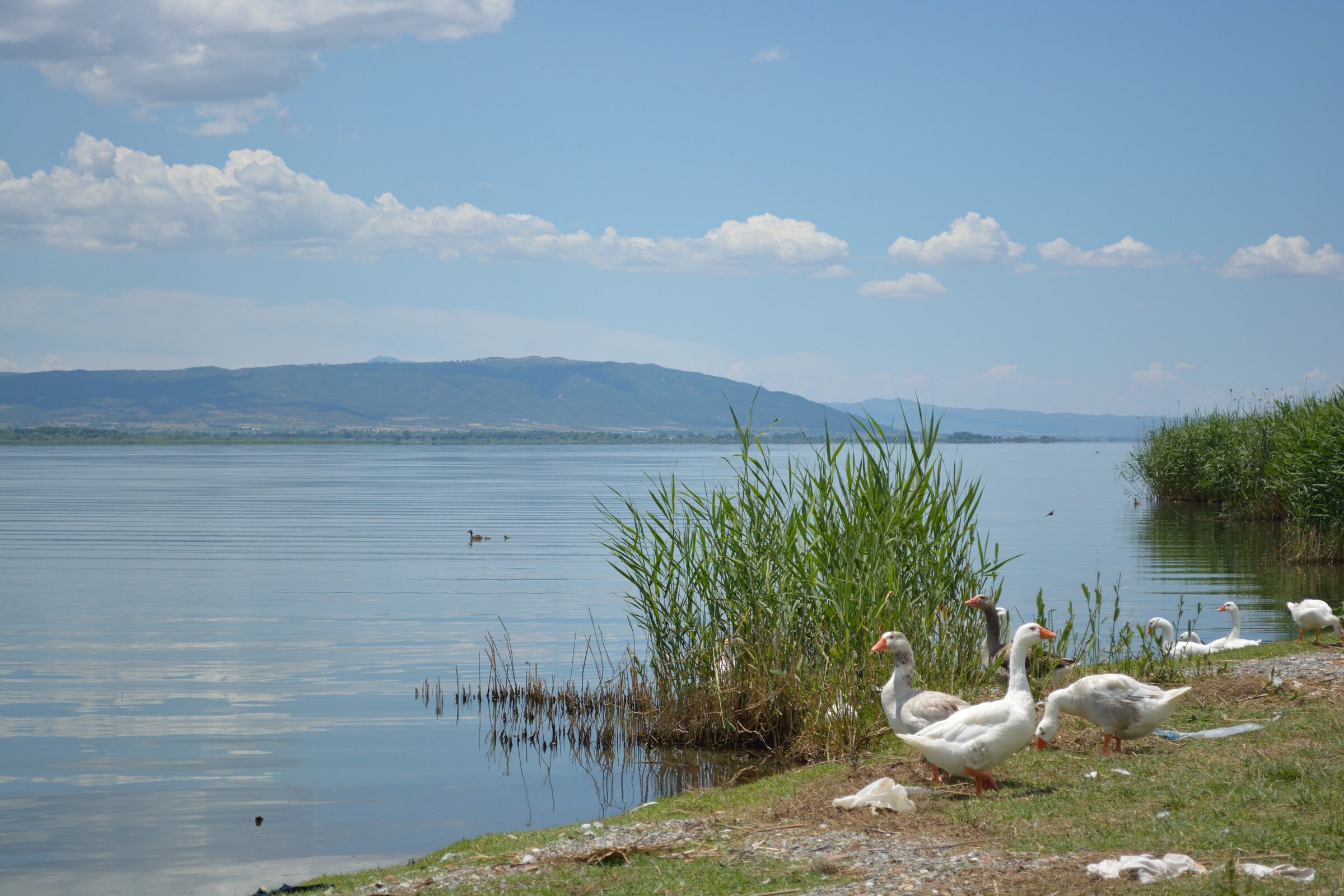
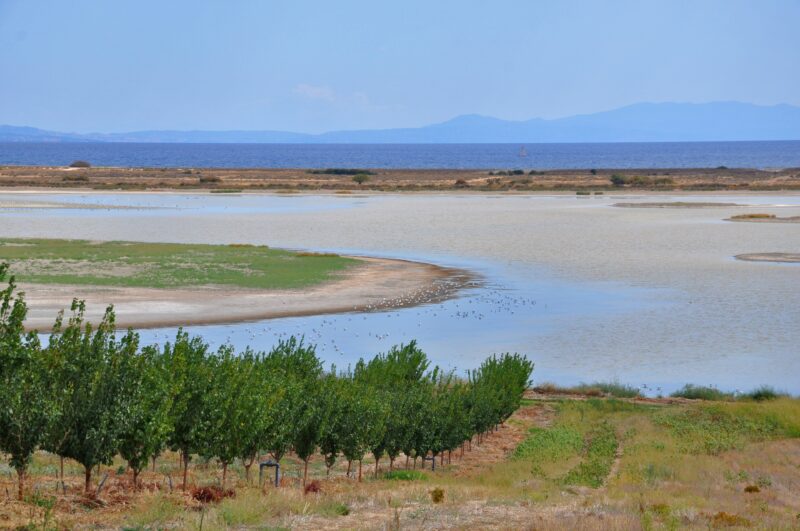
Photo: Iraklis Apergis · CC BY-SA 4.0
Lake Volvi is the second largest lake in Greece, at the root of the Chalkidiki peninsula in the Thessaloniki regional unit, east of Lake Koroneia. A long time ago Volvi, Koroneia and the whole of Mygdonia formed a single huge lake. The Roman Via Egnatia runs along its northern shore and an older road ran along its southern one, and to the east lies the narrow valley of Rentina, the Macedonian Tempe. The municipalities of Volvi and Langadas have shores on the lake.
How it formed
The lake is what remains of a much larger body of water, cut off from the sea long ago. In antiquity it drained to the Strymon Gulf by a stream through the pass known as Aulon or Arethusa.
History
Thucydides knew the lake as Bolbe, and in Greek myth it was home to the nymph of that name. The poet Archestratus praised its perch. The ancient town of Bolbos stood somewhere near it, though its exact site is not known. The Ottomans called it Beşik Gölü, the Cradle Lake, and during the Greek War of Independence hundreds of Greek inhabitants were drowned in it by Ottoman forces.
Nature
With Koroneia and the Apollonia forest it forms a Ramsar wetland, listed since 1975. On the south shore, the Apollonia lakeside forest is one of the last of its kind in Europe, and the only place in Greece with mixed colonies of grey herons and white storks. White and Dalmatian pelicans and greater flamingos visit, pygmy cormorants and black-winged stilts occur, grebes winter in large numbers and birds of prey nest in the Rentina gorge. Three kinds of fish found nowhere else live in the lake, known locally as liparia, gelartza and lakopsaro. Farmland and pollution have taken a heavy toll on the basin, above all on Koroneia.
Gallery
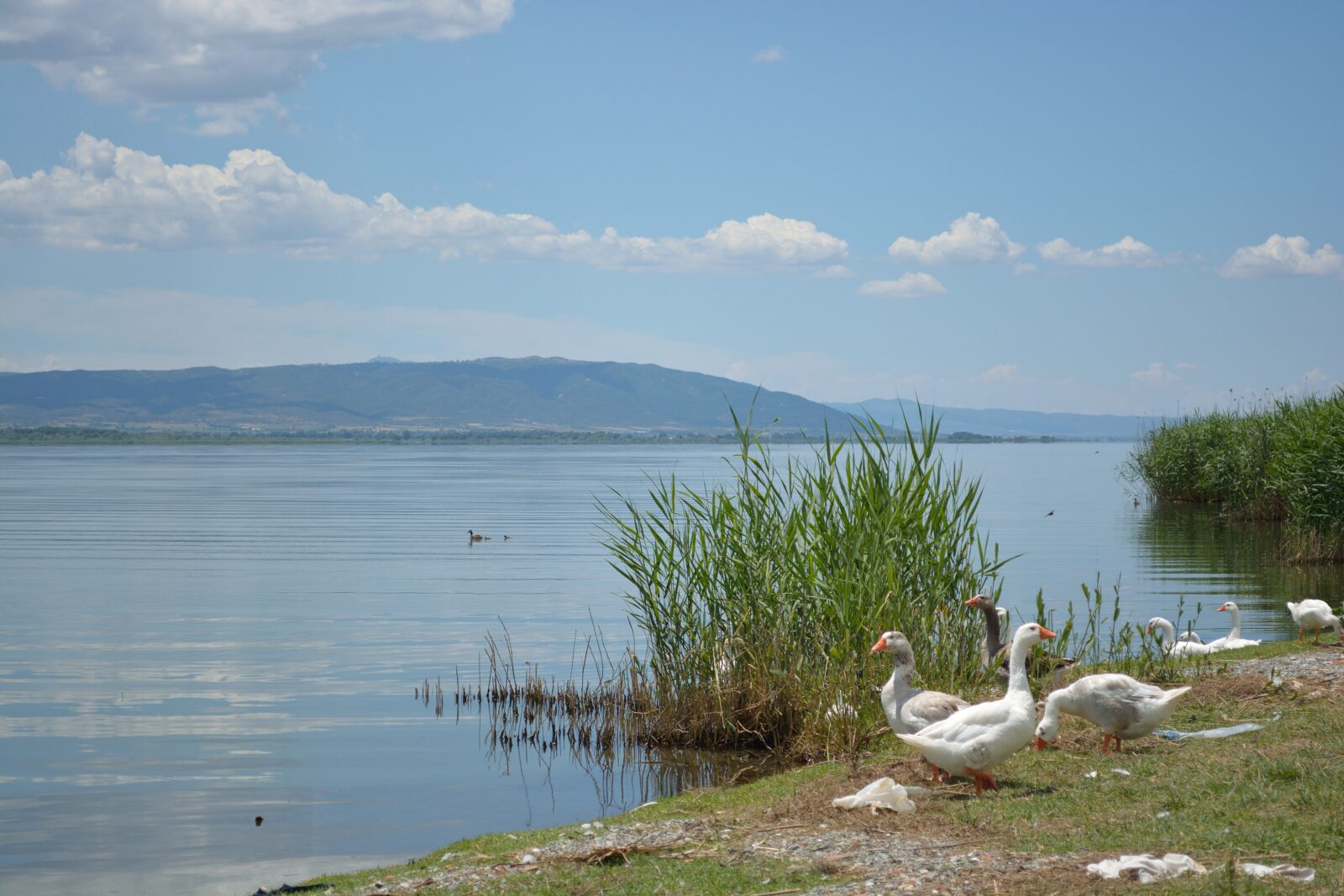 Photo: Iraklis Apergis · CC BY-SA 4.0
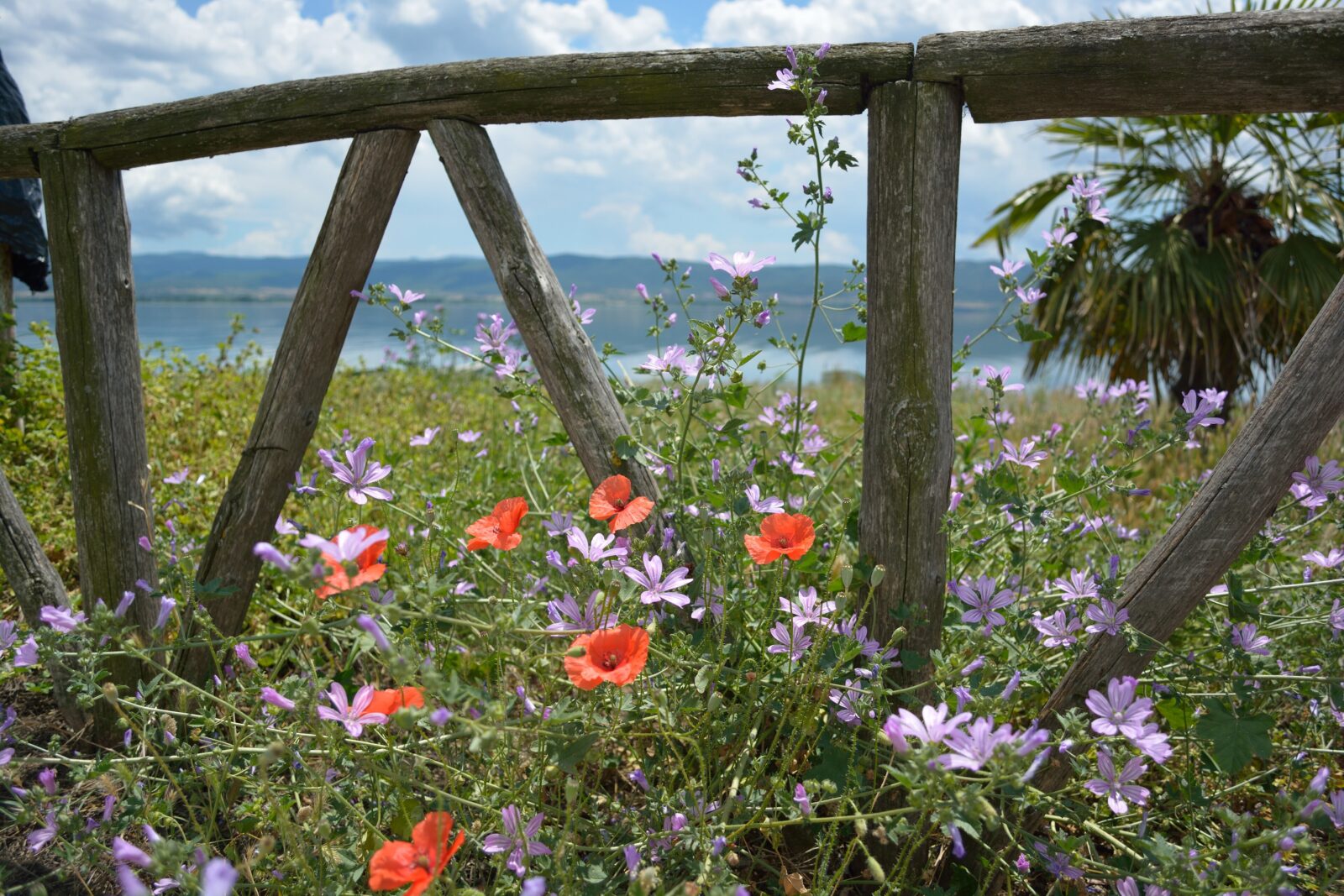 Photo: Sofia Eleftheriou · CC BY-SA 4.0
Visit
Swimming
No reliable information
Tips
Volvi lies about 40–50 km east of Thessaloniki, by the Egnatia motorway along the north shore or the old road along the south, with exits to local roads and dirt tracks down to the water. Birds are the draw: 248 species have been reported, and they can be seen from an observatory. The mouth of the Modi on the eastern shore, reached by car on an unpaved road, is a good spot for white storks, pygmy cormorants and marsh harriers. Bring binoculars. May, June and September are the most pleasant months.
Paths on the flat shore need no special fitness. A trail through the Rentina gorge, the “Macedonian Tempe”, a limestone canyon on the east side, connects the area with Koroneia, and Rentina castle guards it; fire is a recurring risk there. The lake has no organised beaches, but Asprovalta and Vrasna on the coast are good for swimming. Springs at Langadas have been used since antiquity and still work as public baths, and Nea Apollonia is the main thermal village.
Nearby lakes
Show on map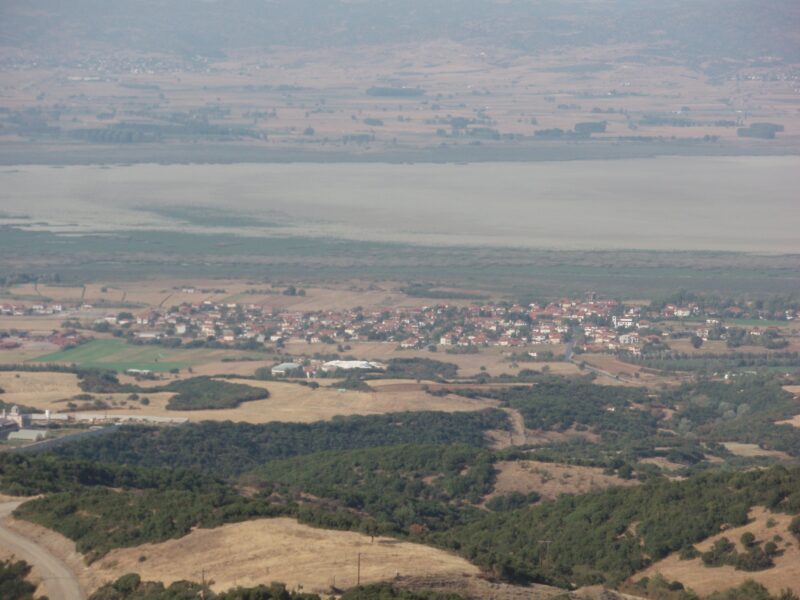


Know Lake Volvi well?
Suggest a beach, viewpoint, trail or amenity, or tell us if something has changed. We read every message.
Sources & data
- Greece's 2022 Water Framework Directive reporting to the EEA: lake (LW) and transitional (TW) water bodies, field cArea, European Environment Agency (WISE WFD), reported by Greece, 2022
- OpenStreetMap: Λίμνη Βόλβη (relation 5695354), OpenStreetMap contributors
- English Wikipedia: Lake Volvi, Wikimedia Foundation
- Wikidata: Lake Volvi (Q132099), Wikimedia Foundation
- Birding places: Lake Volvi, Modi river mouth, Birdingplaces.eu
- Lagadas spas and Amphipolis, Enjoy Thessaloniki
- Lakes of Koronia and Volvi, Travelfind
- Koronia and Volvi lakes, Harry’s Greece Guide
- Lakes Volvi, Koroneia and Rentina Gorge, Key Biodiversity Areas
- Lake Volvi, Plizio
- For the interested birdwatcher: a short stopover at Lake Volvi, Alaturka