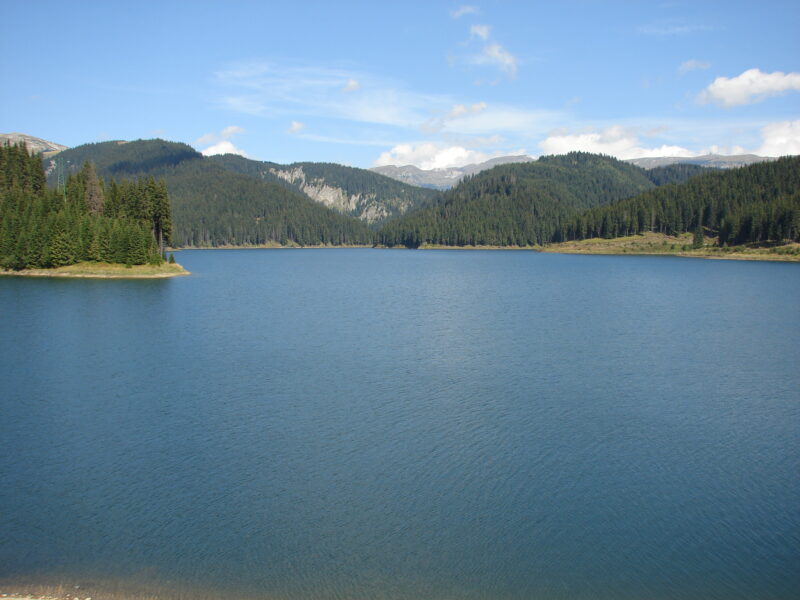
 Photo: Novichok · CC BY-SA 3.0
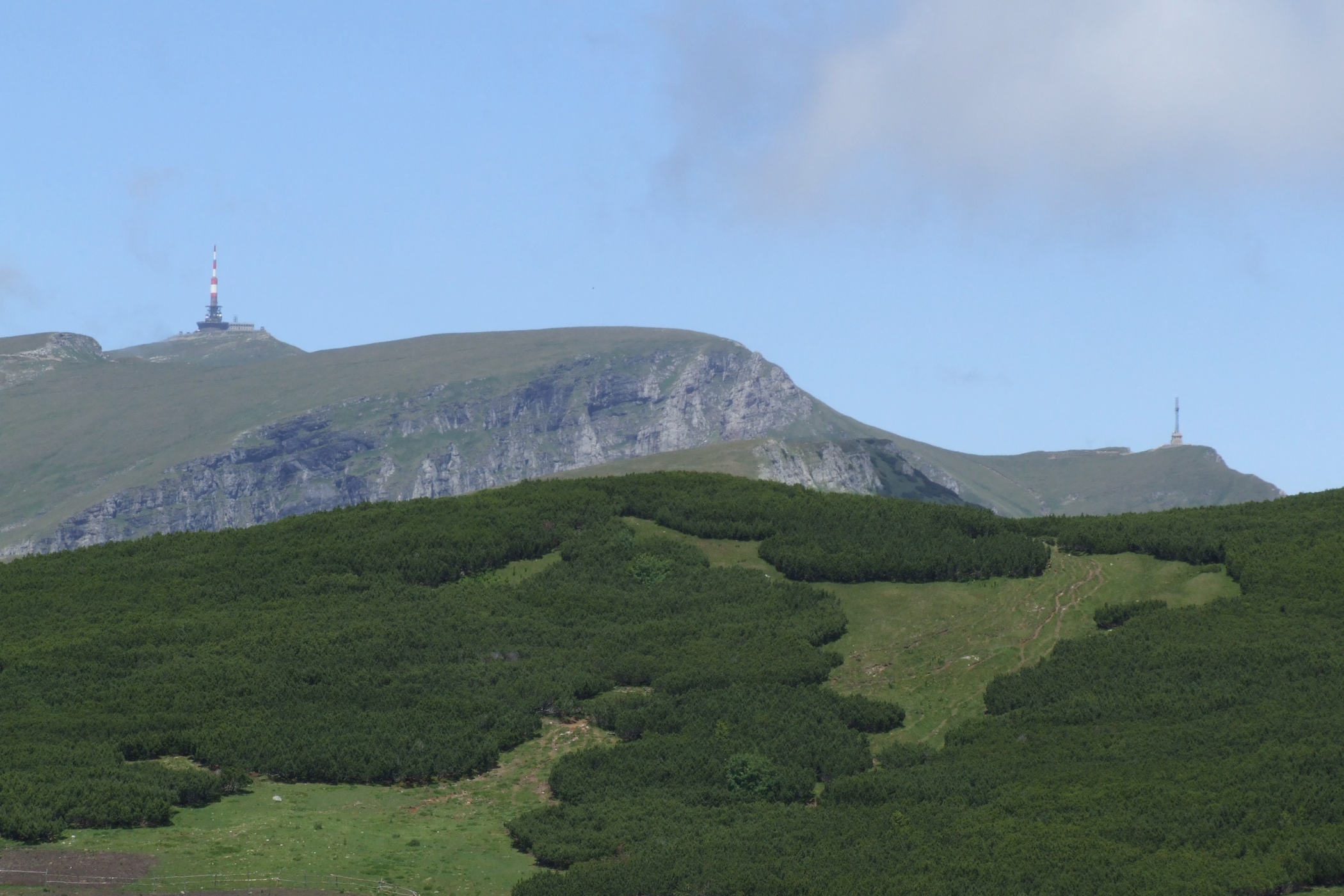
Photo: Pudelek (Marcin Szala) · CC BY-SA 3.0
Bucegi Natural Park is a protected area of IUCN category V in the Bucegi Mountains of the Southern Carpathians, in south-central Romania, on the territory of the counties Brașov, Dâmbovița and Prahova. It was declared a protected area by law in 2000. It is a mountain area of caves, pit caves, canyons, ridges, sinkholes, valleys, waterfalls, pastures and forests, famous for the rock formations known as Babele and the Sphinx. The habitats range from beech forests and bushes to alpine limestone grasslands, alpine rivers, mountain hay meadows and springs, and the park includes protected sites such as Cocora Cave and Cheile Urșilor.
Visiting Bucegi
The cable car from Bușteni takes about ten minutes, climbs 1,235 m over 4.3 km and is the standard way onto the plateau; in winter it runs from about 8:30 to 15:45, and a ride and a park fee (reported at 10 lei at Babele) apply. The Sphinx, a sandstone formation shaped by erosion, is a short, fairly flat walk from the Babele station, manageable for children. The Heroes' Cross on Caraiman is a steeper step up. Omu Peak (about 2,505–2,514 m) is the highest point in the range, and a Sphinx-and-Omu day takes six to eight hours at medium difficulty with about 500 m of height difference. Start early, because car parks fill on weekends. Summer is the hiking season and winter is for skiing; ridges are exposed, so check the forecast. Leashed dogs are generally welcome.
Lakes in the area
Skip map
Map unavailable. The list keeps working.
Pinch to zoom. Pan with two fingers.
Ctrl+scroll to zoom (Cmd+scroll on Mac)
- Natural lake
- Natural, regulated
- Artificial lake (reservoir)
Photo: Novichok · CC BY-SA 3.0
Know Bucegi Natural Park well?
Tell us if something has changed or is missing. We read every message.
Sources & data
- Wikidata: Bucegi Natural Park (Q3364563), Wikimedia Foundation
- English Wikipedia: Bucegi Natural Park, Wikimedia Foundation
- Bucegi Natural Park, Romanian Friend
- The Sphinx of the Bucegi Mountains, WorldAtlas