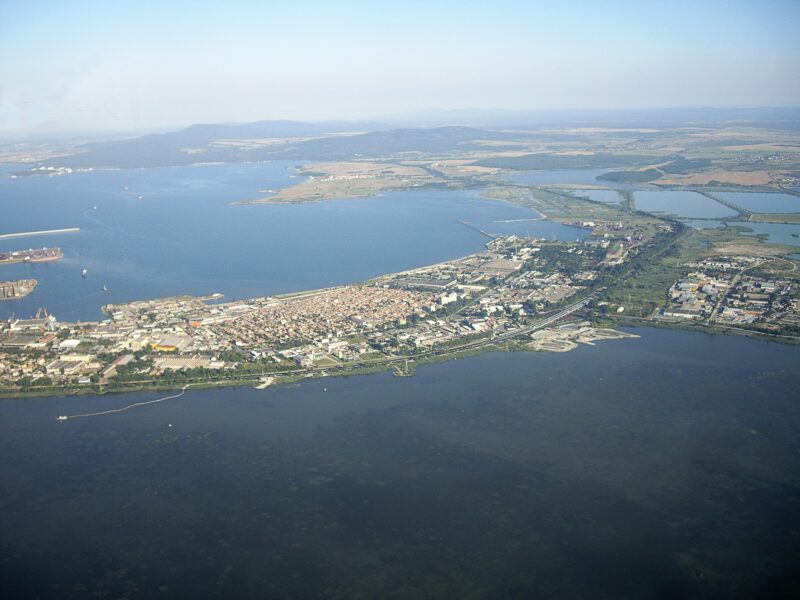
 Photo: Vammpi · CC BY-SA 3.0
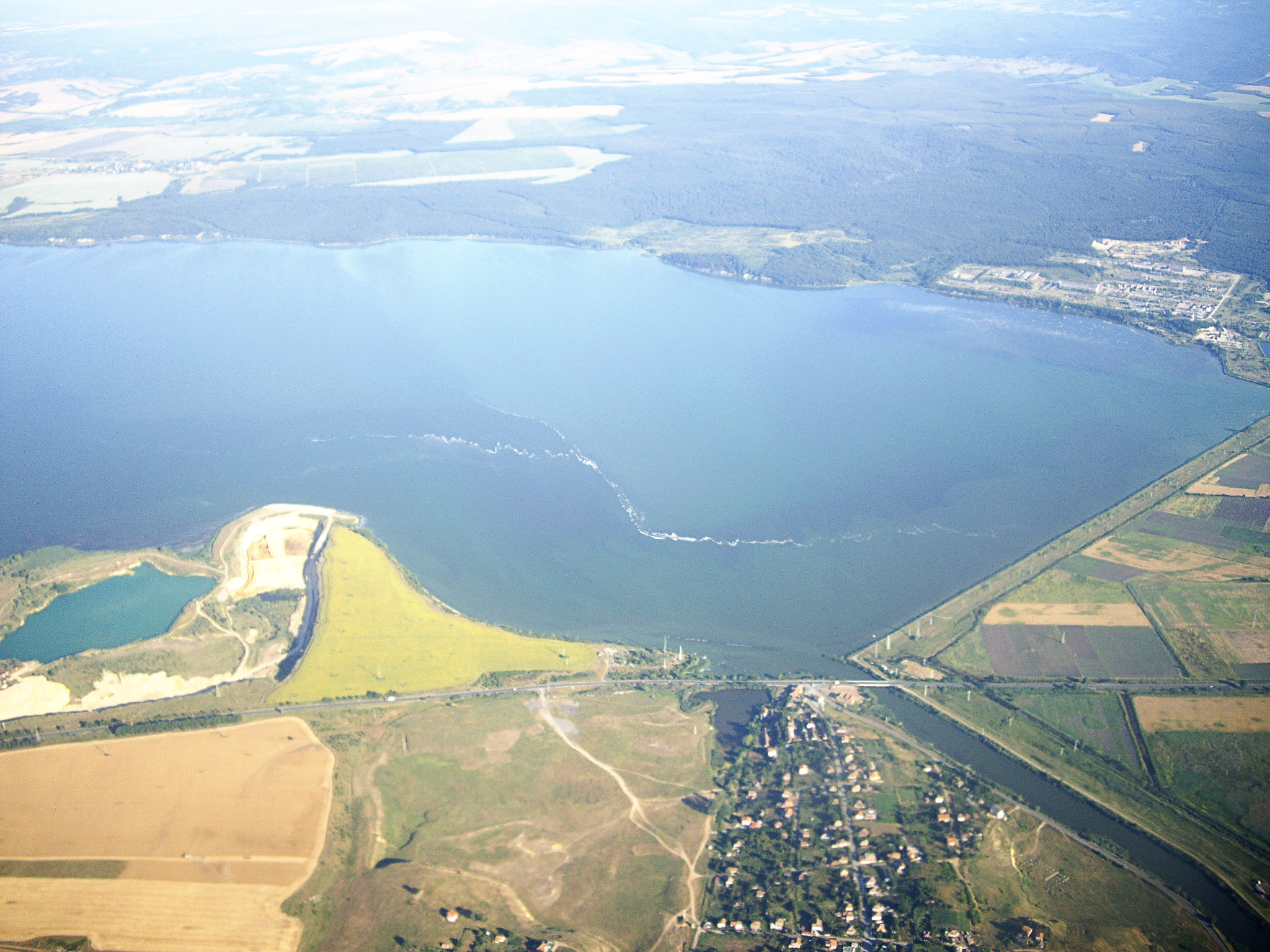
Photo: Vammpi · CC BY-SA 3.0
The southernmost of the Burgas lakes, a coastal lake near Burgas turned into a reservoir.
How it formed
It was a brackish natural lake until a dam was built in 1963, turning it into a freshwater reservoir to supply the oil refinery at Burgas. The Izvorska, Fakiyska, Sredetska and Rusokastrenska rivers flow into it. Below the dam, the water runs into a brackish wetland complex.
History
The ancient city of Develtos lay on its western shore.
Nature
Parts of the lake are protected, including the Poda and Uzungeren areas, and more than 250 bird species are reported. Plentiful fish draw big numbers of birds all year, and usually shy species can often be seen well here: Dalmatian and great white pelicans, pygmy cormorants, glossy ibises, little bitterns, herons and egrets, with collared pratincoles breeding in the fields in some years. Illegal hunting, sand extraction and chemical pollution are problems.
Visit
Swimming
No reliable information
Tips
From Burgas, take the road to Tvarditsa through Meden Rudnik, for the southern part of the dam area, where there is enough parking. A paved ring route can be walked or cycled easily, there is no hide, and a telescope is useful. There are good birds all year.
The nearby Poda Centre, run by the Bulgarian Society for the Protection of Birds, can advise on current conditions, and offers binoculars, telescopes and a nature path with a covered hide.
Nearby lakes
Show on map


Know Mandra Reservoir well?
Suggest a beach, viewpoint, trail or amenity, or tell us if something has changed. We read every message.
Sources & data
- Bulgaria's 2022 Water Framework Directive reporting to the EEA: lake (LW) and transitional (TW) water bodies, field cArea, European Environment Agency (WISE WFD), reported by Bulgaria, 2022
- OpenStreetMap: яз. Мандра (relation 2563662), OpenStreetMap contributors
- Wikidata: Lake Mandrensko (Q1789433), Wikimedia Foundation
- English Wikipedia: Lake Mandrensko, Wikimedia Foundation
- Mandra dam, Birdingplaces
- Mandra–Poda complex, BirdLife International