Photo: BERNARD FISCHER · CC0
The Messolonghi Lagoon is a shallow, triangular lagoon in the south of Aetolia-Acarnania in western Greece, connected with the Gulf of Patras, a bay of the Ionian Sea. It is mostly less than half a metre deep, with several islands in it. Together with the Aitoliko Lagoon to the north it forms the Missolonghi–Aitoliko Lagoons complex.
How it formed
The lagoon has a triangular shape and is connected with the Gulf of Patras. Its depth is small almost everywhere, and near the coast it is only a few centimetres, so that area is swampy. Several islands lie in and around the lagoon.
History
The geographer Strabo called the lake Kynia. In the twentieth century the lagoon was partly drained, especially in its western part, where land was reclaimed with farmland and dikes.
Houses on stilts
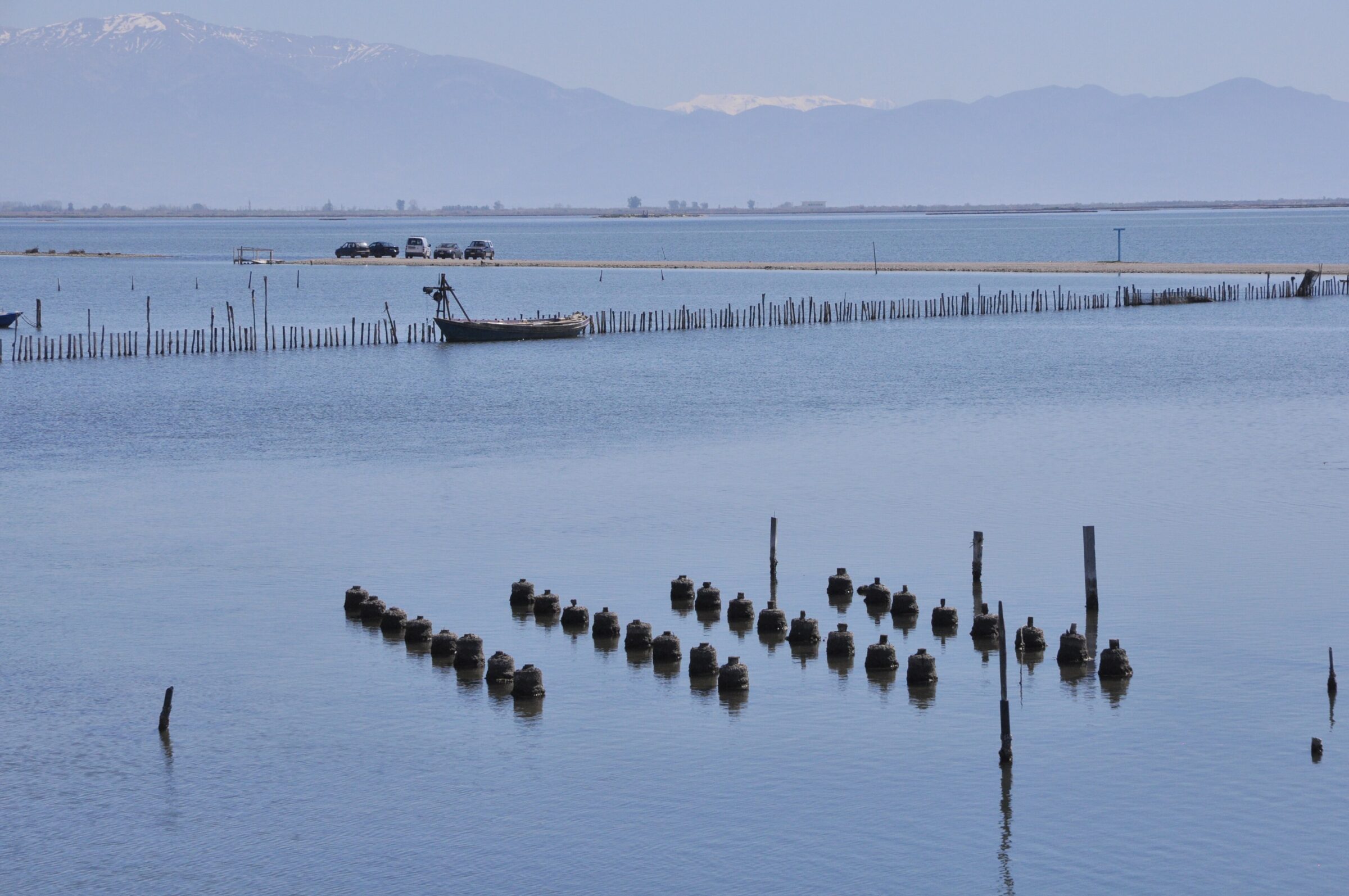
The fishermen's reed houses, the pelades, stand on stilts above the water and are both homes and working bases; they were built that way to keep the floors out of contact with seawater. Fishing is done in part with the divaria, permanent traps that also work as natural fish farms: the lagoon complex has fourteen such facilities, eight of them traditional, placed where the lagoon meets the sea.
Nature
Fish and seaweed live in the shallow lagoon, and the swampy shallows along the coast are part of a wider wetland complex. The lagoon is a Ramsar wetland and a Natura 2000 site. The salt pans here produce a large share of Greece's salt, and paddling to the islet of Agios Sostis may reveal flamingos.
Gallery
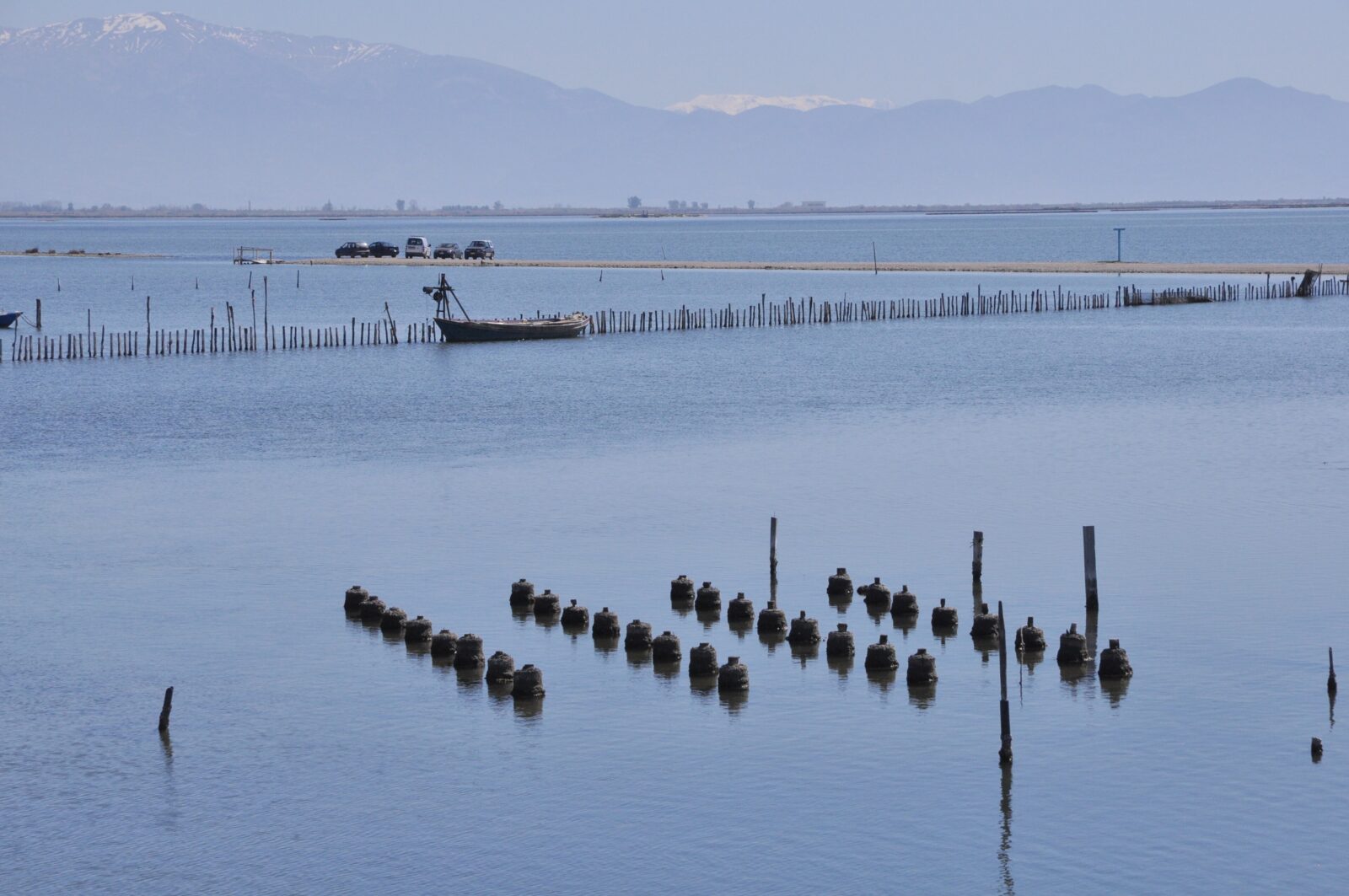 Photo: BERNARD FISCHER · CC0
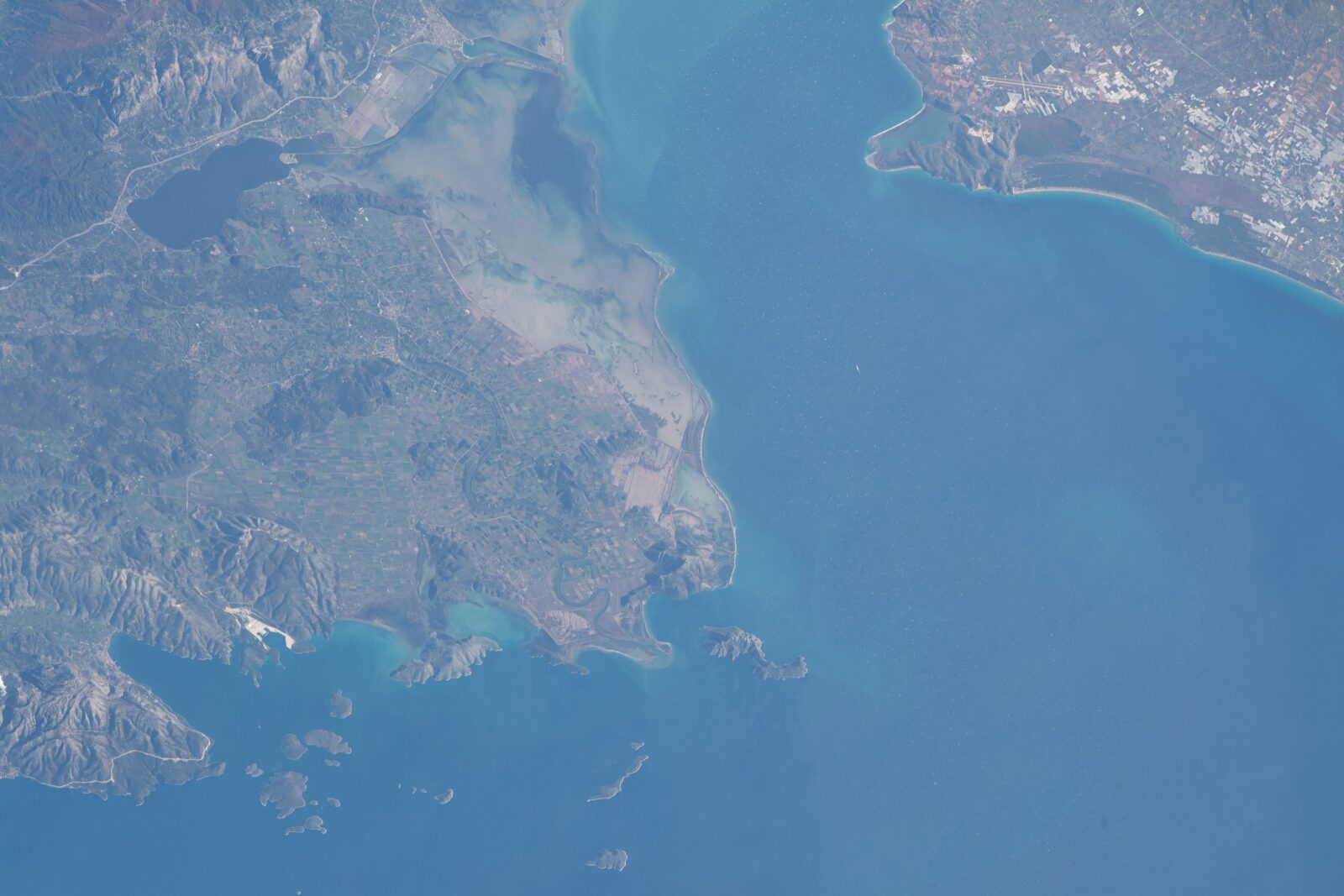
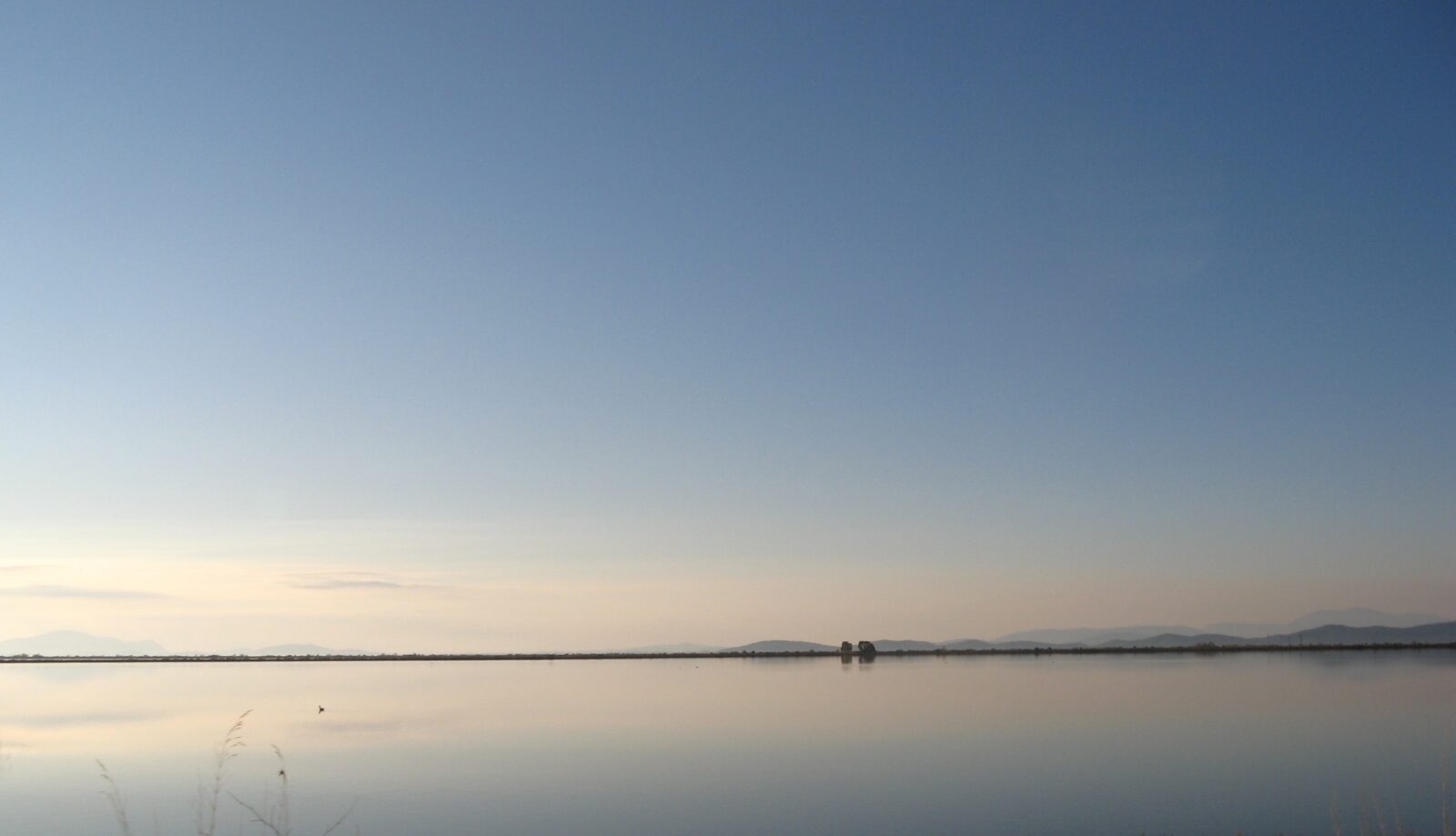 Photo: Dimosthenis Eleftheriadis · CC BY-SA 4.0
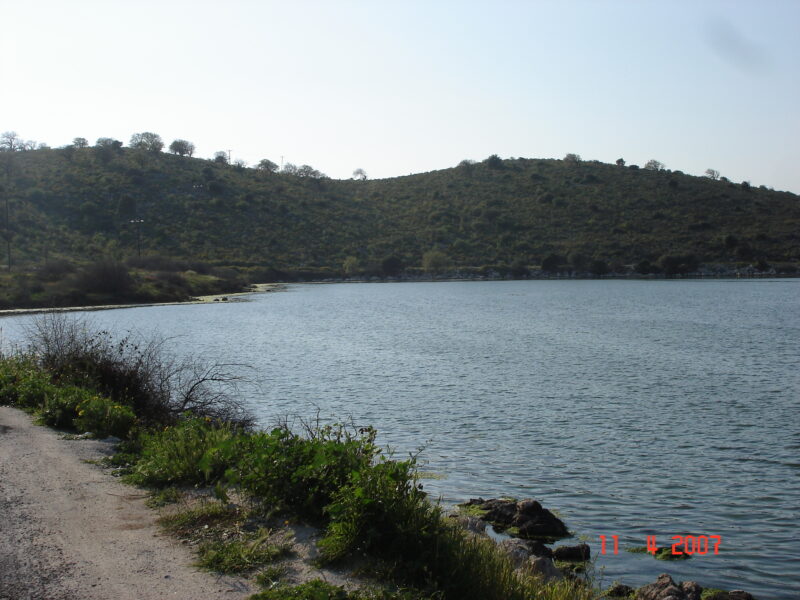
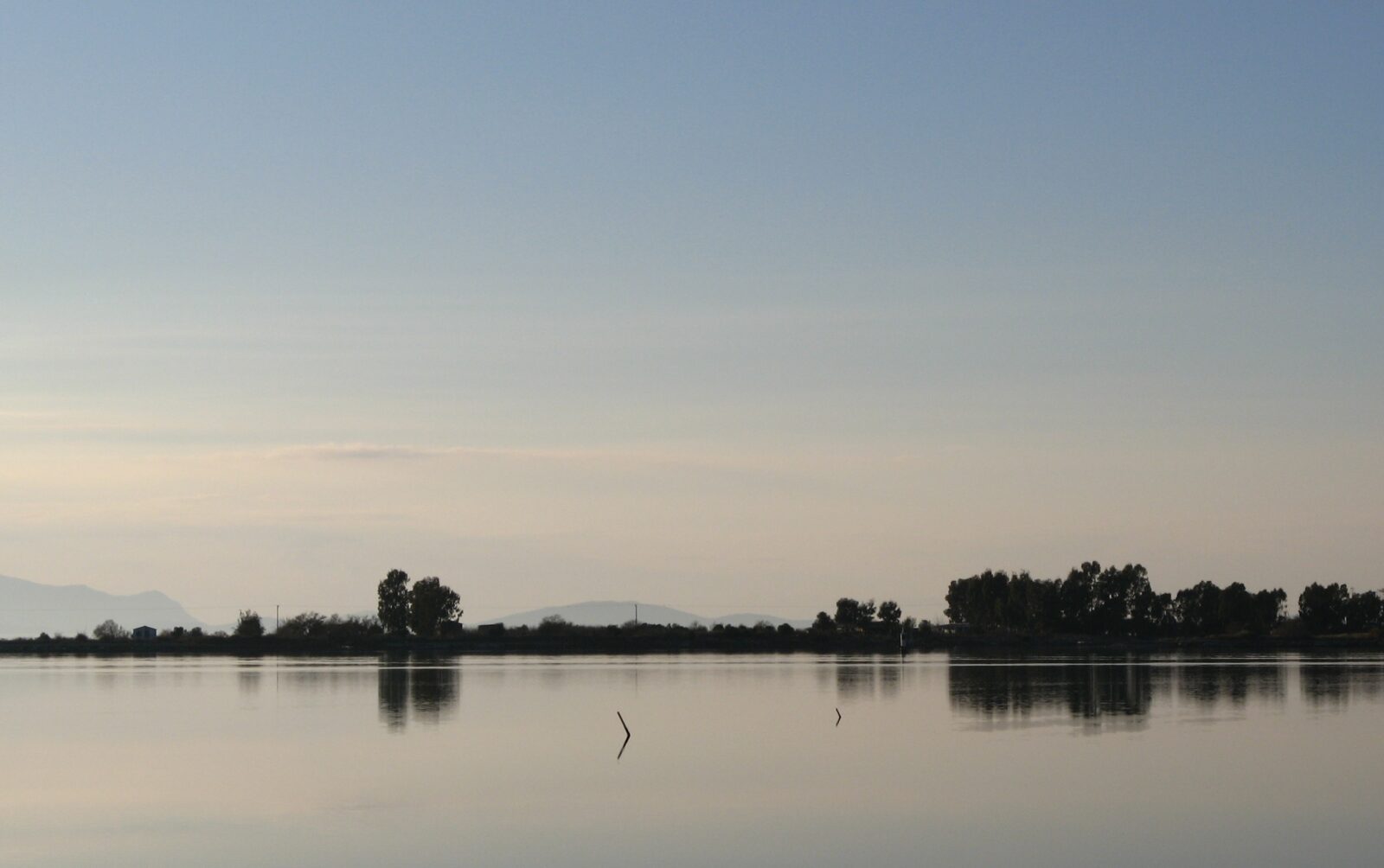 Photo: Dimosthenis Eleftheriadis · CC BY-SA 4.0
Visit
Getting there
Nearest settlement: Messolonghi
Swimming
No reliable information
Tips
The lagoon complex is best seen on the water. A non-profit called Messolonghi by Locals runs eco-tours in a traditional boat with a guide, and the fishermen along the route explain their methods. Canoes and kayaks can be hired, and the lagoon is good for kayaking all year. Spring and autumn migration bring the greatest variety of birds, and winter the great flocks of ducks and other waterfowl.
The flat streets of the town suit bicycles, and a road and cycle path of about 5 km runs across the water to the islet of Tourlida, with wooden jetties, small beaches and the Black Salt Pan at the end of the road. The Salt Museum, the only one in Greece, is best visited in the morning. Look out too for the fishermen’s cured roe, avgotaracho.
Nearby lakes
Show on map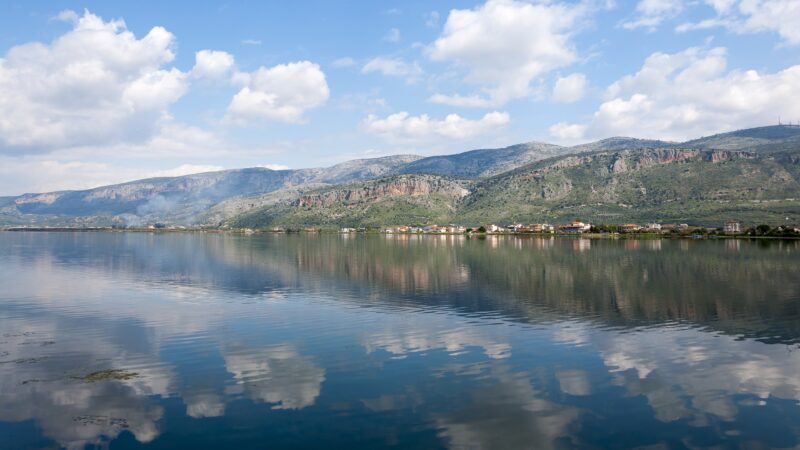


Know Messolonghi Lagoon well?
Suggest a beach, viewpoint, trail or amenity, or tell us if something has changed. We read every message.
Sources & data
- OpenStreetMap: Λιμνοθάλασσα Μεσολογγίου (relation 11963781), OpenStreetMap contributors
- Greece's 2022 Water Framework Directive reporting to the EEA: lake (LW) and transitional (TW) water bodies, field cArea, European Environment Agency (WISE WFD), reported by Greece, 2022
- English Wikipedia: Missolonghi Lagoon, Wikimedia Foundation
- Wikidata: Messolongi Lagoon (Q6822038), Wikimedia Foundation
- Traditional fishing in Messolonghi-Aitolikos lagoons, Greek Reporter
- Messolongi: one of Europe's most beautiful wetlands, Insights Greece
- Messolonghi lagoons: birds, salt and history for families (2026), Greek City Times
- 12 best things to do in Messolongi, Discover Greece
- Birding in Messolonghi, Hellenic Ornithological Society