

 Photo: Albinfo · CC BY-SA 3.0
Albania (Southeastern Albania) · Greece (Western Macedonia) · North Macedonia (Pelagonia)
Lake Prespa
Tectonic · natural
~18 kmaway
849 metreselevation
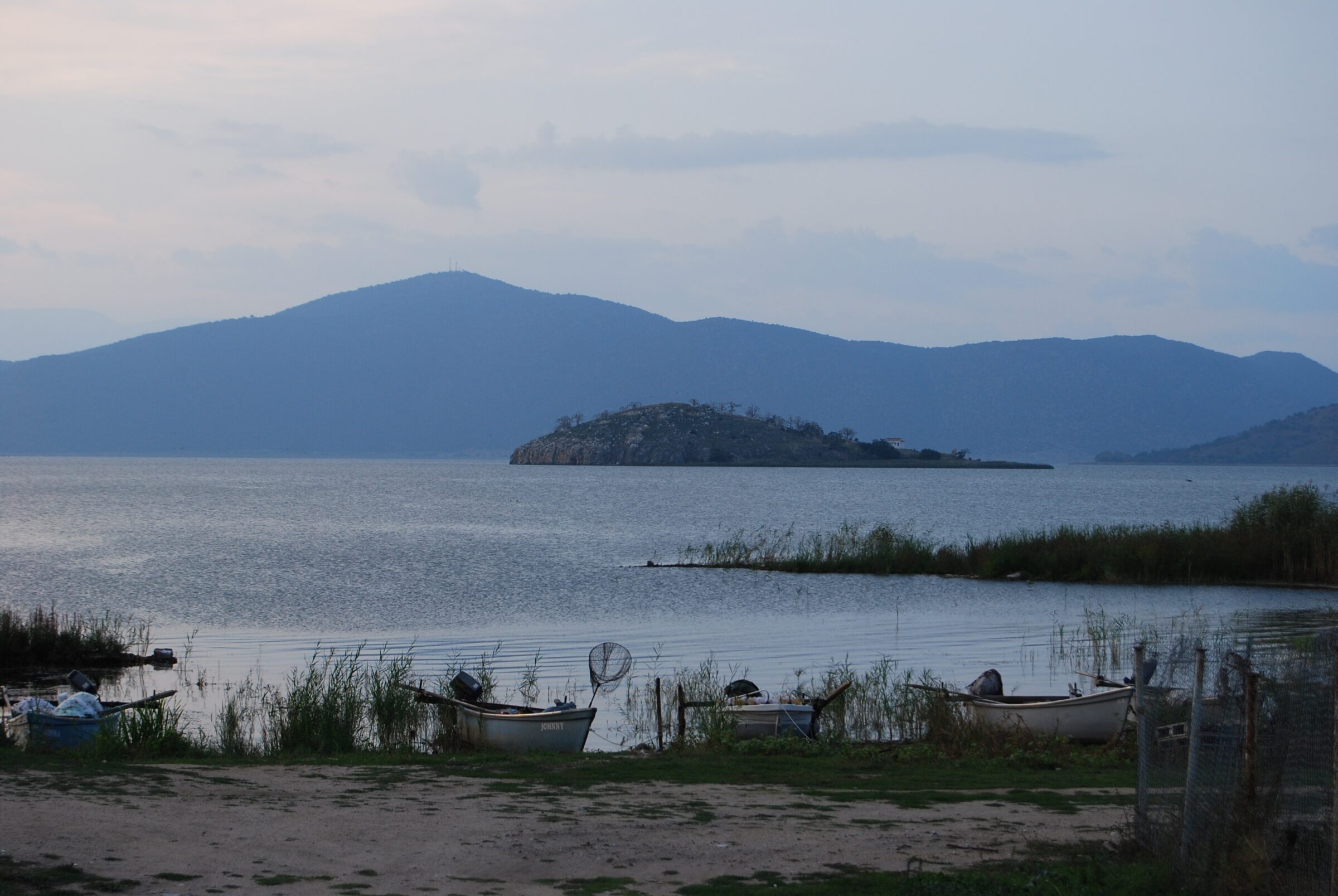
Photo: Todor Georgiev · CC BY-SA 3.0
Albania (Southeastern Albania) · Greece (Western Macedonia)
Μικρή Πρέσπα · Liqeni i Prespës së Vogël
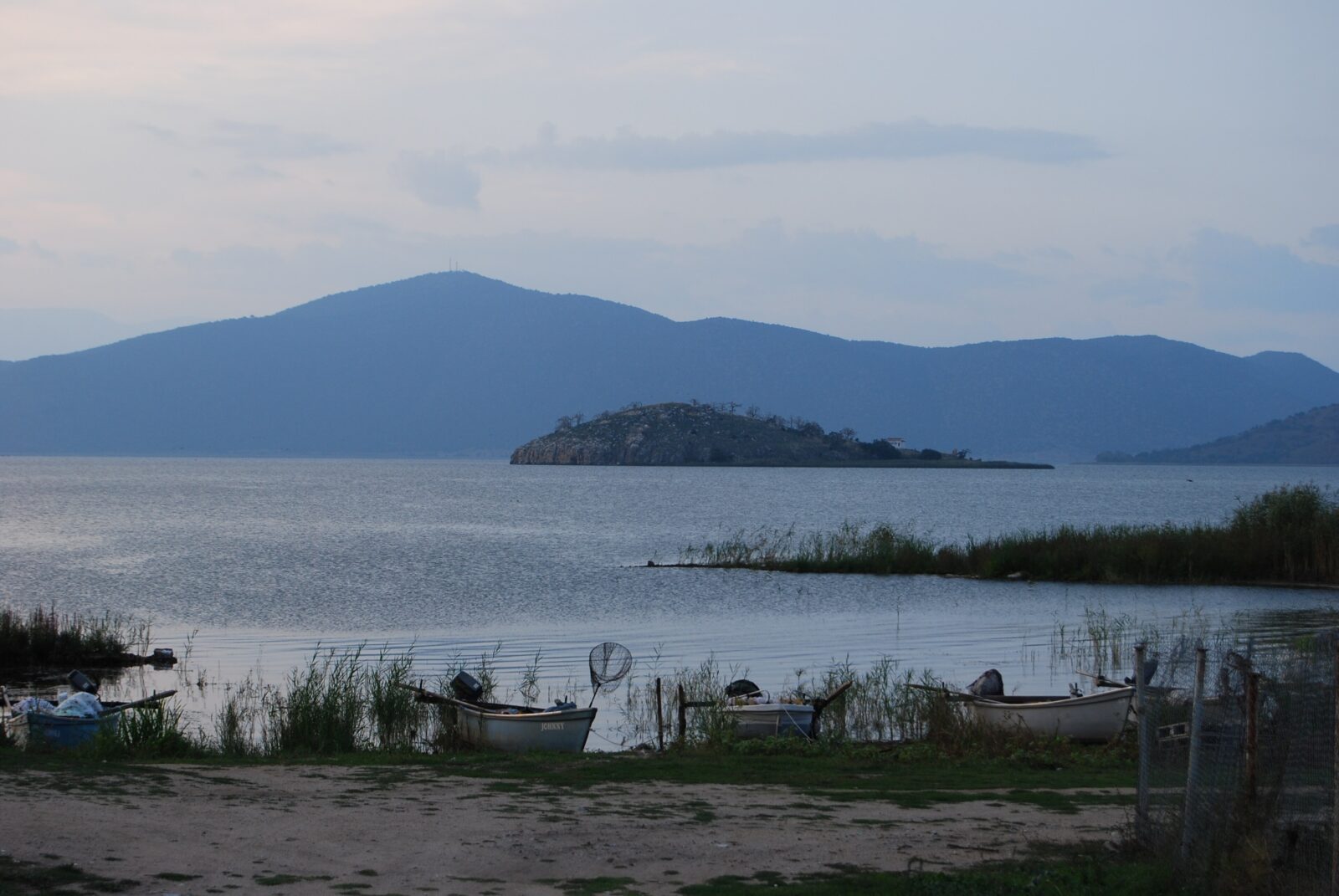
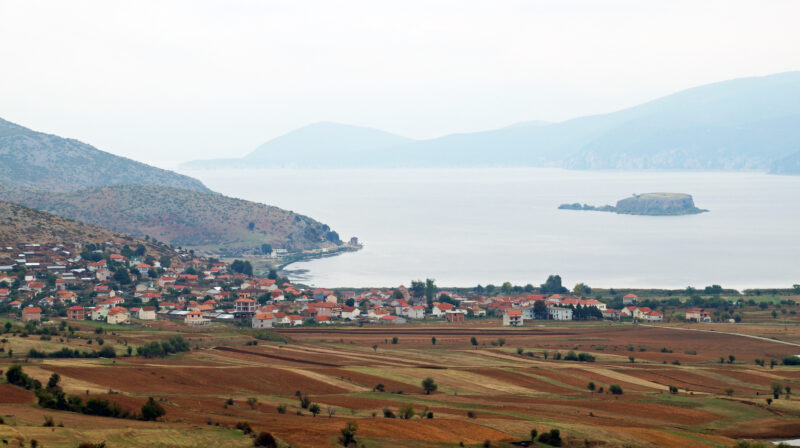
Small Prespa (Little Prespa Lake) is the smaller of the two lakes of Prespa, which meet at the point where North Macedonia, Albania and Greece come together. Most of it lies in Greece, and only its westernmost tip lies in Albania. A narrow isthmus on Greek territory, carrying a road, separates it from Great Prespa, and a short canal links the two on the western side. In the 1970s the diversion of the Devoll river in Albania contributed to a sharp decline in its surface area.
The lake is shallow, about 7.7 m at its deepest, and sits at about 853 m. From 1970, large amounts of water from the Devoll were turned into it for summer irrigation, and the river’s heavy load of sediment badly silted the Albanian side. The diversion has since stopped.
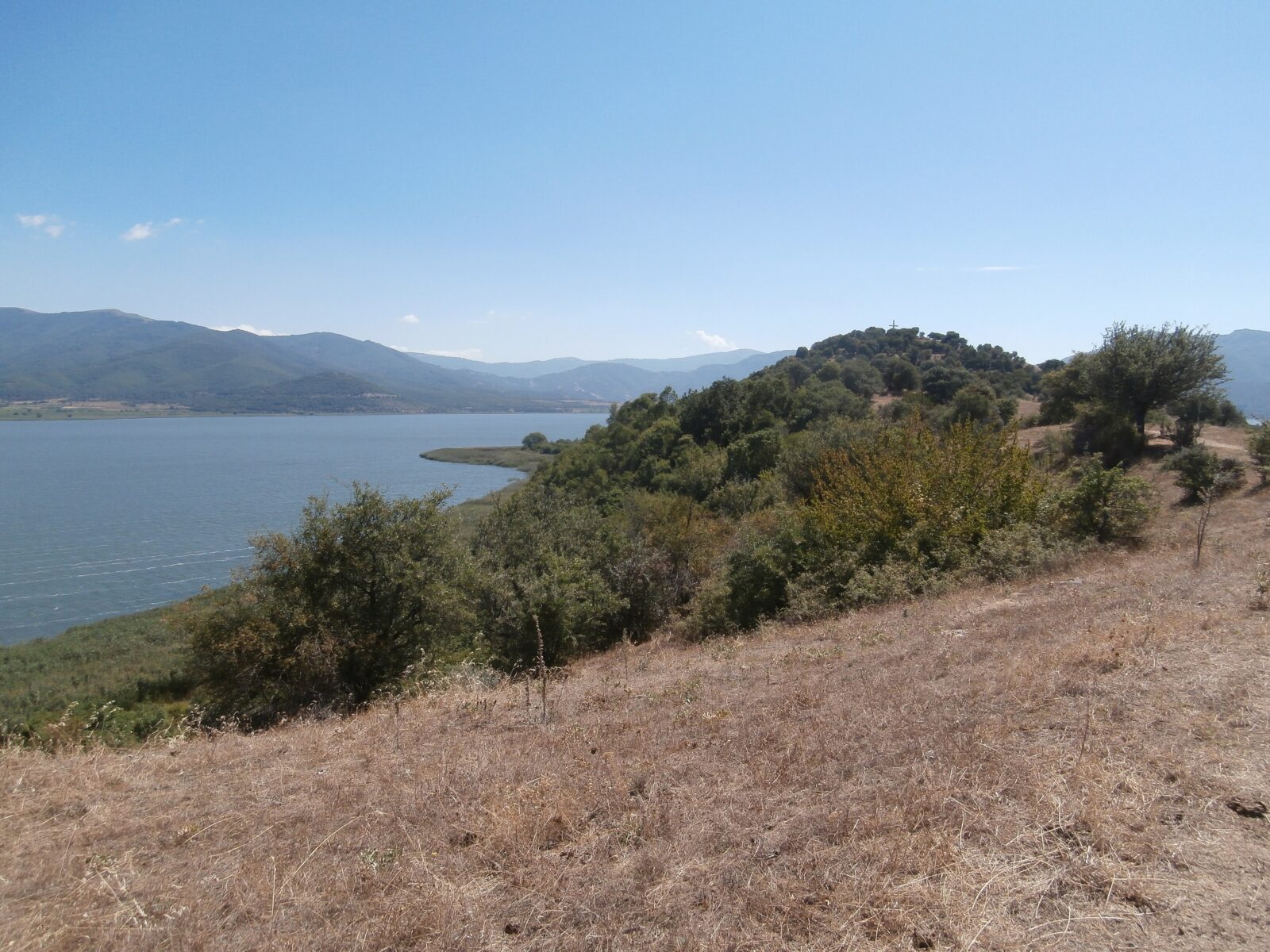
On the island of Agios Achillios, Tsar Samuel made his capital in the 10th century, moving the remains of Saint Achillius to a basilica where he was himself buried in 1014. The island’s fishing village became a tourist centre in the 1970s.
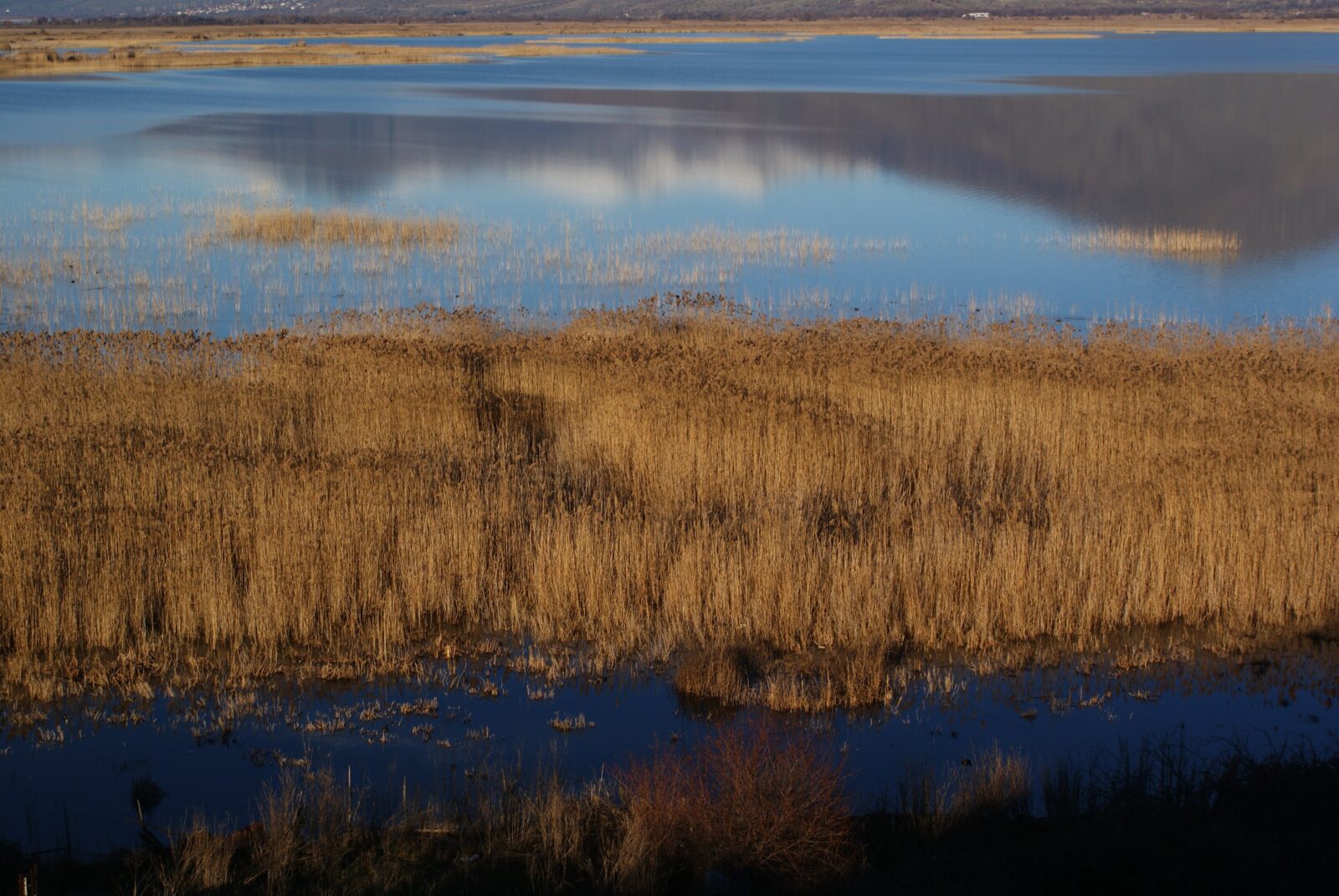
Small Prespa holds what is known as the largest breeding colony of Dalmatian pelicans in the world, and its reed beds and wetlands feed many rare waterbirds. The region as a whole has more than 1,500 plant species. The Greek part has been a Ramsar wetland since 1975 and the Albanian Prespa lakes since 2013, and the Albanian part of the lake belongs to Prespa National Park.
No reliable information
Most of Little Prespa lies in Greece. The pelican lagoons are the heart of the Greek Prespa National Park: the islet of Agios Achillios is reached by a long floating footbridge, with a 10th-century basilica, and the Ornithological Society runs an observation point. Some wetlands are closed to boats in the breeding season. June to August is pleasant, and spring brings migrating birds. See the Prespa pages for more.
On the Albanian side, the lake is reached by roads through the villages of the south-east, near the border. Paths are mostly unpaved and can get muddy, so bring waterproof shoes, insect repellent and binoculars, keep quiet around the birds, and allow two to four hours.
Photo: Albinfo · CC BY-SA 3.0Albania (Southeastern Albania) · Greece (Western Macedonia) · North Macedonia (Pelagonia)
Tectonic · natural
 Photo: Македонец · CC BY-SA 3.0
 Photo: Македонец · CC BY-SA 4.0
Suggest a beach, viewpoint, trail or amenity, or tell us if something has changed. We read every message.
Thank you. We read every suggestion.

