Viewpoint
Baba Viewpoint (Galičica)
~17.1 km
- Elevation
- 1,572 metres
- Walk from parking
- 1 min
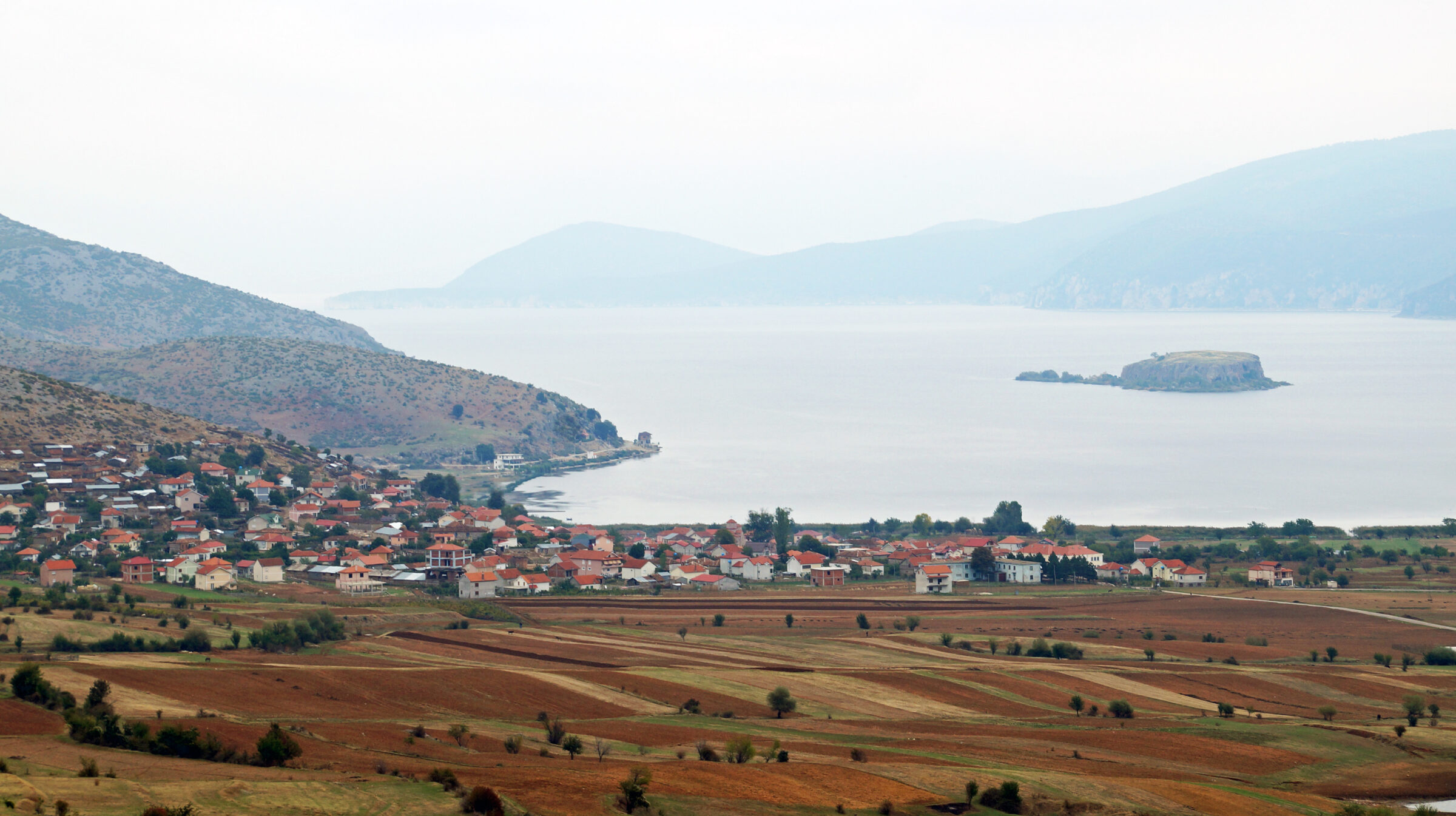
Photo: Albinfo · CC BY-SA 3.0
Albania (Southeastern Albania) · Greece (Western Macedonia) · North Macedonia (Pelagonia)
Μεγάλη Πρέσπα · Преспанско Езеро · Liqeni i Prespës
Lake Prespa is not one lake but two, Great Prespa and Little Prespa, set high in the mountains at the point where North Macedonia, Albania and Greece meet. They are the highest tectonic lakes in the Balkans. The area holds a national park in each of the three countries, and it is a place of reedbeds, islands with old monasteries and some of the richest birdlife in the region.
Great Prespa is divided among the three countries, and most of Little Prespa lies in Greece. A narrow isthmus on the Greek side, carrying a road, separates the two lakes, and a short canal links them. Both sit in limestone country well above Lake Ohrid, which lies close to the west; the water of Great Prespa drains underground through the karst and re-emerges in springs on the shore of Ohrid.
In antiquity the region belonged to ancient Lynkestis, and the lakes were known as Little and Great Brygeis. In the Middle Ages Tsar Samuel built a fortress and a church of St Achillius on an island in Little Prespa. Mal Grad in Albania, with the ruins of a monastery, is uninhabited today.
The Greek part was for many years a remote border area, and the region was declared a transboundary park in 2000. In 2018 the Prespa Agreement, which settled the Macedonia naming dispute, was signed in the Greek village of Psarades on the lake shore. In Albania, the diversion of the Devoll river in the 1970s drained much of Little Prespa.
Golem Grad ("Big Town" in Macedonian, also called Snake Island) is a rocky island of about 20 hectares in Great Prespa. It has the ruins of a 14th-century church of Sts Peter and Paul and of other old buildings. A small monastic community lived there until the middle of the 20th century, and since then the island has been empty. It opened to visitors in August 2008, and you reach it by boat, from the village of Konjsko about 2 km away. Its oddest residents are around 1,000 Hermann's tortoises, introduced by people, with roughly 19 males for every female.
On Little Prespa, the islet of Agios Achillios is linked to the shore by a long floating footbridge. On it stand the ruins of a three-aisled basilica from the 10th century. Crossing early in the morning gives the best light and fewer people.
The lake is home to a small number of native fish species, most of them found only in Prespa. The Macedonian, Albanian and Greek parts of the lake are each recognised as an Important Bird Area, because the reedbeds and open water support ferruginous ducks, tufted ducks, Dalmatian pelicans and pygmy cormorants.
Little Prespa is a famous breeding site for Dalmatian pelicans, said to be the largest colony in the world. Great white pelicans, cormorants and herons are also here, and there is a cormorant colony on the island of Vidronisi. Some wetlands are closed to boats in the breeding season, so follow the signs. Spring brings thousands of migrating birds, and the Ornithological Society runs an observation point on the Greek side. The Greek Prespa National Park has been protected since 1974 and has more than 1,500 plant species and very old junipers.
No reliable information
Allowed
Allowed
The largest town in the region is Resen in North Macedonia, and the lake is reached from there, from the Albanian side and from the Greek village of Psarades. Galičica National Park, Prespa National Park in Albania and Prespa National Park in Greece protect the shores, so expect rules about where you may walk, fish and camp. As with all border lakes, check the rules for crossing between the countries before planning a trip across.
June to August are the most pleasant months. In spring the migrating birds return, so that is the time for birdwatchers.
Psarades and Agios Germanos are traditional lakeside villages. Near Psarades you will find rock carvings and ancient hermitages along the shore, and boat trips on traditional wooden boats called plaves cross Great Prespa and end in one of the two villages. Residents fish and farm, and local tourism leans towards the sustainable.
Try the carp, Florina peppers, the Prespa gigantes (big white beans, famous across Greece) and tsipouro, a pomace brandy.
Golem Grad belongs to Galičica National Park and is reached by boat from Konjsko. Check at Resen for the current rules on landing.
Map unavailable. The list keeps working.
Pinch to zoom. Pan with two fingers.
Ctrl+scroll to zoom (Cmd+scroll on Mac)
Viewpoint
Missing a beach, viewpoint or trail?
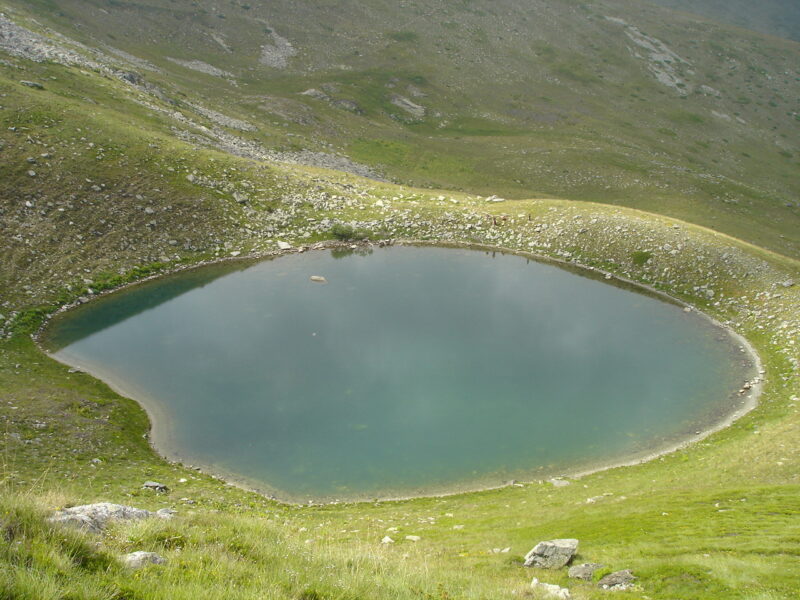 Photo: Македонец · CC BY-SA 4.0
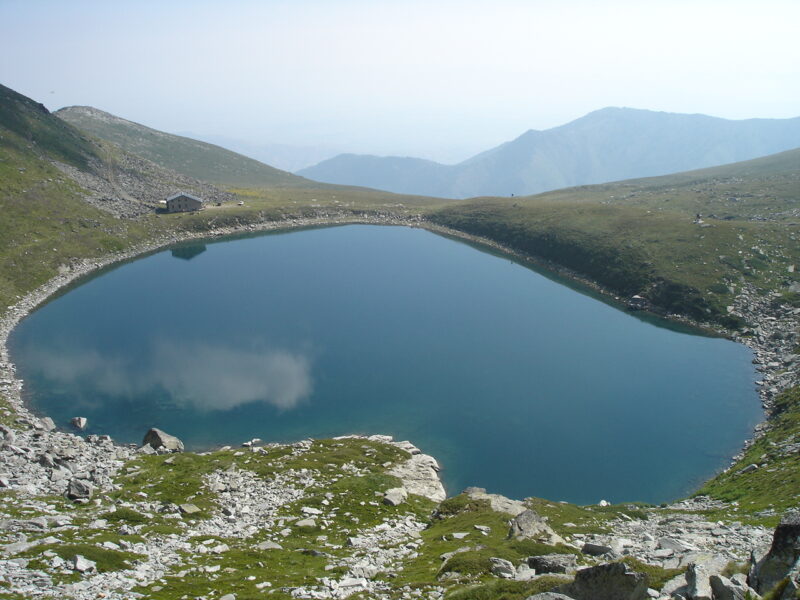 Photo: Македонец · CC BY-SA 3.0
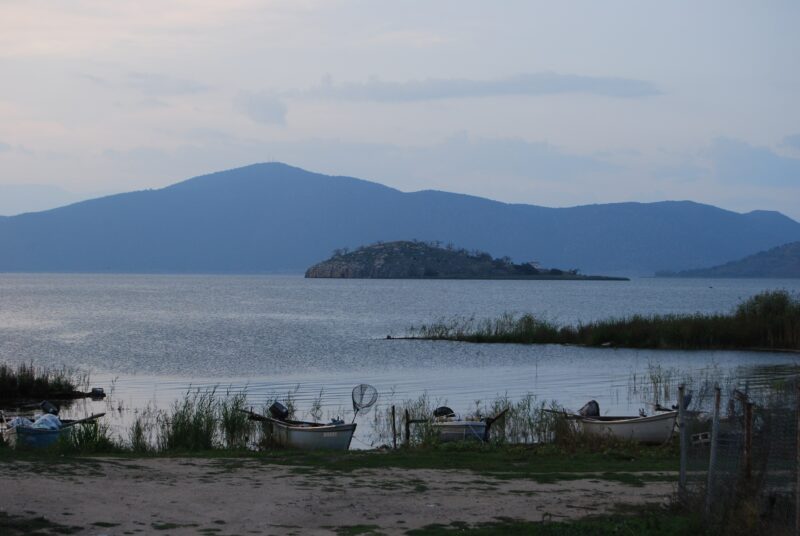 Photo: Todor Georgiev · CC BY-SA 3.0
Albania (Southeastern Albania) · Greece (Western Macedonia)
Tectonic · natural
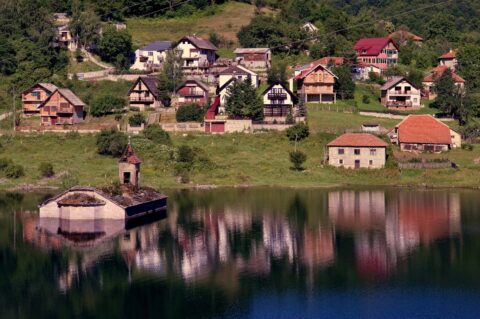
Floating islands, a tortoise island, a church standing in the water, a lake that turns into a football pitch and remote Prokletije lakes: seven off-the-beaten-path lake stops in the Balkans.
Suggest a beach, viewpoint, trail or amenity, or tell us if something has changed. We read every message.
Thank you. We read every suggestion.


