

Beach
Kaneo Beach
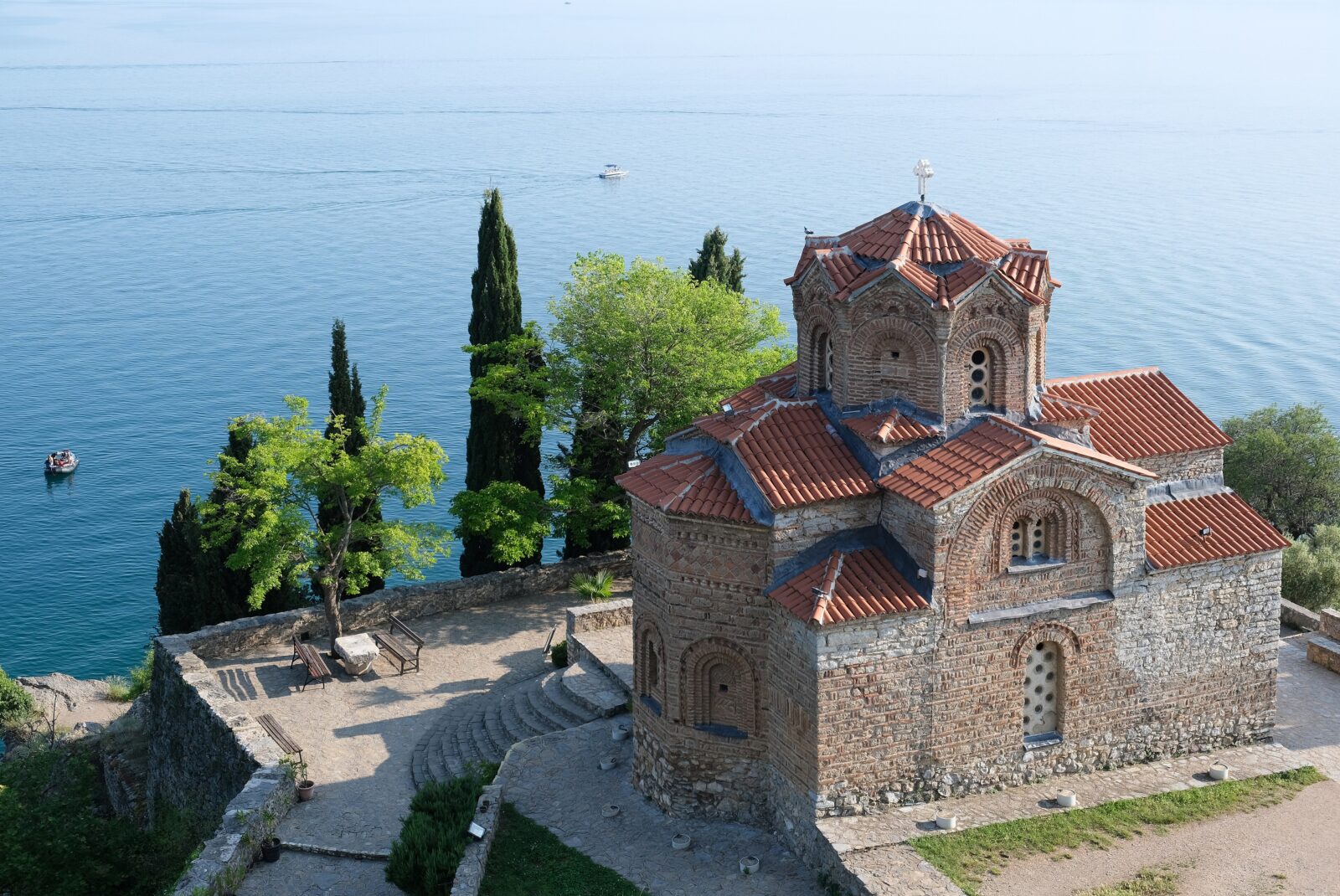
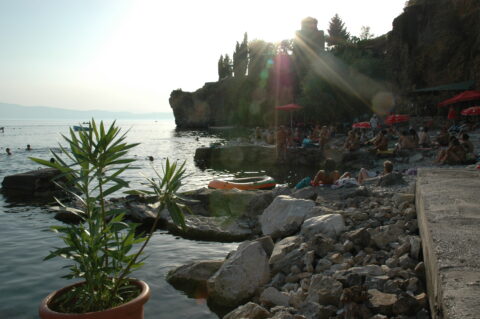
A small pebble beach in Kaneo, the old fishing quarter of Ohrid, below the cliff with the Church of St John at Kaneo. In summer it is one of the favourite places in town for a swim, with clear water…
On shore
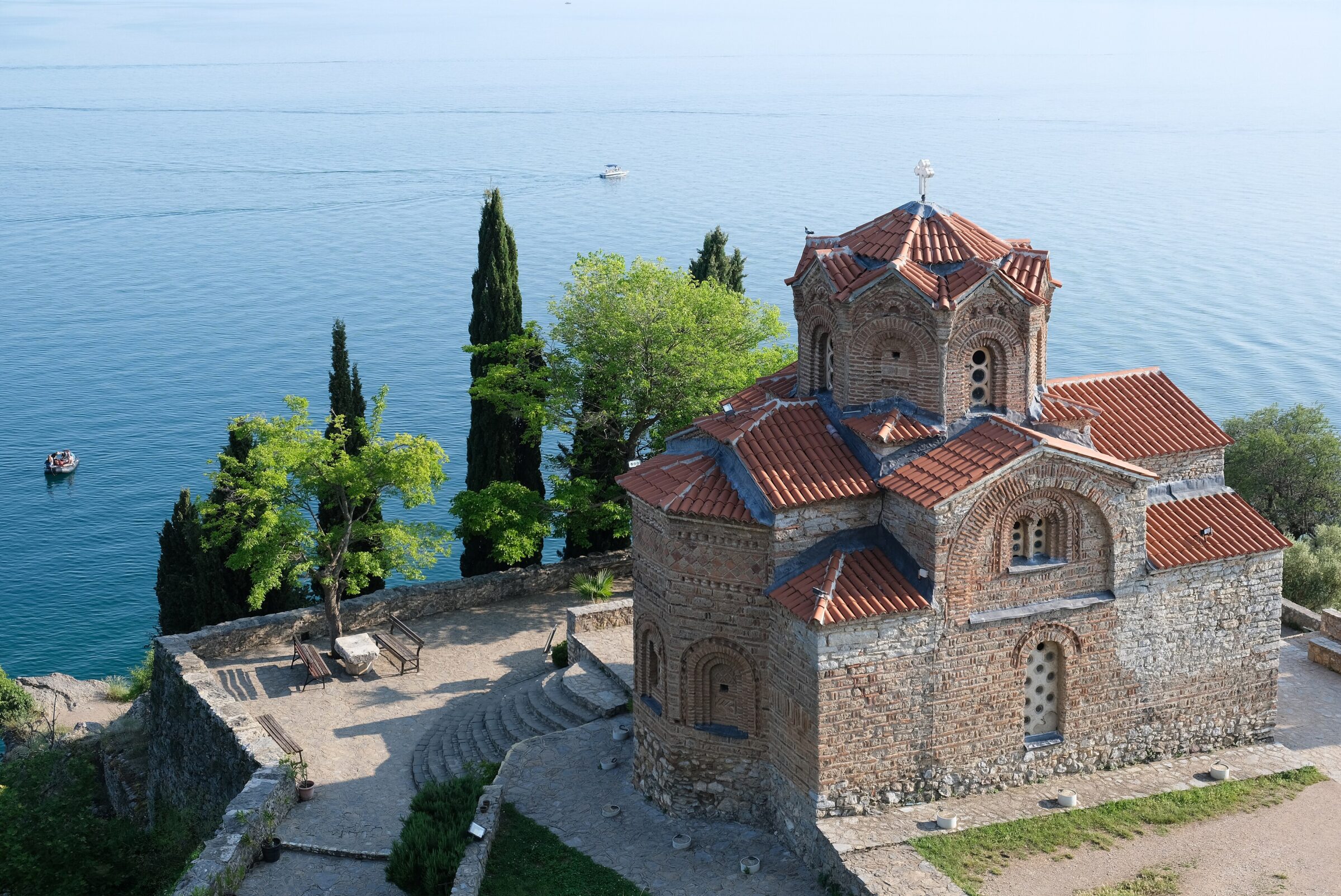
Photo: kallerna · CC BY-SA 4.0
Albania (Southeastern Albania) · North Macedonia (Southwestern Region)
Охридско Езеро · Liqeni i Ohrit
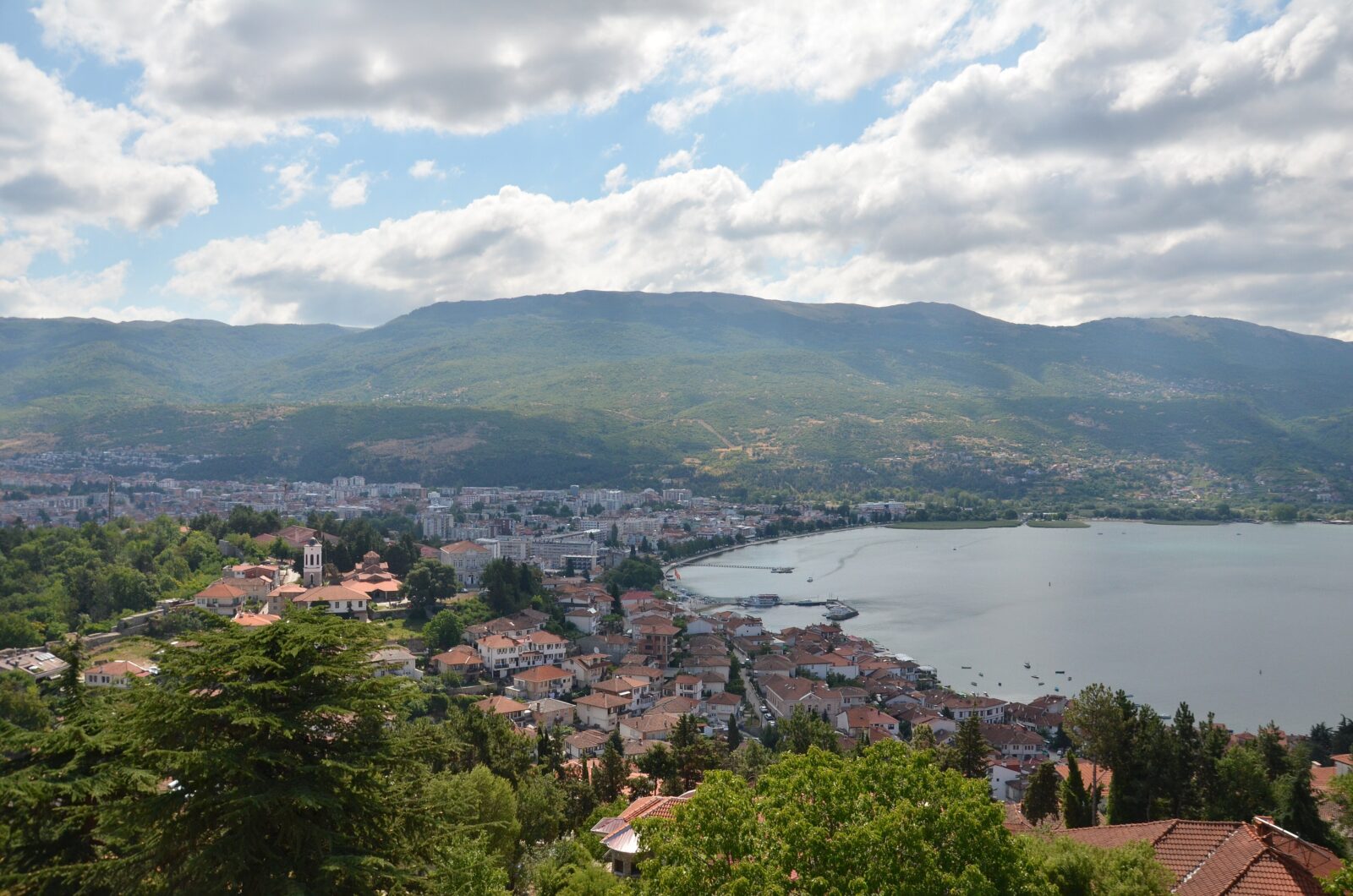
Lake Ohrid lies in a mountain basin on the border between North Macedonia and Albania, with the towns of Ohrid and Struga on the Macedonian shore and Pogradec on the Albanian one. It is among the oldest lakes in the world and the deepest in the Balkans, and its isolated, very clear water shelters a large number of species found nowhere else. The shores on both sides are protected, and the lake and the old town of Ohrid are on the UNESCO World Heritage list.
Ohrid is a tectonic lake. It sits in a basin that sank along faults and is one of a chain of such basins running through the Prespa and Korçë basins towards Lake Ioannina in Greece. The oldest lake sediments date from the Pliocene, so the lake is millions of years old, and it has survived because of its great depth and because the basin is still slowly subsiding.
Much of its water arrives underground. Springs along the eastern shore supply about half of the inflow, and a good part of that comes from Lake Prespa, which lies higher up the mountainside and drains towards Ohrid through the karst. The only surface outlet is the Black Drin, which flows north into Albania. The region is seismically active, and moderate earthquakes are frequent.
The Macedonian side of the lake was declared a UNESCO World Heritage Site in 1979, and in 1980 the listing was extended to take in the cultural and historic area of Ohrid. The Albanian side followed in 2019. In 2014 the Ohrid-Prespa Transboundary Biosphere Reserve was added to UNESCO's network, and the Macedonian part of the lake became a Ramsar site in 2021.
When St Clement arrived in 893, Ohrid became a centre of Slavic learning. Walk up to Plaošnik, halfway up the town's big hill between the church of St John at Kaneo and Samuel's Fortress, to see the church of St Clement and St Panteleimon. It was restored in 2002, and sections of glass floor let you look down at the original foundations.
The monastery of St Naum, at the southern end of the lake, is said to have been founded by the saint himself in 905. He was a disciple of Cyril and Methodius, and he was buried there in 910. The current church dates from the 16th and 17th centuries, built on older foundations. Local legend says that if you press your ear to his tomb you can hear his heartbeat, and the monastery's peacocks are said to guard his rest. Muslim pilgrims came here too: the Bektashi believed their holy man Sari Saltik to be buried at the monastery.
About 14 km from the town of Ohrid, near Gradište, the Bay of Bones is a reconstructed prehistoric pile-dwelling settlement built over the water. Thousands of the original wooden piles have been recorded on the lake bed here. On the Albanian side, archaeologists reported in 2023 an 8,500-year-old submerged stilt village near Lin.
Ohrid pearls are not grown by oysters. A coating made from the scales of the plašica, a small silvery fish of the lake, is applied by hand in layers over a core. The craft is usually dated to 1924 and credited to a Russian émigré, Jovan Subanović, and two families, the Filevs and the Talevs, still guard the secret formula (and still disagree about which of them learned it first). Buying a string in the old town is the classic Ohrid souvenir.
The water is oligotrophic: low in nutrients, and exceptionally clear. Over many millennia the isolation of the lake has produced a large number of endemic species, which is the main reason for its worldwide scientific importance.
The wetlands around the lake have suffered. Struga Marsh was largely drained for farming in the 1940s and again in the 1960s, when the Sateska river was rerouted. Studenchishte Marsh, near the town of Ohrid, is the last significant stretch of coastal wetland, and it is under pressure from waste dumping, building and the loss of reed belts.
The lake’s most famous fish is the Ohrid trout, known as koran in Albania and ohridska pastrmka in North Macedonia. It lives nowhere else, and fishermen call it the “King of Lake Ohrid”. It is endangered. Overfishing, pollution and shoreline development have all hurt it, and one of its forms, Salmo letnica, spawns in January and February. A hatchery at Lin, on the Albanian shore, raises young trout and releases them into the lake at about six months old. The two countries have signed agreements to protect the species.
The lake is an Important Bird Area. Winter is the time for big numbers of waterfowl, and on the Albanian side the Eurasian coot is by far the most numerous species. In the reedbeds look for marsh harrier, little crake, Baillon’s crake and moustached warbler. All three marsh terns and many waders pass through on migration. Spring is the best season, with breeding birds and migrants together. Expect to explore on foot: there are no hides. Local birders can point you to the current hot spots.
Allowed
Restricted
Allowed
The lake is shared by two countries, with a town on each side: Ohrid and Struga in North Macedonia and Pogradec in Albania, plus villages and resorts along both shores. Part of the Macedonian shore belongs to Galičica National Park, and the Albanian coast is a managed nature reserve, so expect protected-area rules in places. On the Macedonian shore you can swim freely along most of the lake, and there are campsites on both sides.
Late spring to early autumn, May to September, is the usual advice. Summer is the busiest time, and in the cold months the lake is quiet and not made for swimming or boat trips.
On the Macedonian shore swimming is free along most of the lake, outside the marked boat zones, with no permit or ticket; organised beaches charge only for sunbeds and umbrellas. The Hydrobiological Institute in Ohrid tests the water regularly, it holds the top quality class, and in the shallows you can usually see the bottom.
Visitors’ favourites are Kaneo, Gradište and Potpesh, and the sandy shore around Sveti Naum has some of the best swimming. The town beaches near Kaneo have a shallow entry that suits families. Between Lagadin and Trpejca the beaches are pebbly and deepen quickly, and the undeveloped bays near Peštani are quieter and a few degrees cooler because of the springs. The bottom drops away suddenly near the shore in places, so be careful with children. Lifeguards work only on the main town beaches, from early June to mid-September, so tell someone where you are before swimming in a remote cove. On the Albanian side the shoreline is craggy, and it is far less crowded than the Albanian coast.
The water is warmest in July and August, at about 23–26 °C, with about 20–22 °C in June and 19–21 °C in September. In high summer the town beaches fill quickly, so arrive between 8 and 10 in the morning. A swim is easy to combine with sightseeing: the church of St John at Kaneo stands above a popular swimming spot, and Plaošnik, the Ancient Theatre and Samuel’s Fortress are all within about 15 minutes’ walk of the water.
South of Ohrid, on the road to Sveti Naum, Autokamp Gradište is about 16 km from the town, with a long beach that gets lively with students in July and August. Camping Ljubanista, at the foot of Galičica, has a sandy beach of about 650 m, shady trees, a restaurant and a beach bar. Elešec is another car camp in the Ohrid area. Near Struga, at Kališta, there are small lakeside sites such as Camping Rino and Sunrise. In Albania, look at Camping Erlin Beach at Buqeze or Camping Fabio at Drilon, close to Pogradec.
Water taxis run from Ohrid port to Kaneo, and larger boats make the half-day trip along the cliffs to Sveti Naum, about 45 to 90 minutes each way depending on the boat. By road it is about 29 km from Ohrid. Once there, you can join a rowing-boat ride (about 5 euros per person) up the green Black Drim river to the springs, where the water is below 11 °C. Underground water from Lake Prespa reaches the surface here after passing through the Galičica mountains. The monastery is still active, so dress and behave respectfully, and the peacocks in the courtyard can be bold. The car park charges cash only. No public ferry crosses to Albania, and private boat trips over the border need a passport.
The Ohrid trout is endangered, and rules differ between the two countries, so ask locally before you cast a line. In North Macedonia you need the general recreational licence plus a separate permit for Lake Ohrid.
Try the trout, the lake’s signature dish, in Ohrid and Struga. Across the border in Albania the local favourite is tavë korani, baked fish with walnuts and vegetables. Menus may offer farmed fish, so ask where yours came from. Tushemisht and Drilon, near the springs of Drilon National Park, are known for traditional restaurants.
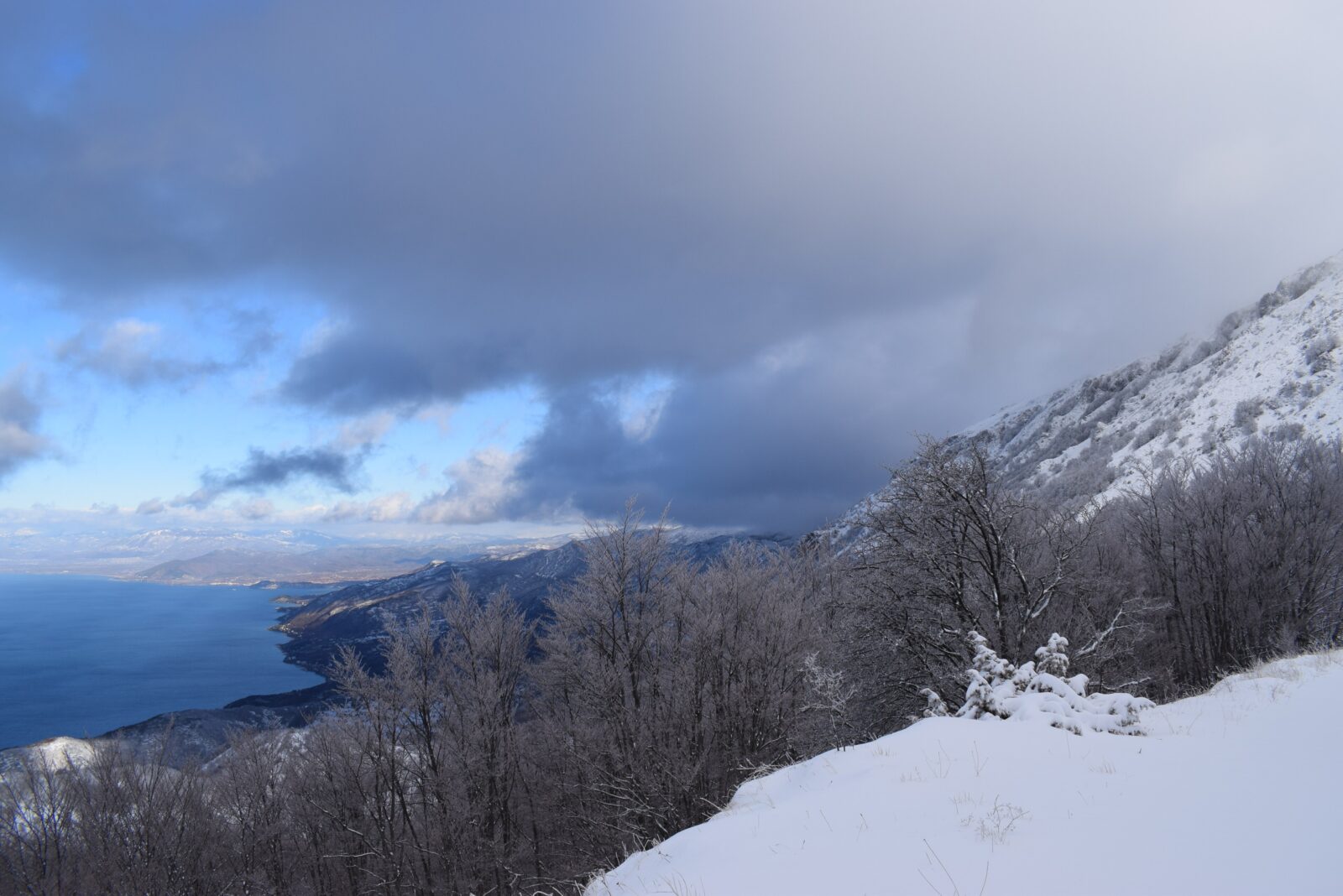
Galičica National Park, about 15 km from Ohrid, has trails with views of both Ohrid and Prespa, and the Vevčani springs are about 30 km away.
Pogradec is the best base, with a narrow pebble beach along its promenade. Nearby, at Lin, you can see a paleo-Christian church mosaic with lake plants and animals, and a former bunker converted into an Orthodox chapel with views over the lake. The small beaches around the Lin peninsula are popular with locals, but you need your own transport to reach them. At Selca, five rock-cut tombs from the 4th to 1st centuries BC are linked to Illyrian kings. A few days is enough to see the highlights, and the area suits families.
Map unavailable. The list keeps working.
Pinch to zoom. Pan with two fingers.
Ctrl+scroll to zoom (Cmd+scroll on Mac)
Beach
A small pebble beach in Kaneo, the old fishing quarter of Ohrid, below the cliff with the Church of St John at Kaneo. In summer it is one of the favourite places in town for a swim, with clear water…
Viewpoint
Missing a beach, viewpoint or trail?
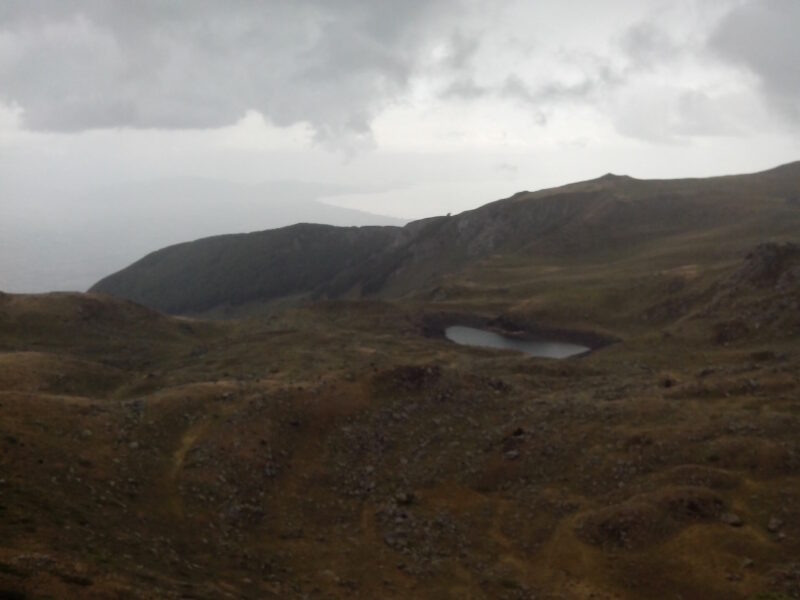 Photo: Krisaemilia · CC BY-SA 3.0
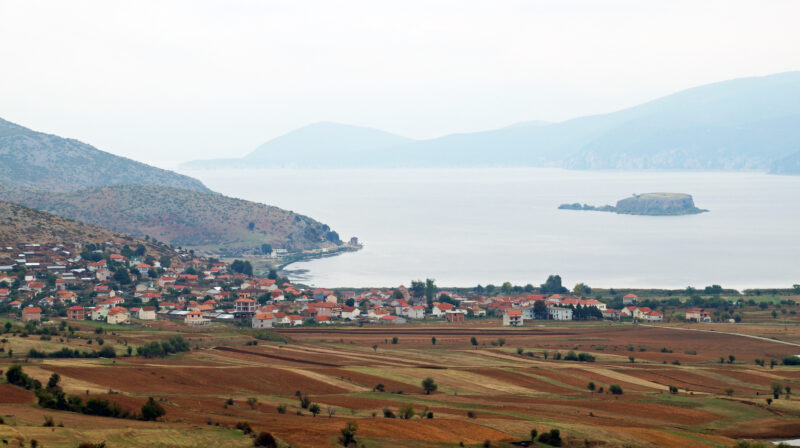 Photo: Albinfo · CC BY-SA 3.0
Albania (Southeastern Albania) · Greece (Western Macedonia) · North Macedonia (Pelagonia)
Tectonic · natural
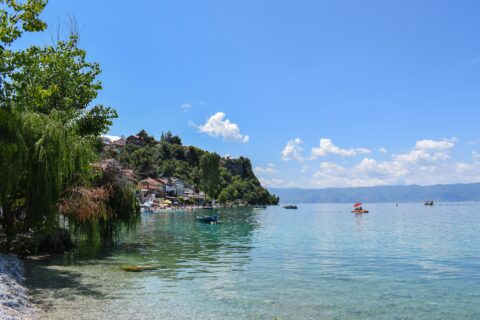
Looking for a beach holiday without the Adriatic crowds? Six Balkan lakes with warm water, real beaches and room to breathe, with water temperatures, facilities and how to get there.
Suggest a beach, viewpoint, trail or amenity, or tell us if something has changed. We read every message.
Thank you. We read every suggestion.
