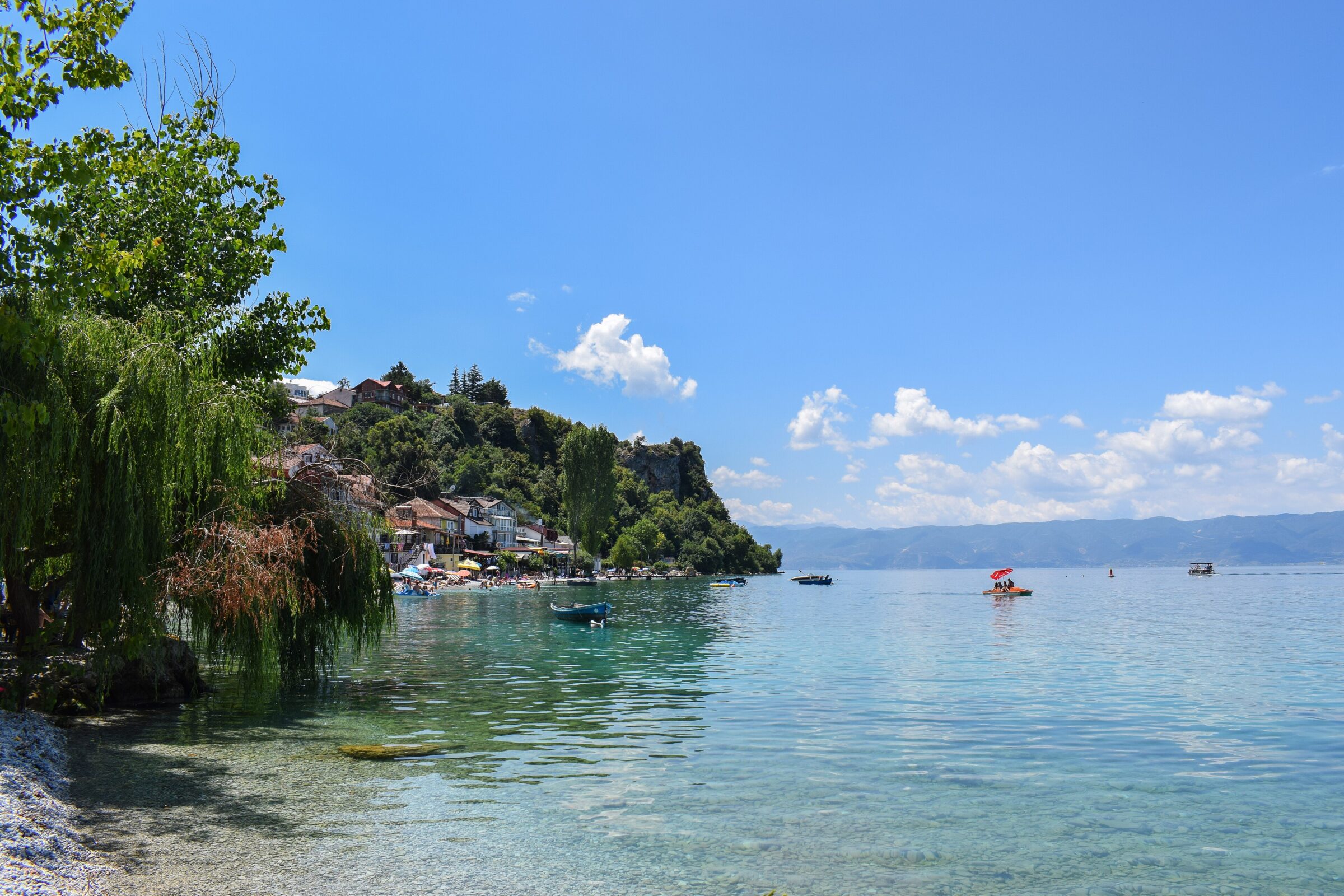
Every summer the same traffic jam forms on the way to the Adriatic, and every summer someone in the back seat asks whether there is another way to do a beach holiday. There is. Across the Balkans there are lakes with warm, clear water, proper beaches, lifeguards in season and a lot more breathing room than the coast. Here are six that are worth planning a trip around.
A lake will not give you salt, waves or a horizon. What it gives you is calmer water, kinder temperatures than you might expect, mountains for scenery, villages that are not yet sold out, and prices that make the coast look ambitious. Some of the lakes below are as warm as the sea by August. One is cold enough to wake you up properly. All of them are worth the detour.
Lake Ohrid: the one that wins people over
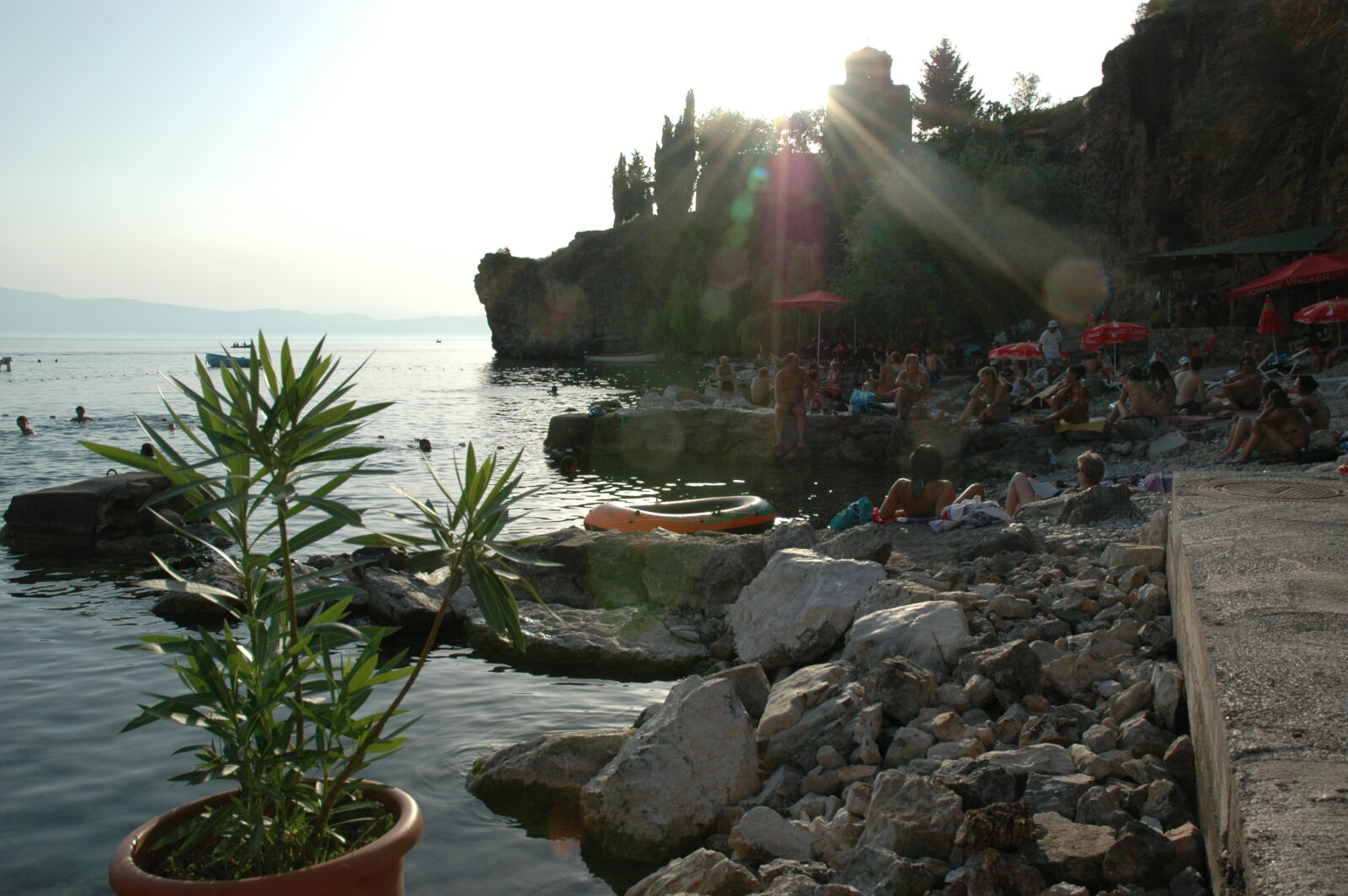
Ohrid is the lake that makes sceptics change their minds. It is one of the oldest lakes in Europe, the water is so clear that you can usually see the bottom in the shallows, and the surface warms up to around 23 to 26 °C in July and August. In June it is a cooler 20 to 22 °C, and September is around 19 to 21 °C, which is still fine if the sun is out.
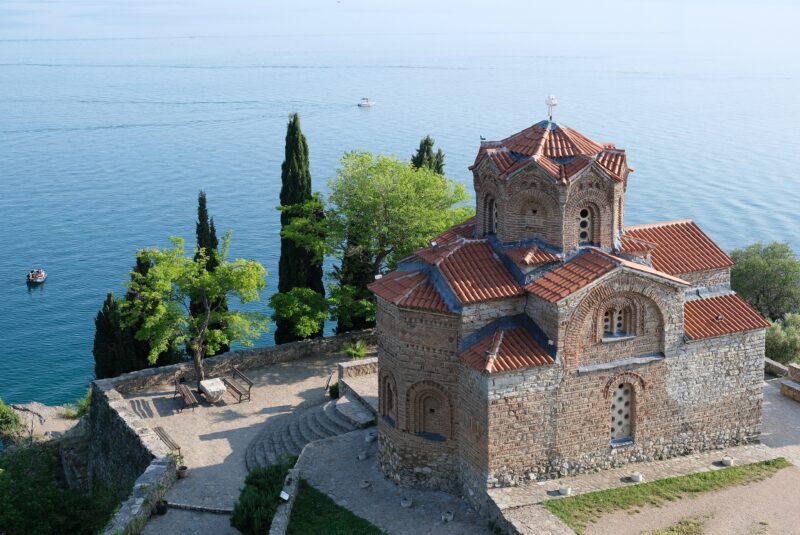
On the Macedonian side you may swim almost anywhere along the shore outside the marked boat zones, with no ticket and no permit. Organised beaches charge only for sunbeds and umbrellas, typically a few euros. Locals head for Kaneo, below the old church on the cliff, for Gradište, which is pebbly and lively in summer, and for Potpesh. The sandy shore around Sveti Naum has some of the best swimming of all. The quieter bays near Peštani are a few degrees cooler because underwater springs feed the lake there. Trpejca is the one to look up if you want small, clear coves and a village that has not yet turned into a resort.
You will not need to swim all day. The Bay of Bones, a reconstructed prehistoric pile-dwelling settlement built out over the water near Gradište, is about 14 km from Ohrid town and makes a good wet-hair stop on the way south. And above the lake, Galičica National Park has trails with views of both Ohrid and Prespa, which is a fine thing to do on the one cloudy day of your week.
- Swimming season
- Late May to mid-September; the water is warmest in July and August.
- Facilities
- Lifeguards on the main town beaches from early June to mid-September. Elsewhere you swim on your own, so tell someone where you are before using a remote cove.
- Getting there
- The town of Ohrid has its own airport with seasonal flights, and it is about three hours by road from Skopje. Struga is on the northern shore; Pogradec is the Albanian town.
- Mind this
- The bottom drops away suddenly in places, particularly between Lagadin and Trpejca. Keep an eye on small children.
Do not skip the Albanian shore if you can cross the border easily. It is wilder and a lot less crowded than the Albanian coast. Pogradec has a narrow pebble beach along its promenade, and the Lin peninsula, a few kilometres to the south, has small beaches that mostly belong to locals. You need a car to reach them.
On the way back from the beach: take the boat to the monastery of Sveti Naum, which lies at the southern end of the lake, and then row up the Black Drim to the springs where the water stays below 11 °C. It is the coldest thing you will touch all week.
Lake Skadar: the warm, slow one
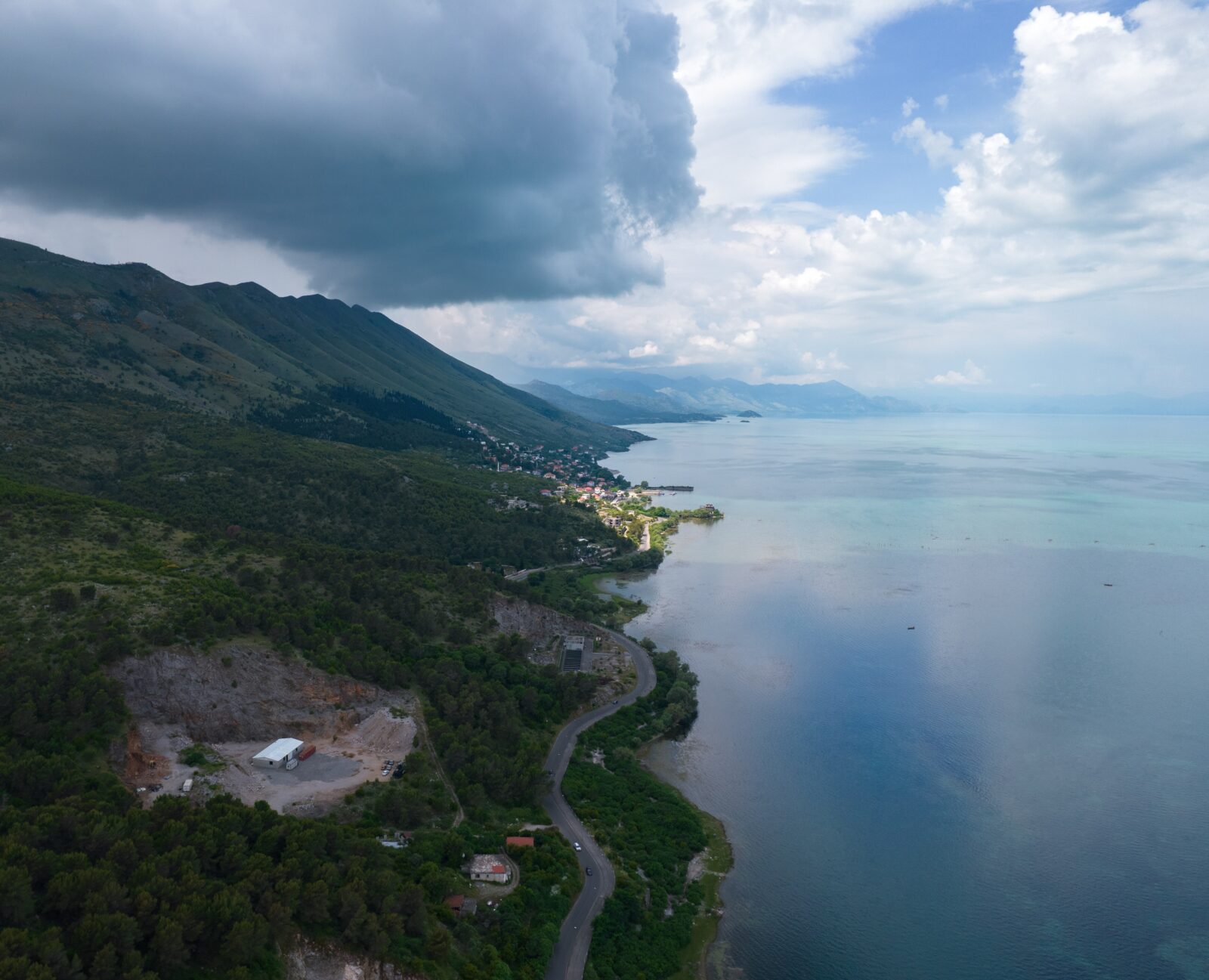
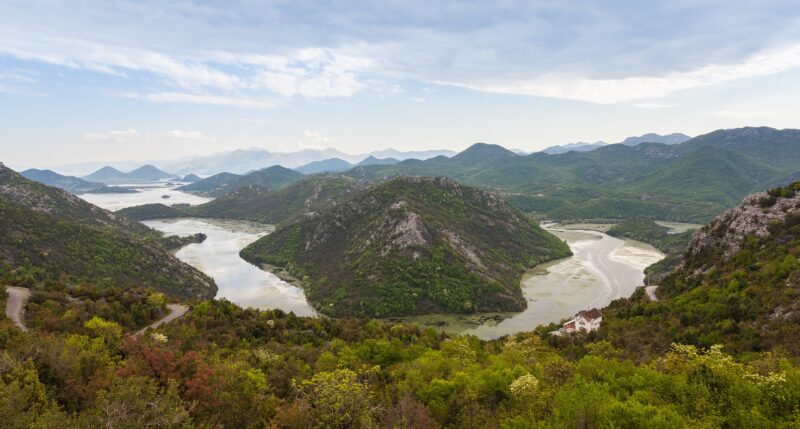
If Ohrid is the polished choice, Skadar is the one that lets you take your shoes off. It is the biggest lake in the Balkans, and it is shallow enough that in summer it heats up like a bathtub. Pelicans nest on its islands, water lilies cover its channels, and the mountain wall of Montenegro stands behind it. Some people go for one boat trip and end up staying a week.
The best-known swimming spot on the Montenegrin side is Murići, on the southern shore. It is a quiet beach of pebbles and sand with calm, clear water, which makes it good for children, and there is a restaurant nearby, parking at the beach and a few sun loungers for hire in summer. The road down is narrow and rough, with blind bends, so go in the morning and drive slowly. A boat trip to the small islands off the beach can be arranged on the spot.
On the Albanian side, the villages of Shiroka and Zogaj are where Shkodër goes to swim at weekends. The beaches here are pebbly and simple, and the boardwalks and wooden fishing boats are half the charm. Bring insect repellent for the evenings, and do not worry if you see a water snake. They are harmless, but they are there.
Plan one proper boat trip and let the swimming fit around it. A two-hour group trip from Virpazar typically costs 15 to 25 euros per person, and booking ahead online saves you the touts in the harbour. Kayaks are quieter and reach the narrow channels, and longer cruises usually stop at Kom monastery, where the monks sometimes sell homemade honey at the jetty. Pick a guide who keeps a distance from the nesting birds.
- Swimming season
- June to September. April to June is the time for birds and lilies, and July and August are for swimming, although the heat can go past 35 °C on land.
- Facilities
- Basic. Loungers at Murići in summer, restaurants and guesthouses in the villages, and plenty of boat operators.
- Getting there
- Virpazar is about half an hour from Podgorica by road, and the Belgrade to Bar train stops there. Murići is a drive away from Virpazar.
- Mind this
- The water level changes a great deal between seasons, so the shore may not look like the photographs. The national park charges a small entry fee, separate from any boat trip.
Close by: Pavlova Strana, a viewpoint above the horseshoe bend of the Crnojević river, is at its best between 7 and 9 in the morning. The wine villages of Crmnica, above Virpazar, make a very good lunch, and Bar and the Adriatic are about half an hour away if someone in your group insists on salt water.
Srebrno jezero: Serbia's answer to the sea
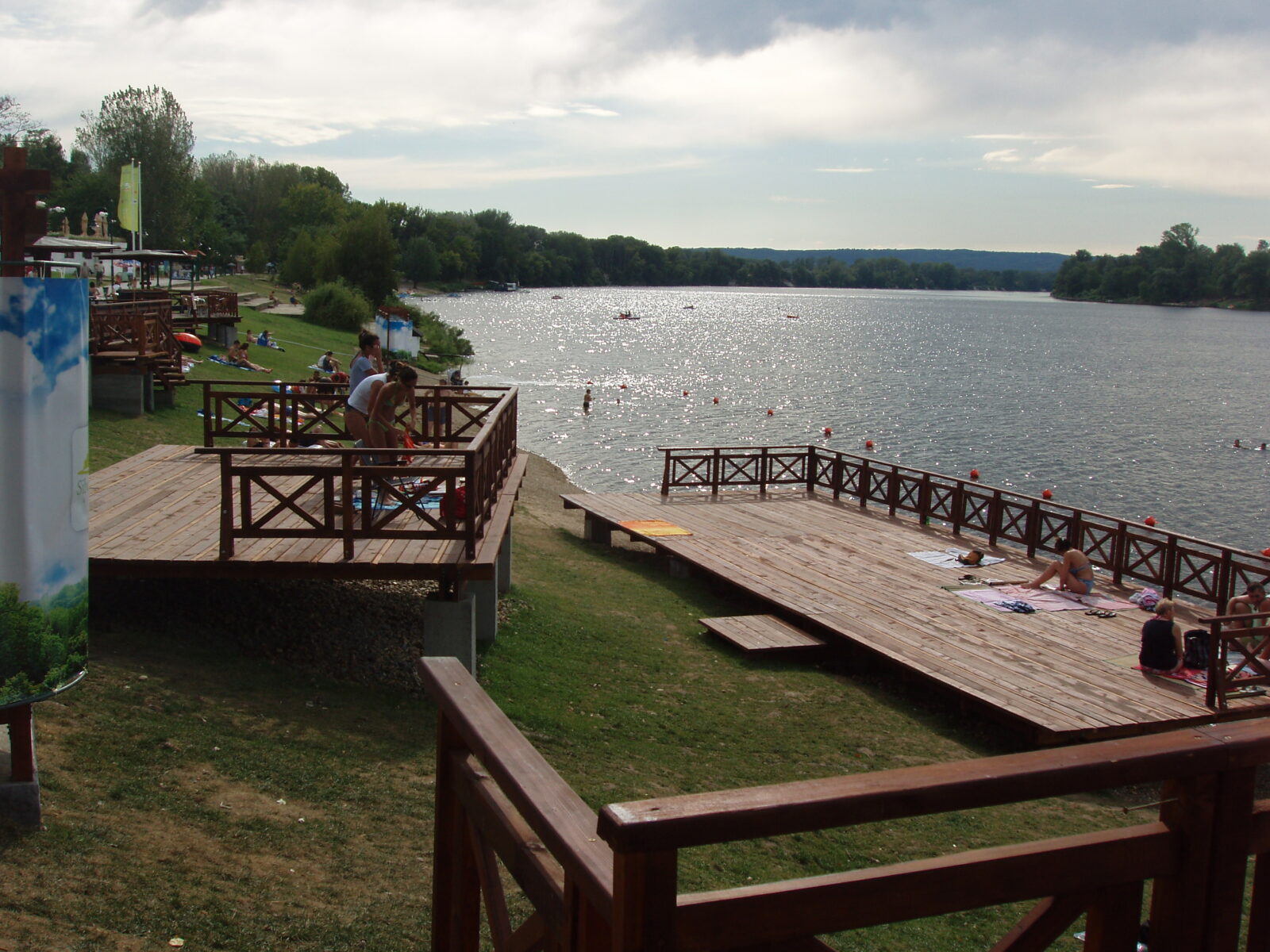
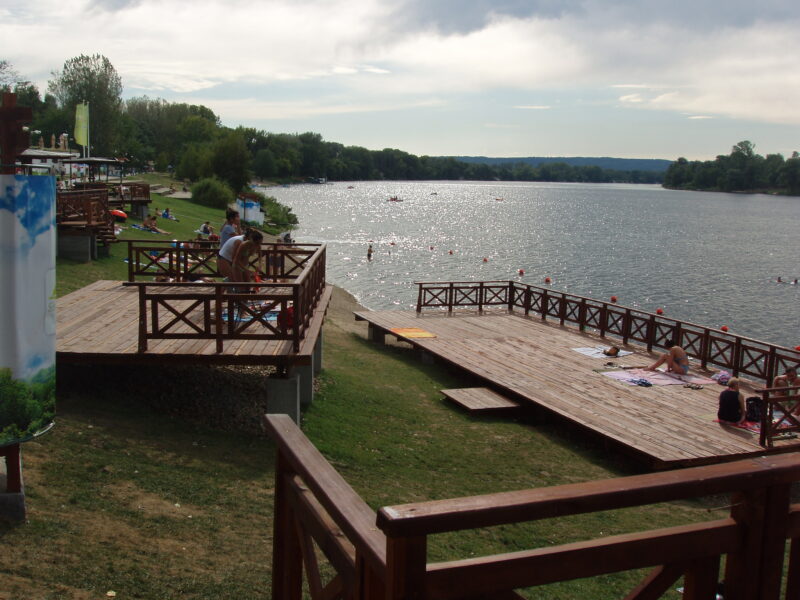
Silver Lake is the place Serbia goes when it cannot get to the coast. It is an old arm of the Danube cut off in 1971 and lined with beaches, and the water is warm, clear and filtered naturally through the sandy ground around it. The locals call it the Serbian sea, and the crowds on a summer Saturday make the nickname feel earned.
It is about 14 kilometres long, so there is always another beach round the corner. Veliko Gradište is the nearest town. From there a paved promenade of about 2.5 kilometres leads along the Danube to the lake. You can hire pedal boats, canoes and water bikes, there is an aqua park, and the lake has the largest car camping park in Serbia. Water readings in the summer usually sit between about 23 and 27 °C.
It is not only for swimmers. The lake is rich in carp, catfish, pike, perch and zander, so anglers share the shore with the bathers, and the calendar fills up with a chess festival and beach-volleyball tournaments. If you want a quiet corner, walk past the last organised beach and keep going; the shoreline is long enough that you will find one.
- Swimming season
- Mainly June to August, with the busiest weekends in July.
- Facilities
- A hotel, many guesthouses and villas, camping, an aqua park and boat hire. The public health institute in Požarevac tests the water at the beaches in the swimming season.
- Getting there
- About two hours by road from Belgrade, through Veliko Gradište.
- Mind this
- Reports say there is no official lifeguard service and that many unofficial beaches sit next to the official ones. Book your room well ahead for weekends, and stay close to children.
Nearby: the medieval fortresses of Ram and Golubac stand on the Danube a short drive away. Golubac in particular is worth a morning when the beach gets too hot.
Boračko jezero: the cold one, on purpose
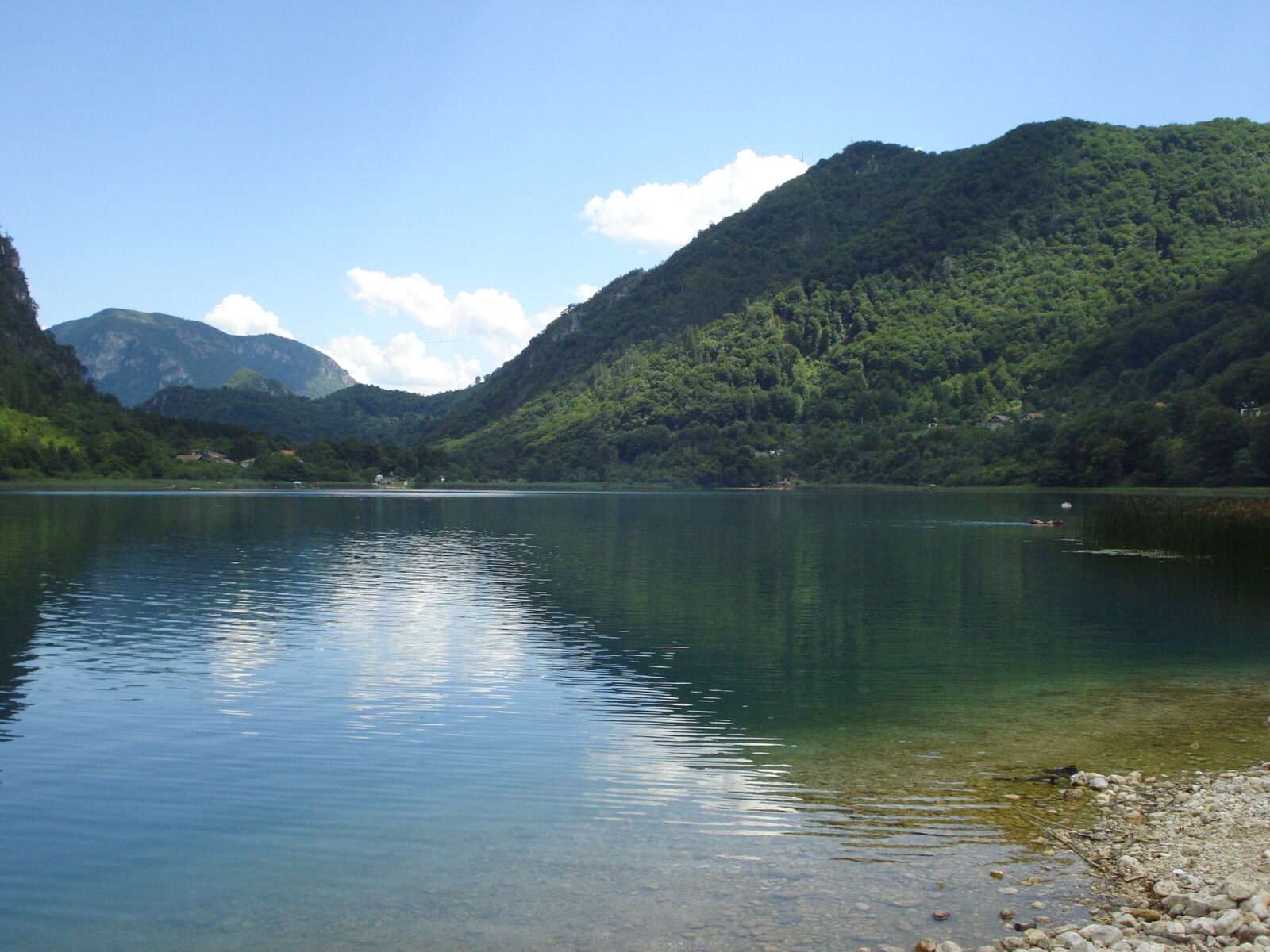
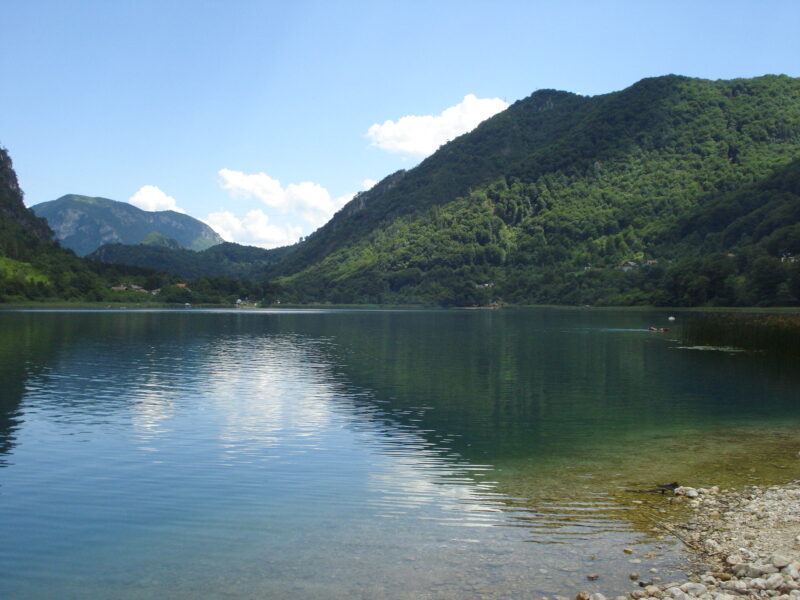
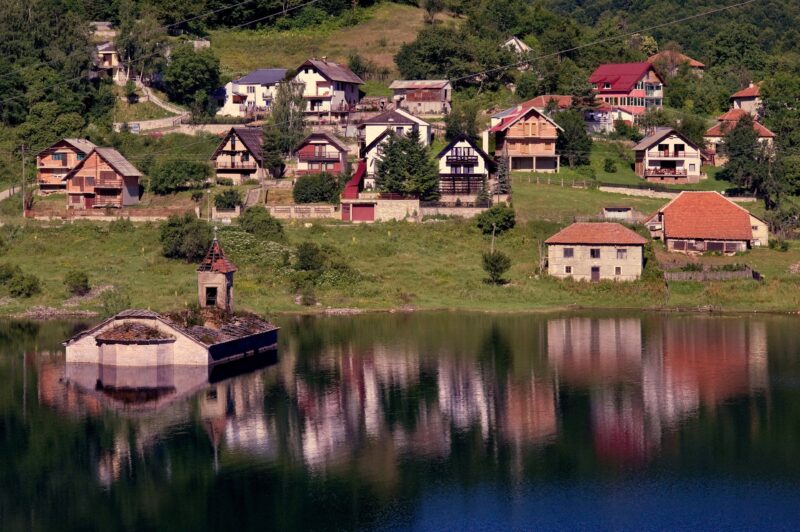
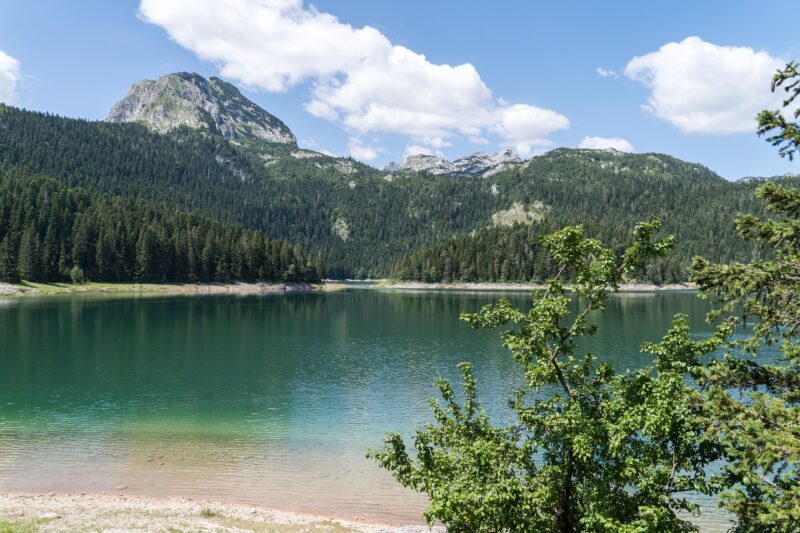
Not every lake needs to be warm to be a good beach day. Boračko jezero sits at about 400 metres in a bowl of forested hills, below the Prenj range, and it is a glacial lake with a bright green colour that changes through the day. The water is fed by springs and mountain streams and stays cold even in August. It is about 17 metres deep at most. In a heatwave that is exactly what you want: a short, sharp swim and then a long lie on the grass.
June and July are the peak, and September is good too. There is a small beach, a campsite right beside it that is usually open from about May to October, weekend cottages and boat trips. It feels more like a hillside picnic than a resort, and that is the charm.
The lake sits in a basin carved by a glacier, and springs feed it, some of them rising from the bottom, which explains the chill. Its outflow, the Šištica, runs through a gorge and drops as a waterfall into the Neretva. Several kinds of harmless water snake live around the shore, and reed beds fringe the edges, so if something ripples past you in the shallows, it is not worth worrying about.
- Swimming season
- Late spring to early autumn, best in June, July and September.
- Facilities
- A lakeside campsite on the beach, cottages, boat trips and a few places to eat. Confirm the campsite's dates before you go.
- Getting there
- About 20 to 25 km and 30 minutes by road from Konjic, which itself is roughly an hour from Sarajevo. Public transport is limited, so a car or taxi makes life easier.
- Mind this
- It is properly cold, so go in slowly. Some parts of the shore may charge a small access fee, so ask on arrival.
Make a day of it: forest trails lead from the shore towards the Prenj ridges, and Konjic has a handsome old stone bridge and a very good place to try rafting on the Neretva.
Lake Plastiras: swimming with mountain air
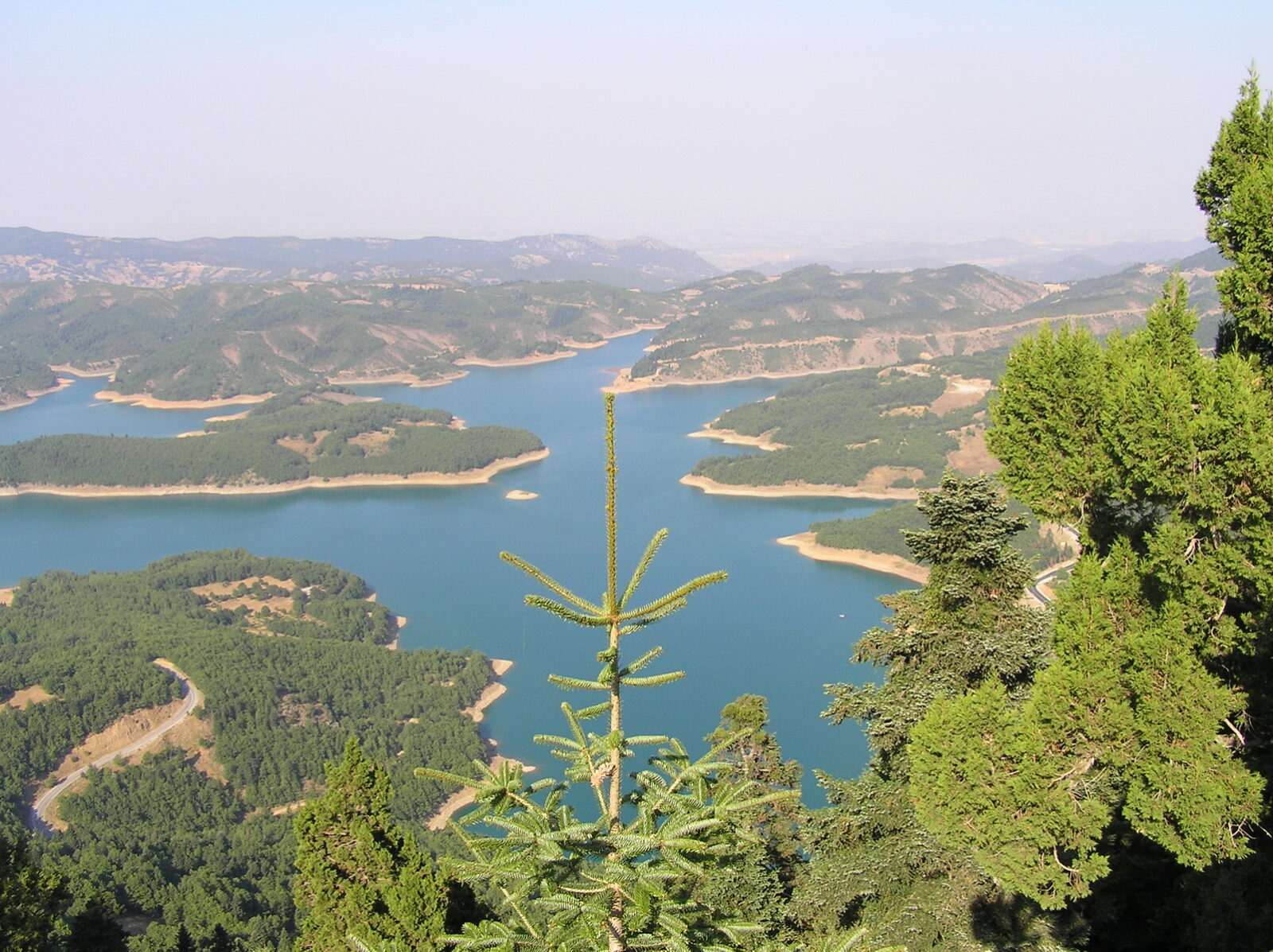
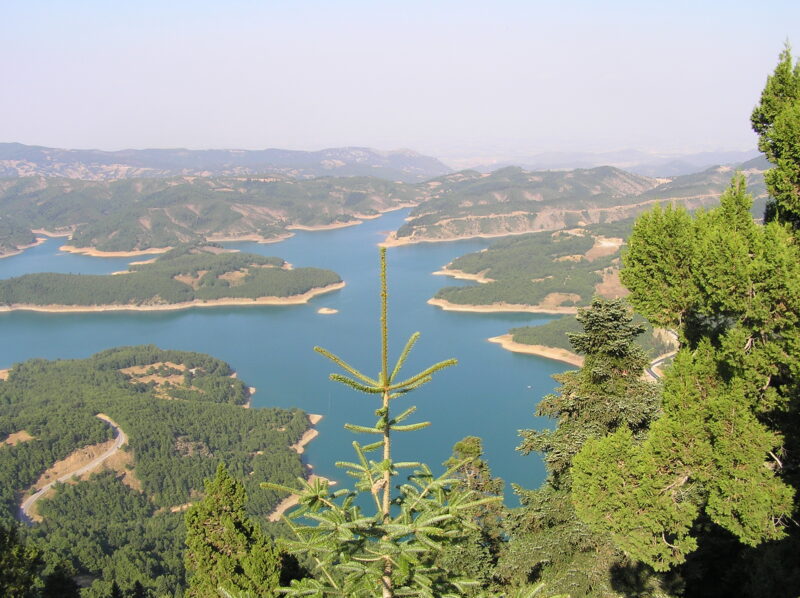
Greeks call this one Little Switzerland, which is not a promise most lakes can keep, but Plastiras comes close. It lies at around 800 metres in the Agrafa mountains, behind an 83-metre dam, and its shoreline is full of pine-covered inlets. It is far from the Aegean, and that is exactly the point. You get a day on the water, then a cool mountain evening with a proper dinner.
The two serviced beaches are at Pezoula and Lambero. Canoes and pedal boats can be hired on the lake, and an early-morning paddle is the quietest way to see it. In August the lake hosts a Pan-Hellenic swimming crossing, so you will find the locals are in the water too. In July and August the surface is usually in the mid-20s.
The lake exists because of a flood. General Nikolaos Plastiras imagined a reservoir here after the Tavropos river devastated his home region, and the dam was inaugurated in 1960. Today the lake is a retreat for Greeks from the plains, with a little islet called Niaga in the turquoise water. The road around the shore is 55 to 70 km depending on the route, and it gives you a viewpoint every few minutes, so it is a good evening drive after a day on the water.
- Swimming season
- June to September; spring and autumn are better for walking.
- Facilities
- Serviced beaches at Pezoula and Lambero; hotels and tavernas in Neochori and Kalyvia Pezoulas; boat and canoe hire.
- Getting there
- About 335 km from Athens and about an hour from the city of Karditsa. A car is the only practical way. Winter roads can be icy, but that is not a concern in summer.
- Mind this
- It is a reservoir, so its level rises and falls with the seasons and the shore can look different from the postcards.
Up the hill: the Observatory at 1,350 metres has a view over the Agrafa mountains and the plain of Thessaly, and the Belokomitis forest eco-trails are an easy afternoon walk. Neochori has a botanical garden, and the rock-carved monastery of Panagia Pelekiti is at Karitsa.
Jarun: the city beach nobody expects
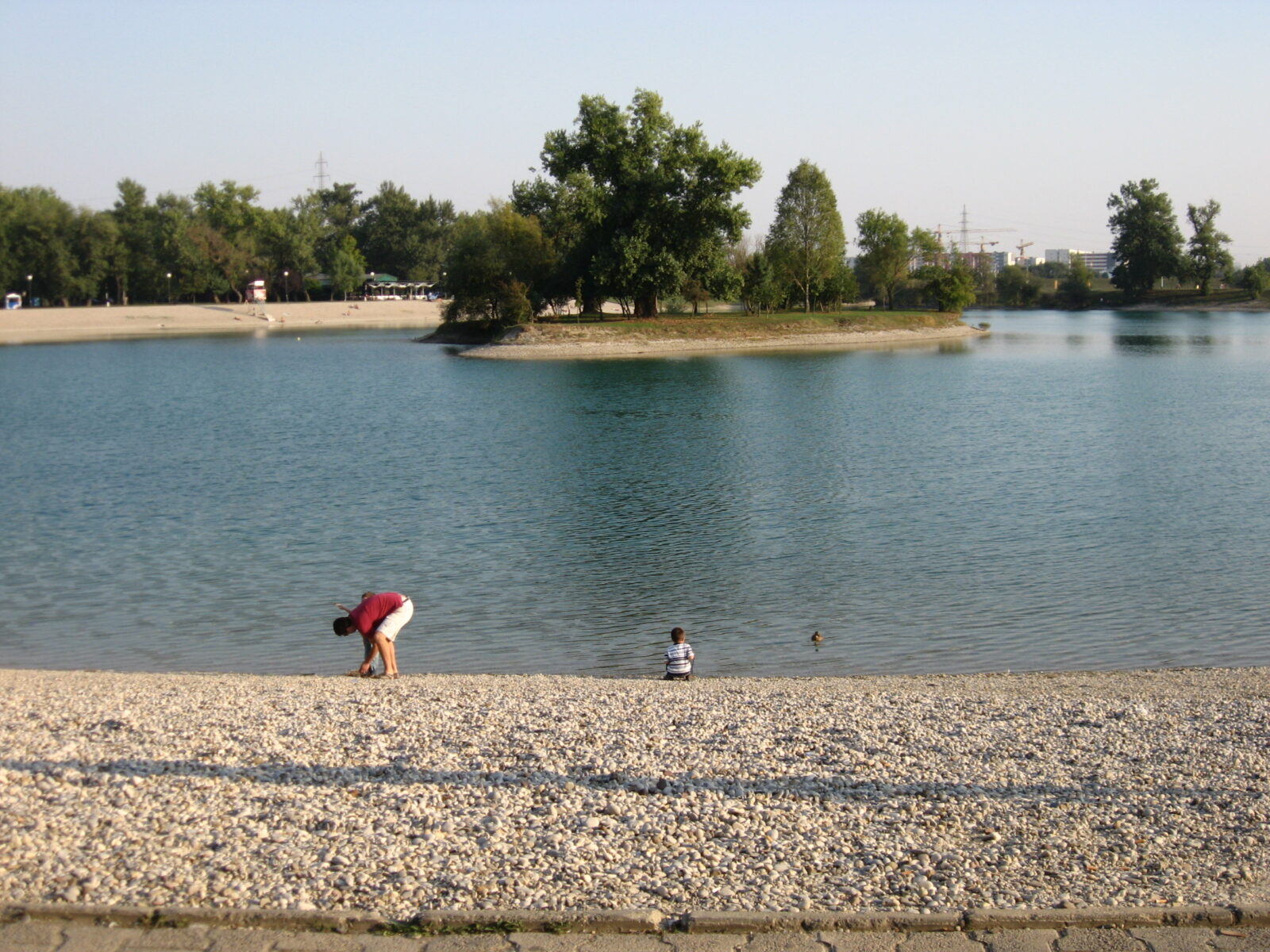
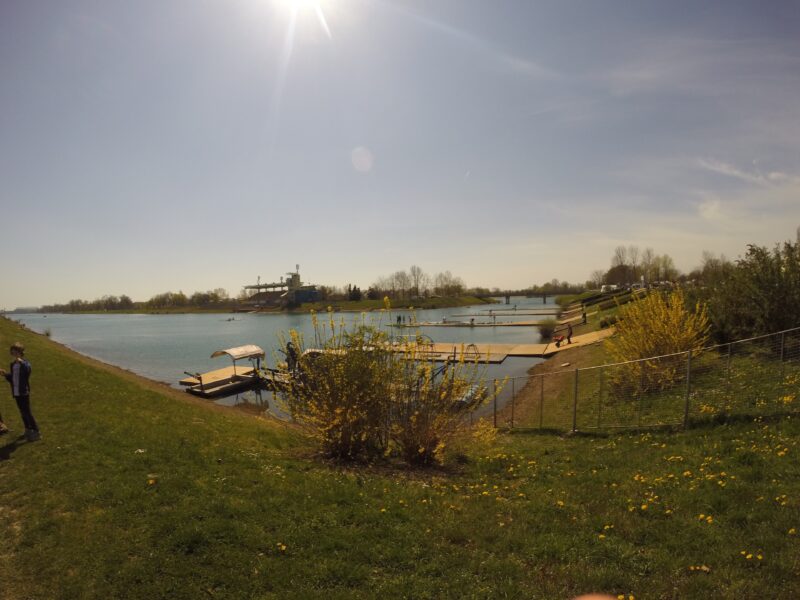
It is a little cheeky to include a lake in a capital city, but Jarun earns it. Zagreb dug it for the 1987 Universiade, and it has become the place where the whole city goes to cool down. The pebbly shore stretches for about 2.5 kilometres, lifeguards watch over the official beaches in season, and a path runs all the way around for walkers and cyclists. For anyone arriving in Croatia by the inland route, it makes a good first swim.
The Small Lake and its islands are set aside for recreation, and the Large Lake holds a rowing course that has hosted World Rowing Cup races. After the sun goes down, the lakeside bars fill up, and Jarun hosts the INmusic festival every June.
There is far more to Jarun than the beach. Five pebble beaches line the shore, and rowing, canoeing, kayaking and sailing clubs work from the water's edge. Behind them you will find a skate park, a sculpture park, a small botanical garden, playgrounds and courts for basketball, beach volleyball, beach handball, table tennis and bocce. It is the kind of lake where a family can spend the whole day without leaving the shore.
- Swimming season
- 1 June to 15 September, with lifeguards in the official bathing areas from 10 a.m. to 8 p.m.
- Facilities
- Cafés, bars, boat and bike hire, and a track of about 5.5 km around the lake.
- Getting there
- Trams 5 and 17 run from the main square to Jarun in about half an hour.
- Mind this
- Water quality is tested twice a month during the season. Look at the City of Zagreb's current results, and check which parts of the lake are open for swimming this year.
Nearby: Zagreb's other lake, Bundek, is a quieter option, and the old town is a short ride away. If you have a car, Medvednica above the city is a cool escape on the hottest afternoons.
Good to know before you jump in
Lakes are not the sea, and they do not forgive carelessness. Most of these beaches have no lifeguards outside the main season, and a number have none at all. Cold water below a warm surface is common, so enter slowly. After a long hot spell, look for notices about algae before you swim, and keep small children within arm's reach. Water temperatures here are typical summer values, and they shift from week to week, so treat them as a guide and not a promise.
Which one should you pick?
If you want one lake and one trip, go to Ohrid. If you want a quieter week with boats and birds, choose Skadar. If your group wants beaches, beers and an easy drive from Belgrade, it is Srebrno jezero. If you are camping and the weather is scorching, Boračko jezero is the best way to survive it. If you want to swim without giving up mountain air, Plastiras is your lake. And if you are in Zagreb with an afternoon to spare, Jarun is waiting.