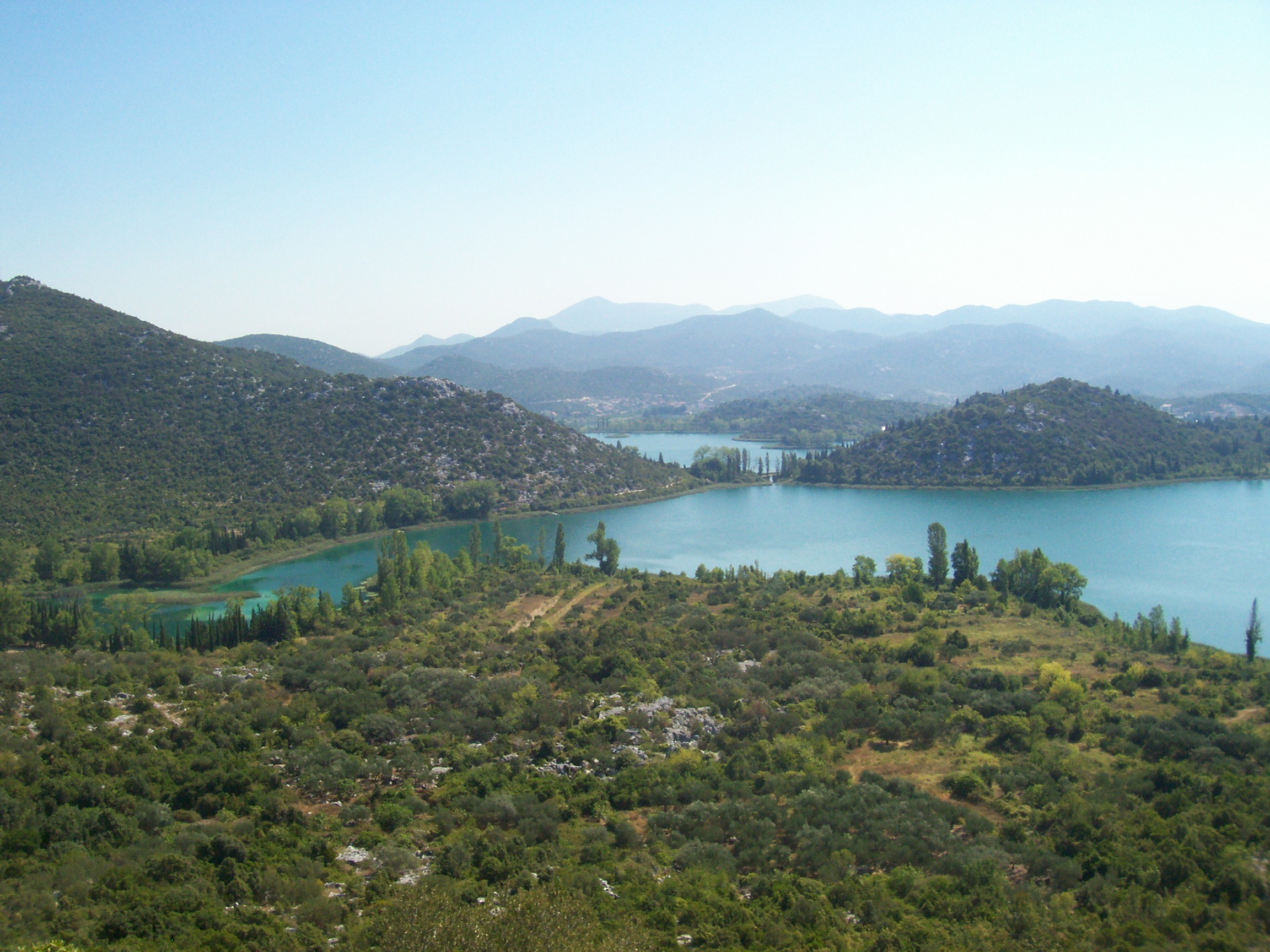
Photo: Draceane · CC BY-SA 4.0
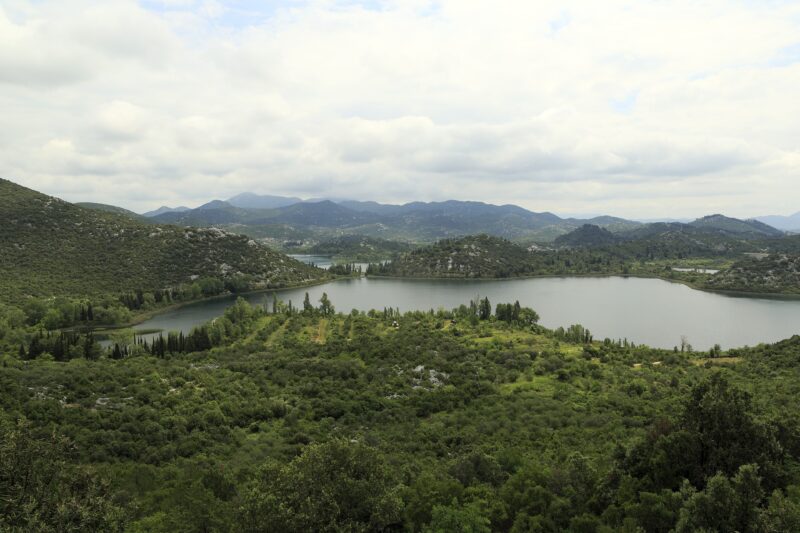
Oćuša is the largest of the Baćina lakes, a group of seven karst lakes near Ploče in Dalmatia. Six of them are joined, among them Oćuša, Crniševo, Podgora, Sladinac, Šipak and Plitko jezero, and only Vrbnik lies apart. The lakes are fresh despite their closeness to the sea, and a spring at Klokun, near Plitko jezero, supplies drinking water for Ploče and its surroundings. Lake Vrgorac to the north drains into the Adriatic through the group. Reed beds dominate, with willow thickets on the steeper shores, and the lakes are a well-known place to hunt grey mullet. Their preserved nature draws nature lovers, tourists and day-trippers.
How it formed
Like the rest of the group, Oćuša is a cryptodepression: its bed lies below sea level while its surface stands just above it. Karst springs and channels feed it, among them the Oćuša spring on its shore, and the water moves on through natural and artificial channels towards the sea near Ploče.
History
The shores of the Baćina lakes have been settled since Roman times: the remains of the settlement of Praetoria, a 6th-century early Christian basilica and medieval stećci tombstones lie by Sladinac, one of the joined lakes. A tunnel built between 1914 and 1938 to drain the floodwater of the Vrgorac field to the sea lowered the lakes. Locals call them the pearls of the Illyrian Queen Teuta, who is said to have loved them.
Nature
Reeds, willows, poplars and water lilies line the shore, and ducks and other waterbirds use the quiet bays; there is a bird hide by the Oćuša spring. The lakes belong to the Natura 2000 network and hold many kinds of fish, several of them rare endemics, and in 2022 the violet dropwing, a dragonfly of North Africa, was found here for the first time in Croatia.
Visit
Swimming
No reliable information
Tips
The lakes are a few kilometres from Ploče, just off the main road between Makarska and Dubrovnik; the viewpoint car park on the main road fills quickly in high summer. A walking and cycling path links six of the lakes, with benches, springs and boards about the lakes’ dragonflies, amphibians, reptiles and birds, and the hide at the Oćuša spring is the place for birdwatching.
A ride in a lađa, the traditional Neretva boat, crosses the six joined lakes, and kayaks and paddleboards are a good way to reach the hidden coves and small beaches. The main bathing spots are near the Mindel spring. In summer the lakes are a few degrees warmer than the sea, so the swimming season starts earlier and lasts longer.
Nearby lakes
Show on map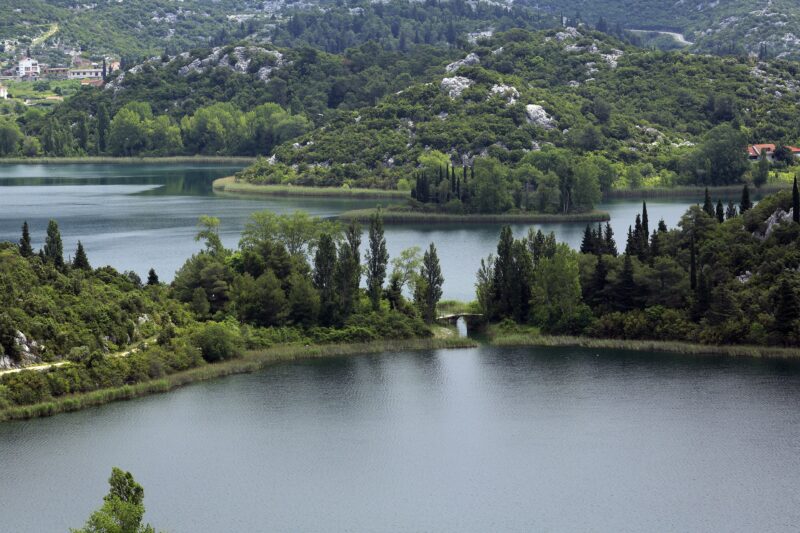


Know Oćuša well?
Suggest a beach, viewpoint, trail or amenity, or tell us if something has changed. We read every message.
Sources & data
- Croatia's 2022 Water Framework Directive reporting to the EEA: lake water bodies (SWB, category LW), field cArea, European Environment Agency (WISE WFD), reported by Croatia, 2022
- OpenStreetMap: Oćuša (relation 2454320), OpenStreetMap contributors
- Croatian Wikipedia: Baćinska jezera, Wikimedia Foundation
- English Wikipedia: Baćina lakes, Wikimedia Foundation
- Bacina Lakes Croatia, Croatia Itinerary
- Baćina Lakes: Croatia's freshwater phenomenon, Total Croatia News
- Baćinska jezera – neretvansko kraljevstvo netaknute prirode (2021), Rogotin.hr
- Baćinska jezera, Neretva.org