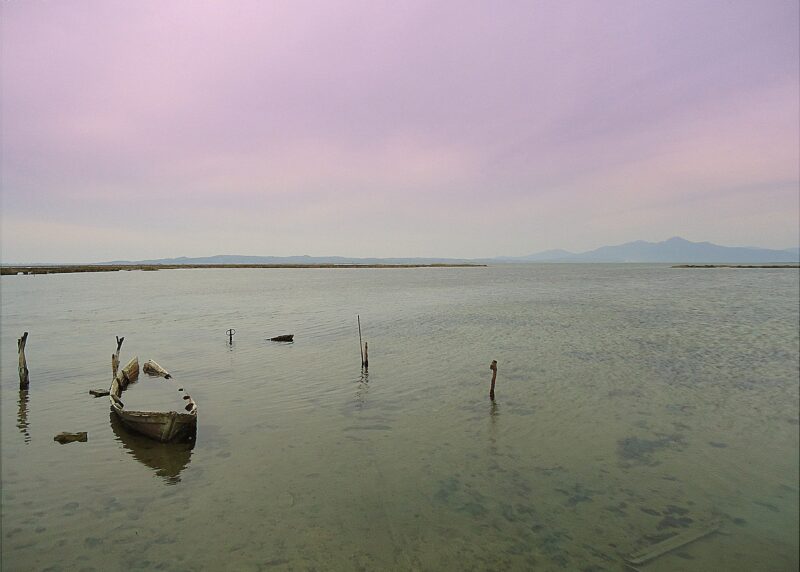
 Photo: ArtaMania · CC BY-SA 4.0
Rodia is one of the three great lagoons of the Amvrakikos Gulf, about 14 km², in the delta of the Louros in the north of the gulf. Linked with neighbouring Tsoukalio, it is the largest marsh in Greece, and its reed bed is described as the largest of its kind in the Balkans.
Nature
Its water is less salty than Tsoukalio’s, and the plants on its bed are mostly stoneworts and dwarf eelgrass. Glossy ibises and spoonbills feed along the Louros, while great white egrets, flamingos, spoonbills and red kites winter in large numbers. Pelicans and flamingos gather in the main open waters.
Visit
Swimming
No reliable information
Tips
A boardwalk through the reeds leads to hides overlooking the pelican and flamingo gatherings. The Louros embankment on the north side is good for freshwater birds, but its track is potholed, overgrown and often impassable after rain.
The village of Petra, about an hour by road from Parga or Lefkada, is a good starting point, and a telescope is useful. Winter and the spring and autumn migrations are the best times. Expect protection measures around the pelicans in the breeding season. Allow at least a full day for the Amvrakikos wetlands. There is no entrance fee to the park, the main information centre is in Arta, and morning fog is common over the lagoons in autumn and winter.
Nearby lakes
Show on map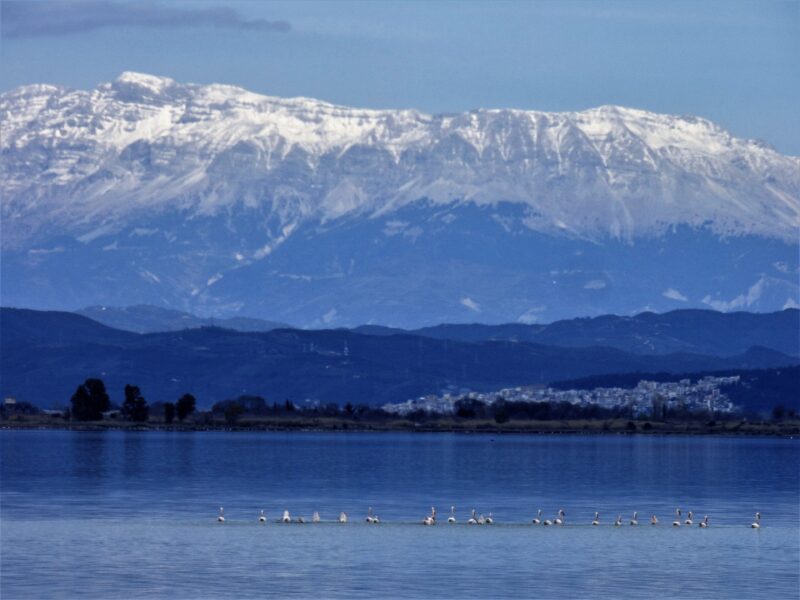


Know Rodia Lagoon well?
Suggest a beach, viewpoint, trail or amenity, or tell us if something has changed. We read every message.
Sources & data
- OpenStreetMap: Λιμνοθάλασσα Ροδιάς (way 27574306), OpenStreetMap contributors
- Wikidata: Rodia Lagoon (Q24993041), Wikimedia Foundation
- The lagoons of the Amvracian Gulf, Discover Arta
- Amvrakikos Gulf, Katafourko lagoon and Korakonisia, LIFE Transfer
- Amvrakikos Wetlands NP: Rodia and Tsoukalio lagoons, Birdingplaces
- Amvrakikos Wetlands, International Parks