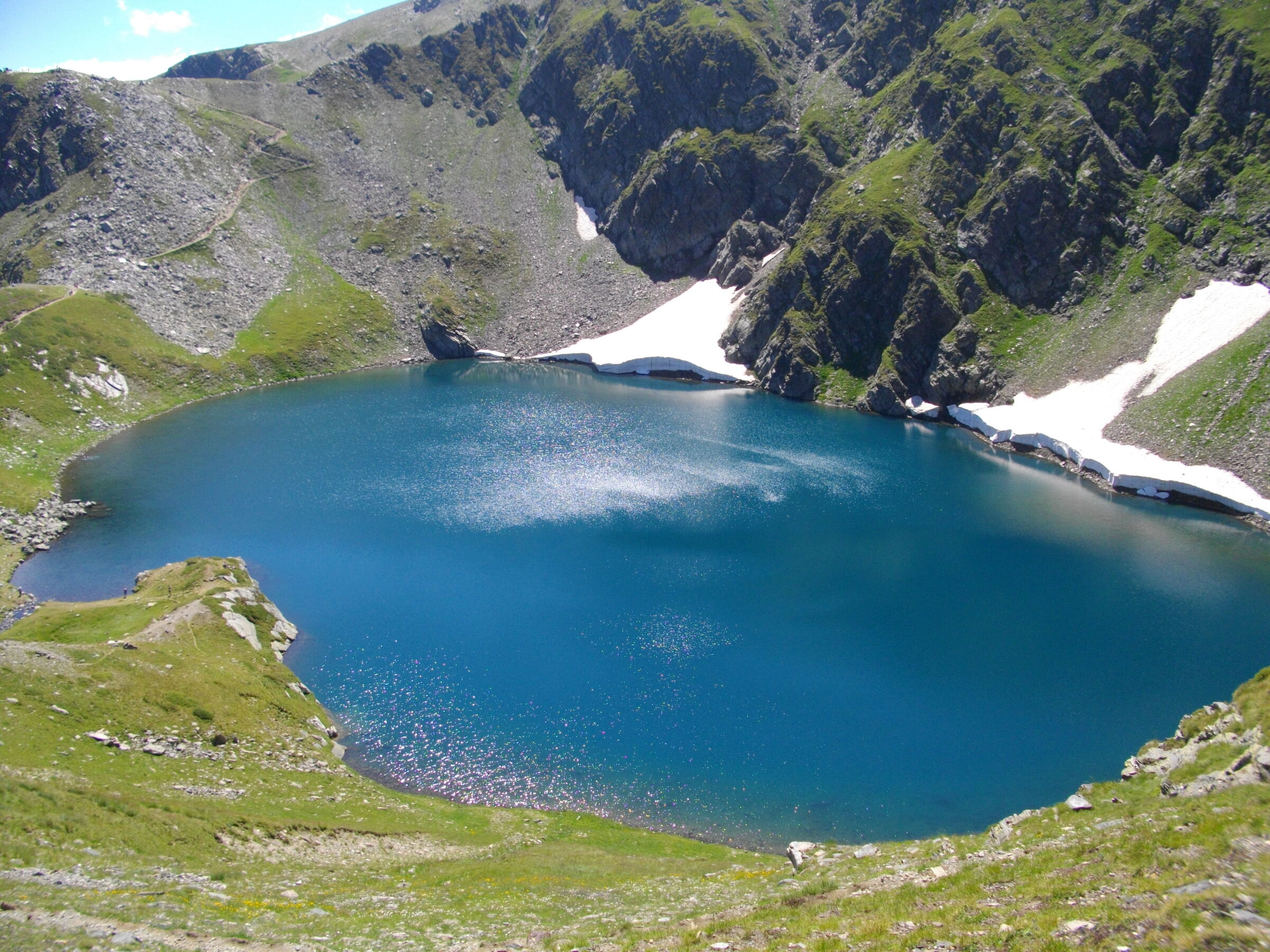
Photo: Glagoli · Public domain
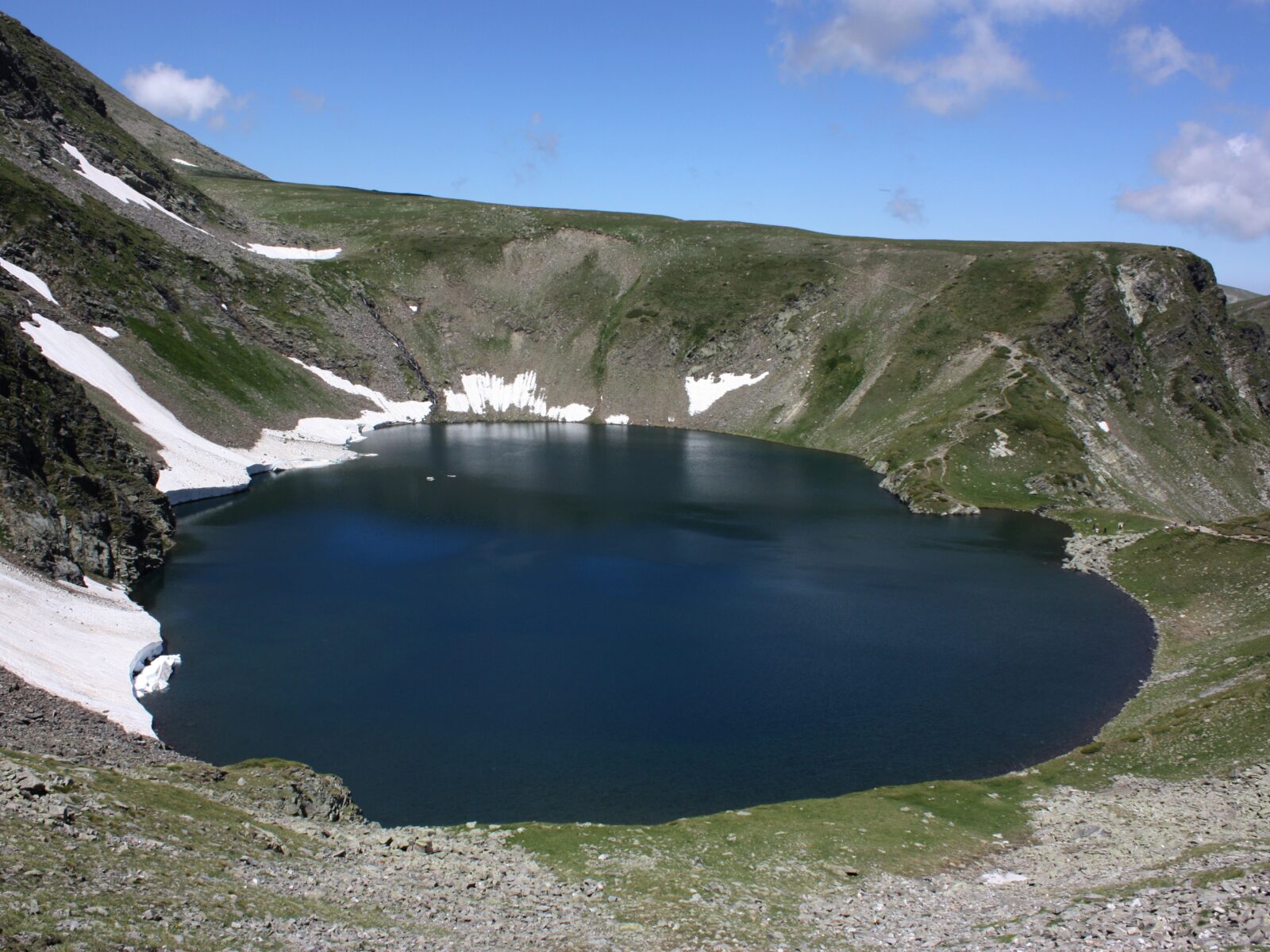
Okoto, the Eye, is a glacial cirque lake in the Rila mountains, the second of the Seven Rila Lakes. It is also called the Heart, and in the past it was known as Chanak Gyol. It is the deepest of the glacial lakes on the Balkan Peninsula, and it lies on one of the most popular alpine routes in Bulgaria, the round of the Seven Rila Lakes.
How it formed
Okoto is a glacial lake in a cirque, a bowl cut by ice. It drains from its north-eastern end towards the lower lake Bliznaka. From the south a snowfield overhangs the lake, and its tongue very rarely melts away and stays outside the lake's outline. The streams from the Seven Rila Lakes are the source of the Dzherman river.
History
In 2005 two Bulgarian divers made the first dive into the lake in the history of Bulgarian diving, reached its deepest point and found that the depth had been increasing over the years. They donated samples of bottom sediment and water to the hydrobiology department of Sofia University.
The Eye
Okoto is at about 2,440 m, and its almost oval outline gives it its name, the Eye. It is the deepest cirque lake in Bulgaria, at 37.5 m. Of its neighbours, the Fish Lake is the shallowest of the group, at about 2.5 m, and the Lower Lake is the lowest.
Nature
It is the deepest glacial lake in Bulgaria, and one of the poorest in nutrients among the Rila lakes that scientists have studied, so its water is very clear and its food web short. The lakes usually freeze in October and do not thaw until June, under ice up to 2 m thick. The Rila lakes have been stocked for decades with brown trout and brook trout, and brook trout have been recorded here.
Around the lakes grows the Rila primrose (Primula deorum), a Bulgarian endemic found only on wet ground above 1,800 m in this range. It flowers from early June as the snow melts, alongside bird’s-eye primrose, alpine snowbell and the insect-eating Balkan butterwort. Since the chairlift opened in 2009, visitor numbers have soared, from 15,000 that year to 120,000 in 2011, and experts consider this too many for such a fragile place, so keep to the paths.
Gallery
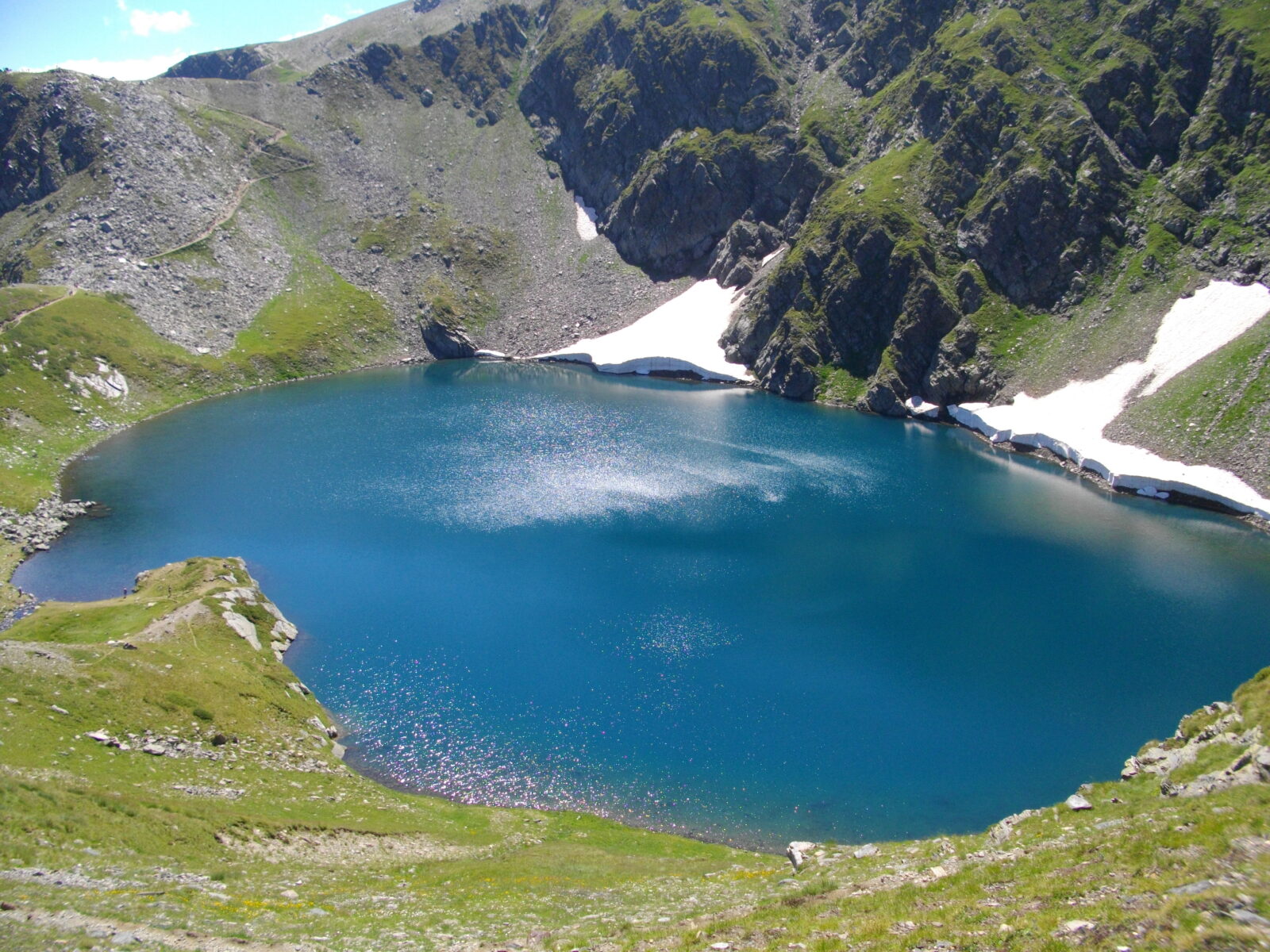 Photo: Glagoli · Public domain
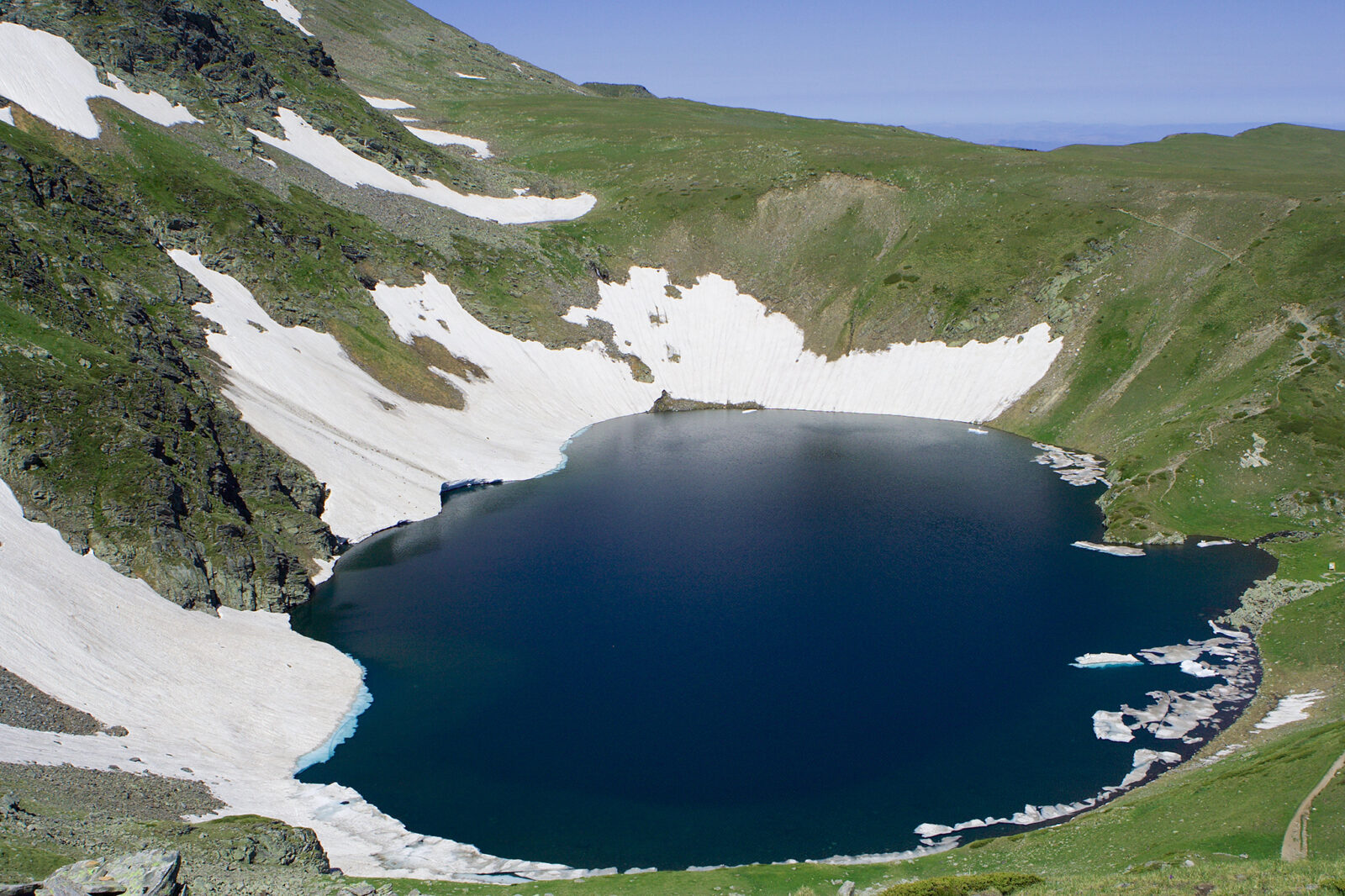 Photo: Deyan Vasilev ( Dido3 ) · CC BY-SA 3.0
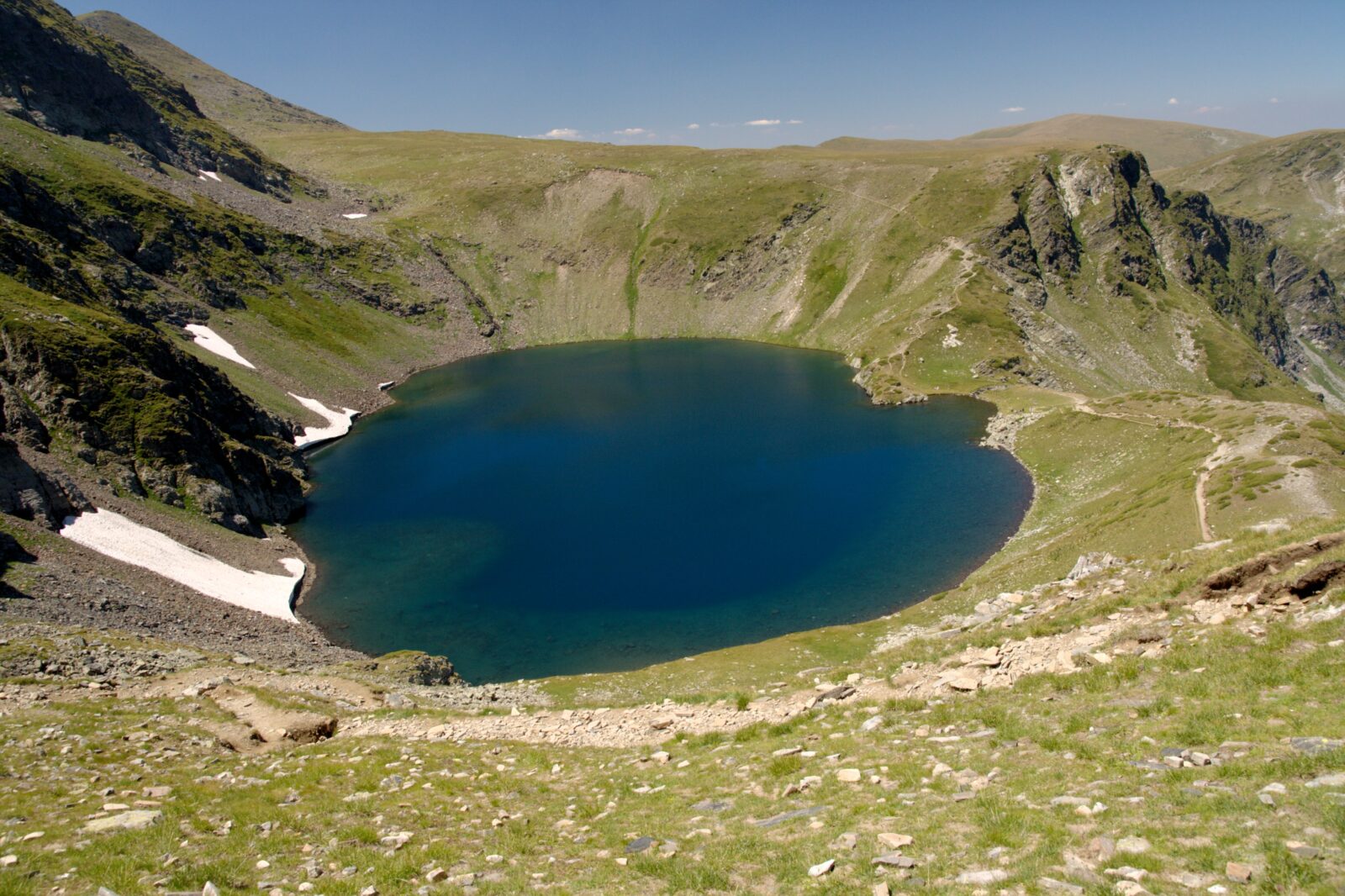 Photo: Javier Sánchez Portero · CC BY-SA 3.0
Visit
Swimming
No reliable information
Tips
The starting points for Okoto are the old hut Sedemte Ezera and the new hut Rilski Ezera. From the old hut the path runs past the Fish Lake, Trilistnika, Bliznaka and Bŭbreka. Okoto is the second last lake of the round of the Seven Rila Lakes, one of the most popular alpine routes in the Bulgarian mountains, and an unmarked path leads from its outflow to the Otovishki peak and the Ivan Vazov hut. It is high mountain terrain, so check the weather and the trail conditions.
Getting up there
A chairlift takes you from Panichishte (about 1,520 m, near the Pionerska hut) up to the Rila Lakes hut at about 2,100–2,150 m, a ride of roughly 20 to 40 minutes, which saves most of the climb. The hut has basic accommodation and a café. Plan 3.5 to 4 hours on foot to see the lakes, and up to 6 if you take your time. Check the lift’s current hours and prices, because they change.
When to go
July to September is the best time. The lift closes for maintenance in October, and the lakes are frozen and inaccessible to most hikers from roughly November to late June. Seven Rila Lakes is the most visited group of lakes in Bulgaria, so go early.
Nearby lakes
Show on map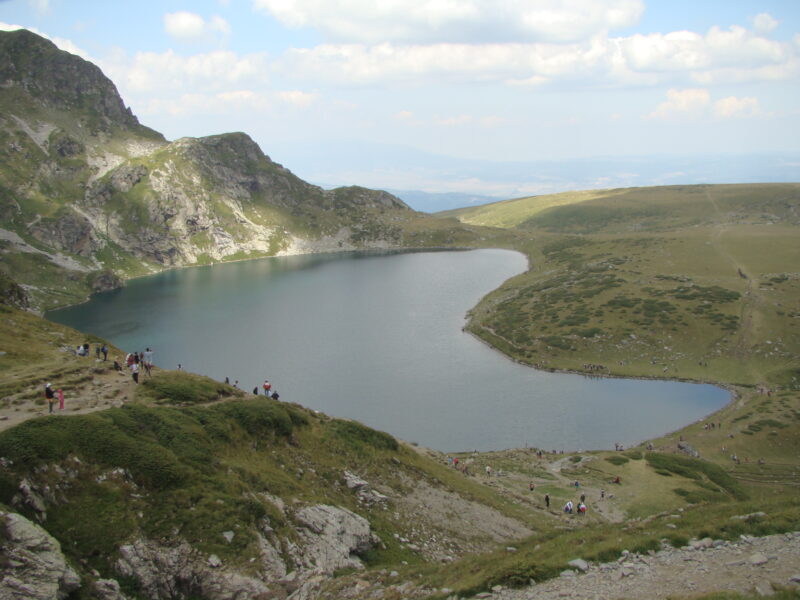


Know Okoto (Rila) well?
Suggest a beach, viewpoint, trail or amenity, or tell us if something has changed. We read every message.
Sources & data
- Wikidata: The Eye (Q12289183), Wikimedia Foundation
- OpenStreetMap: Окото (way 439492170), OpenStreetMap contributors
- Bulgarian Wikipedia: Окото, Wikimedia Foundation
- English Wikipedia: Seven Rila Lakes, Wikimedia Foundation
- Lifts operating hours: the 7 Rila Lakes lift, BulGuides
- Ecological relations and temporal changes in the pelagial of the high mountain lakes in the Rila Mountains (Kalchev et al., 2004), Journal of Limnology
- Очарованието на Седемте рилски езера и заплахите за тях (2021), Priroda, Bulgarian Academy of Sciences